Thursday, March 25, 2010

top hats

Ian Jack has researched a 1937 photograph for a mag called More Intelligent Life. The photo is notorious as a graphic demonstration of England's dishonorable class barriers. You may have seen it before. This version comes from Francis Bennion's photo pages:


The photo stands well on its own. It's good photojournalism and good photography period. As you'd expect its story isn't just about wealth and privilges, snobbery and distinction; there's a lot more to it. Each of the five boys it portrays has his own story. Sure, it does simplistically reveal a class division, but the two boys on left — Harrow students at the gate to Lord's Cricket Ground — are divided as much from the students of arch-rivals, Eton, whose eleven their team is about to play, as they are of the three boys on the right, not themselves street urchins, but urban kids likely to be cricketers themselves.


{impromptu open-field cricket in the late 1930s; source: as you can see}


{street cricket, also from the late 30s; source: getty}

Here's a link to Jack's article: FIVE BOYS: THE STORY OF A PICTURE. It's worth reading, through to the end.

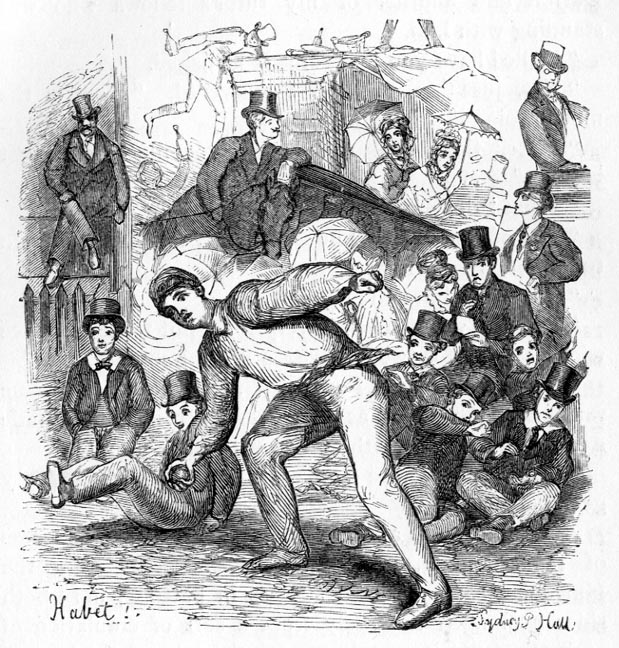
These prints from late 19th-century weekly illustrated news magazines show the festive nature of the annual Harrow-Eton match. They show fashionable young folks of Imperial England enjoying themselves much as now do the crowds at collegiate homecoming games every fall in the US. In those times, only a tiny minority of the population could enjoy itself in this way — in England and the US alike. Although disparities of wealth persist or, in England's case, have reëmerged in our times, it seems unlikely that we'll ever again have among us so self-assured, energetic, and surprisingly creative a generation as were these Harrovians and Etonians, with all their prejudices and absurd traditions.


{source: KAUAI FINE ARTS}


{source: Antique Prints of Cricket}


{caption: The Eton-Harrow Cricket Match by Sydney P. Hall. 1870. Wood-engraving, 3 1/2 x 3 1/4 inches. Recollections of Eton, p. 320. Scanned image and text by George P. Landow; source: victorianweb.org}


This shot shows Eton boys arriving for the match, ca. 1930

{caption: Eton schoolboys arriving for the cricket match between the Eton and Harrow at Lord's cricket ground, London, ca. 1930; source: getty}


---------------

The US has its own bastions of educational privilege, as I'm sure we all already know.

The Ivy League - bastions of privilege instead of institutes of learning

Which College Grads Earn the Most?
graduates of prestigious institutions, especially Ivy League universities, earned the biggest salaries

Harvard Grad Details 'Privilege' of Ivy League Life

Wednesday, March 24, 2010

Milan-San Remo

Milan-San Remo, the Spring classic bike race which bills itself as La Classicissima went off very well this year. At the line, Oscar Frere proved to have the right tactics and the best legs. He rides for the Rabobank squad and although the rider I follow most closely, Joost Posthuma, wasn't in this race, the result is a satisfying one. 'Tho it was the third time Oscar won, the announcers and the race cameras picked out other former winners and current favorites in the run up to the finish. I kept seeing the bright orange flash of his jersey behind or nearby the guys the photogs were watching. The replays showed both his skill in maneuvering himself into position leading up to the sprint and the enormous surge with which he pulled away from contenders.


Julian Dean's race diary blog tells a different story. Milan-San Remo is so very long and so very fast that — after a few hours of riding — racers who get shelled out the back have little hope of rejoining the front bunch. About half way through, Dean got caught up in a crash, was unable to reconnect, and lost so much time that he and another sufferer lost more than an hour on the lead group. He writes, in typical New Zealand idiom:
I was out the arse because I was going bad, now I had to keep going to the finish, hoping that at some point I might see someone coming from the finish to collect me after they finally realised I was MIA. But it didn't happen and I had to ride a miserable 100km to the finish with no fluids or food on one of the worst days I’ve had on the bike for as long as I can remember. . . .

Eventually, after almost 8 hours, I rolled into San Remo to the team bus feeling more than a little cheesed off and disillusioned as to the lack of consideration of the welfare the team has for its riders - especially for an athlete who’s struck a bad day and needs a little more support than they might need on regular occasions. What added to my frustration was that in my heart I knew I had done all I could to get back on top of my form after being crook and even though I couldn’t contribute much on this particular day, I still buried myself for the team.

Anyway that’s often what you get when you have a bad day. Unless you are running at the top of your game, professional sport can be very demoralizing and disheartening no matter how long you’ve been in it and how much stature you have. Everybody prefers to be with a winner....


{Dean at MSR on another day; source: his team's website}

A couple of days ago, a race page I follow called Cyclingnews did an article on an experience similar to Dean's from twenty-five years ago: Phinney and Kiefel recall 7-11's wild Milan-San Remo

At that time the American team, 7-Eleven, had just begun racing in Europe. They entered MSR hoping to put someone on the podium but expecting just to gain some valuable experience. Davis Phinney and Ron Kiefel were their two star riders, both successful in US races, and, eventually, in European ones as well. This day, March 16, 1985, was not to be Phinney's best. Beforehand he's given what he takes to be valuable advice to eat constantly in order to avoid running out of energy at the end — the race being so very long and hard. He fills his jersey pockets with the pannini that riders ate in those days and ate one after the other. For this, he's derided by one of the best racers of all time. As he tells it, "After about 60km Sean Kelly pulls up next to me while I'm stuffing my face. My gut is so full that my knees are banging into it while I'm pedalling. Kelly says, 'What are you doing? You're eating like a pig! You'll never make the finish like that'."

Then: "As we came into the little town before the Turchino [climb] started I was on the far right side, in the second row, and we're just flying along. There's a sharp left turn and the pack drifted a little bit wide to the point where I was pushed off the road. I went flying off the road, crashed into this chain fence separating the road from the sidewalk and dislocated my finger."

It was very cold and wet that day. Fellow team member Eric Heiden stopped to help Phinney and manages to pull the dislocated finger back to normal, but Phinney had lost steam. Heiden managed to get himself back in the race, but Phinney did not. He remembers: "Here I am at this big race, Milan-San Remo, off the back with three other knuckleheads, still riding with race numbers on. I'm dirty, wet, cold and hungry, because I have no food, and we're still a long way from San Remo. We realized that we're screwed."

Two of the four struggle on but Phinney and a Belgian rider decide to leave the course and see whether they can't hitch a ride to the finish on the nearby autostrada — a limited-access tollroad. They're stopped at the tollbooth and since neither knows the dialect which the tolltaker uses, they're near out of hope until the tolltaker finally figures out why these two bike riders are plaguing him and calls race headquarters. Phinney's team manager eventually sends a car for them. I'd love to see a photo of the two, dirty, cold, wet, hungry, dejected; standing by their bikes at the entrance to an Italian superhighway.


{Kiefel and Phinney at a warm and sunny race in Colorado a year or two before their MSR adventure; source: rbaction.net}

Monday, March 22, 2010

writing in sand

This week's gospel reading in Roman Catholic churches is a passage from John in which scribes and Pharisees confront Jesus with an adulterous woman. I'd forgotten, if I ever knew, that in this familiar story he deflects the hostility of the sectaries by concentrating on something that he is writing. He has been seated in the temple court, speaking to a group that has gathered to hear him; when the scribes and Pharisees show up, he bends down and writes in the dust of the packed earth. As the King James Version tells it, he "stooped down, and with his finger wrote on the ground, as though he heard them not."

Although this is the only occasion on which Jesus is shown to be writing, it's in keeping with practices of the time that he'd use the dust to do it. Writing materials were scarce and expensive and those few who could write would, at that time, have done most of it in this ephemeral way. In fact, most writing would then have involved commercial transactions and most of that would have been quick calculations for tallying sums. Many merchants used sand boards for the purpose, portable platforms like checkerboards on which they would strew sand. These had a sturdier and more efficient counterpart in boards that even more closely resembled checkerboards on which counters would be placed for abacus-style calculations. It would be many centuries before writing materials, particularly paper, would become cheap enough to use for tallying sums and recording transactions and writing in sand is too practical entirely to have disappeared even in modern times. Witness this sequence of photos that Dorothea Lange took in rural North Carolina during July 1939.


Her caption for these shots reads "Roadside meeting with Durham County farmer. North Carolina. He gives road directions by drawing the dirt with a stick." My source is the Prints and Photos Div. of the Library of Congress. The photos are in the collections of the Farm Security Administration, Lange's employer at the time.


{This image appears on a blog called andybraner.typepad.com; the author does not credit its source.}

It's a bit of a disappointment to learn that the account of Jesus and the adulterous woman is now considered to be a late, uncanonical, addition to John's gospel. Like most of the best Bible stories it's compact and hangs together well but is also ambiguous, unsimplistic, morally nuanced. The good guy triumphs over the bad guys but we're left asking what's meant by bad and good. The woman is saved from a horrible death and, we suppose, also learns to save herself from damnation in the afterlife, but I think we have to ask how far to take this idea in which repentance cancels due punishment for those convicted of crimes. And there's question of what is due punishment (which should be taken historically — can't be just be what we now consider appropriate, right?).

Commentators generally take the bending down to write as a rhetorical device. As the interpolation in KJV has it: "as though he heard them not." One could suppose this turning away buys some time in which to consider how to respond. Some say Jesus is demonstrating that he knows the sins of the men who have come to attack him and, as he writes them, they see that he knows. In the brief research I did for this post I didn't find a commentary that says he's demonstrating he knows the law (not the oral but the written law) and knows that stoning is not the approved punishment for adulterous women, but that's a possible interpretation.

For me it's not the dramatic turning away so much or the content of the writing that interests, but the implication that what Jesus has been teaching requires concentration, is important enough that it shouldn't be interrupted. His accusers address him as teacher and teaching is what he's engaged in when they begin their attack. He's using the earth as his blackboard, it's important to him to get across his point, he doesn't want to lose the thread of his argument. He wants to finish what he's doing before he turns his full attention on the scribes and Pharisees with their abject captive. The fact that, after responding to their question, he stoops back down to continue his writing supports this interpretation a bit. But then, if the teaching is so important, why does the story have the students all depart with the accusers so that Jesus is left alone with the woman? I don't think this uncertainty cries for resolution; it it just encourages me to keep thinking about the passage. In the end what sticks in my mind is the focus on writing as a central element in the account and the reminder that much that is written is unfixed, not retained; it is transitory, wiped off the blackboard, scuffed off the ground.

Sunday, March 14, 2010

Steve McQueen

I was washing the car the other day and my next door neighbor, the former fighter pilot, came over to reminisce about the muscle cars he's owned over the years. The topic brought to mind a fast bike I once owned. Not a racing bicycle, tho I've owned some, but the Triumph Bonneville I had through most of my college years.

I'd bought it from the boyfriend of my cousin Jo, my older and urbanely slender cousin Jo who was overfond of martinis. He'd bought it new and found it inconvenient to keep it in Manhattan. I myself had no storage problems.

I thought about the bike today on seeing this photo in a favorite microblog.

It shows Steve McQueen on the set of The Great Escape. He's not riding a Bonneville but a similar model, the TR6 Trophy. (I don't think anyone minded that the Trophy didn't look much like the German bikes of the '30s and '40s.)

This Bonneville is just like the one I tore around on.


McQueen was a bike racer, bike builder, and collector of old bikes. In a photo essay which Popular Science did on him in 1966 he said the Bonneville was production bike of its time for high speed and manoeuverability. In 1962 a Bonneville set a land speed record of 224.57mph. This photo, from that shoot, shows him on the one he owned.


This shot shows him on a bike he'd hybridized himself. It's a Rickman-Metisse with a BSA fork-crown, Ceriani forks, and many customizations.


The article gives a helpful table comparing the bikes in the test.


Here are some stills from the movie.

One of the movie's most memorable scenes shows this trick. For insurance reasons the film studio forbid McQueen to do it himself. Instead it was performed by his friend the stuntman Bud Ekins.


The wikipedia article on McQueen says "According to the commentary track on The Great Escape DVD, it was difficult to find riders as skilled as McQueen. At one point, due to clever editing, McQueen is seen in a German uniform chasing himself on another bike."


{These shots come from IMDB}

McQueen's biography makes interesting reading. He got himself into and out of trouble while struggling to grow up under trying circumstances. As a kid he was a thief and gang member who took punishment again and again for his major aversion to following anyone's rules. Bounced from household to household by his turbulent and troubled family, he survived stints in reform school, the merchant marine, and the US Marine Corps, ending up a bonafide and decorated hero for saving the lives of other Marines by pulling them from a tank that was sinking into the Arctic Ocean. Pretty much fearless and highly skilled in racing cars and motorcycles, he subsequently supported himself partly by competing in weekend motorcycle races and was able to buy his first motorcycle with his winnings.

This wikipedia photo is a mugshot taken following a DWI arrest in Anchorage, Alaska, 1972.


For more on Bonnevilles, see:

Significant Motorcycles in Triumph History

Triumph Bonneville by Soren Winslow

Triumph Bonneville wikipedia article

----
{Note: I've reproduced photos on this page under fair use provisions of US copyright law. Let me know if you'd like me to remove any shots that belong to you.}

Sunday, March 07, 2010

two Soviet snipers

During World War II the Soviet Army used young women as snipers. The women served not just as icons of solidarity for propaganda purposes, but were, many of them, authentic war heroines.

Here are two: Roza Shanina and Lyudmila Pavlichenko.

Roza Yegorovna Shanina (Ро́за Его́ровна Ша́нина) was a teacher's aide in a Russian kindergarden when in 1943, at age 19, when she joined the Red Army. She was killed in battle in 1945. In two years of combat duty, she served in major conflicts as the Soviet forces first stopped German advances, then relentlessly pushed them back out of Eastern Europe. During that time, she killed at least 54 enemy combatants, including 12 during the brutal Vilnius Offensive of a single week in July 1944. That winter she was shot in the shoulder but continued fighting and was killed a few weeks later in battle in the Ukraine.

Lyudmila Mikhailivna Pavlichenko (Людмила Михайловна Павличенко) was 23, studying for her Master's Degree in History, when she joined the Red Army. She had previously earned a living as a grinder at the Kiev Arsenal factory and had there become a member of the local rifle club. An excellent marksman (markswoman), she was one of the first women to sign up to fight in what the Russians call the Great Patriotic War.

During 1941 when she first entered battle as a sniper, the Germans were crushing the Red Army in the south and west. Assigned to a rifle division, she fought for a year in Odessa and the Crimean Peninsula until wounded by mortar fire. By the time she was pulled from combat, she had 309 confirmed kills. She became part of the Soviet propaganda operation after her fame as a sniper spread.

Touring the US in 1942, she was flabbergasted by the superficiality of the American press. The magnitude and significance of the struggle between the Nazi and Soviet armies in Hitler's Operation Barbarossa in the summer of 1941 is now almost impossible to comprehend. As the wikipedia article on the campaign says, "Operation Barbarossa and the areas that fell under it became the site of some of the largest battles, deadliest atrocities, highest casualties, and most horrific conditions for Soviets and Germans alike – all of which influenced the course of both World War II and 20th century history." Lyudmila Pavlichenko fought amidst this carnage and suffered with the hundreds of thousands of others who fought in the same battles. Though impossible to comprehend much about her experience at the time, it is possible to imagine her shock when, as the wikipedia article on her reports, one reporter, during her tour of the US, "criticized the length of the skirt of my uniform, saying that in America women wear shorter skirts and besides my uniform made me look fat." The wikipedia article on her says that of the 2,000 women sharpshooters, only 500 survived the war; she was one of these survivors.


{Roza Shanina; source: wikipedia}


{Roza Shanina; source: flickr}


{Roza Shanina; source: flickr}


{Roza Shanina; source: wikipedia}


{Lyudmila_Pavlichenko; source: wikipedia}


{Lyudmila_Pavlichenko; source: pic.itiexue.net}


{Lyudmila_Pavlichenko; source: wikipedia}

Here are some Youtube videos giving these and a few more still shots of the two women.


This video gives still shots of the two and also a few other Soviet snipers.

Monday, March 01, 2010

daily finds

First thing each morning (after making tea and finishing a few chores), I plant myself at the pc and open a little app called webmon. The app keeps track of changes in a bunch of homepages I follow and I have it show me all the changed pages -- maybe a dozen. Once loaded, I spend maybe an hour moving from tab to tab, checking what's new since last look. Some of what's there is news sites or other sorts of publications, but many are tumblogs, like Soup (my favorite) which is populated by mostly European, mostly geeky, mostly culturally-hip men and (increasingly) women. Here's a smattering of what catches my eye.

1. from Nothing New by charlottinka:

a retro arty photograph


a pretty woman


a cityscape


a photo from a bike fashionista


an audio track
Jane's Addiction - Summertime Rolls
Me and my girlfriend don't wear no shoes
Her nose is painted pepper sunlight
She loves me, I mean it's serious
As serious can be
— Jane's Addiction


2. From a group blog called Saigonmarket

a poignant old news photo; the caption reads: "Elvis didn’t die he just moved to a better town. Memphis, USA"


a tatoo (DC!)


3. From a Soup blog by ashe

a comic


an item on sexual assault
"A Culture of Indifference": Report on Campus Sexual Assault Reveals Inaction Taken by Schools, Education Department
Feministing


In December, the Center for Public Integrity (CPI) released a report not only about the fact that 95% of college campus rapes go unreported, but that survivors who do report often get no justice. Today, they have followed up with solid results from a year-long study, revealing that school judicial systems sanction little to no punishment for students responsible for sexual assault, often...


4. From halberd on tumblr.com

a cat


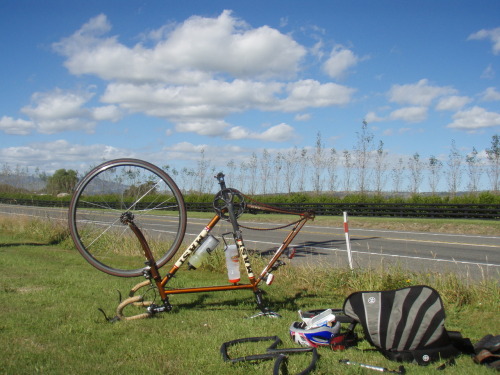
a bike


5. From a Soup blog called Tumble upon johl

a quirky, funny photo


a wolf


6. From the cartoonist, Stuart McMillen


7. From a Soup blog by ivanzero

harbinger of the coming season


a reflection photo


8. And from other miscellaneous sources

an animated gif


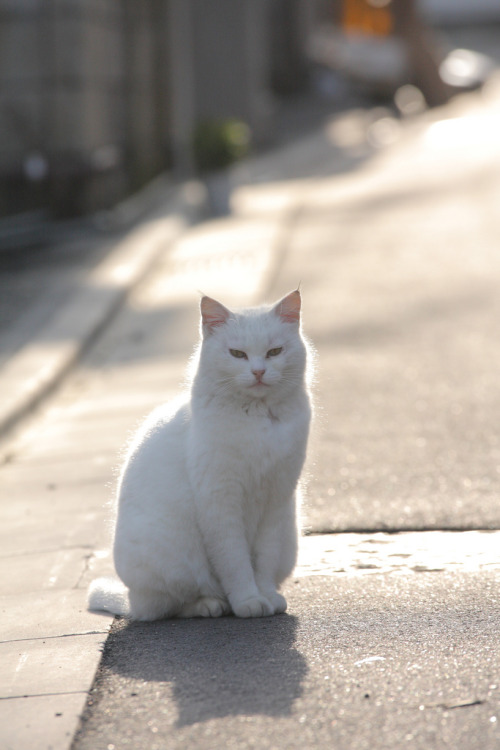
a hi-def cat photo


a landscape


a link to a youtube
"This is what happens when you tickle a Koala. "

a travel photo

this is on flickr and is by Xavier Fargas)