Showing posts with label cycling. Show all posts

Friday, July 23, 2010

Spen King

I noticed an obit the other day reporting that the designer of the Range Rover had died "of injuries sustained in a collision between his bicycle and a van." Although the death has been widely reported, its cause has remained vague. Reporters have contented themselves with repeating the passive-voice phrase I've just quoted and near variants: they say he died of "injuries that occurred during a cycling accident" or "after suffering complications following a cycling accident." None say how the crash occurred or who caused it. As Tom Vanderbilt and many bike bloggers tell us, reporters almost always describe crashes involving bikes and motor vehicles as if they simply happened of their own accord, without anyone bringing them about.

Still, about this particular crash there proved to be even fewer hard facts than usual. After spending a bit too much time on the search, at last I think I've got something. On June 9 the local paper reported that a man had been struck on the head and mortally injured in a collision with a van at an intersection in King's home town. The victim was unconscious when taken to the local hospital and soon after died. Although the reporter was unable to identify him, the description, location, and timing make it almost certain that the dead man was King.[1]

A guy named John Riley, writing to the discussion list called BentRider Online, adds this: "Apparently he [King] was riding a bike because an eye surgery precluded driving. Had a head-on collision with a van, but I can't find out any more about it." Riley then gives this quote: "The accident was a head-on between him on his bike (no helmet) and a delivery van last Tuesday, not far from his home. He had ridden to the ATM to get cash to pay his housekeeper. He cannot drive because of a detached retina operation a couple of weeks ago."[2]

King was in pretty good shape and quite active for an 85-year-old. An acquaintance of his said "If you're wondering why a man of 85 would be jumping on a bicycle, well then you didn't know Spen. He was a very fit, inquisitive, energetic engineer who refused to let the years slow him down.[3] Still, he had been forced to stop driving after an operation for a detached retina and one's reflexes at 85 are quite a bit slower than those of a younger man. It seems reasonable to conclude that his disabilities may, directly or indirectly, have brought about the crash, but, still, it would be good to know whether the driver of the van was speeding, turning a corner unsafely, using a mobile phone, or what.

If it seems ironic that the designer of the prototype of all SUVs was victim of a collision with a delivery van, it's really not, or not very much anyway. King didn't design the Land Rover as the glitzy monster of urban boulevards and suburban side streets. For him, it was a working vehicle for people who owned estates. Almost all the obits quote him as saying that vehicles like the Range Rover he created were "never intended as a status symbol but later incarnations of my design seem to be intended for that purpose." Some accounts say he called such status seekers "stupid."

Eventually, he came to regret having brought a gas-guzzler into the world, saying, in 2004, "I find it distressing that that the popularity of four-by-fours has had such a noticeable correlative effect on environmental damage."[4]

There is some irony, however, in the story of his death. It emerges in that fact that he had campaigned strenuously for improved forward driver vision. He pointed to numerous studies showing that pedestrians, bicyclists, and motorcyclists were at risk due to over-wide windshield posts and other obstructions of drivers' vision. One of the obits points out:
The danger was brought home to him when he stopped to let some pedestrians over a crossing. "I thought they were all clear; then, as I moved off, I found some more had followed behind them. They were hidden behind the screen pillar, and I had to jam the brakes on again." Other potential danger spots were junctions, roundabouts and right-hand bends. "Of course, if the driver moves his head he can see round the pillar. However, my observations and experience make me think drivers very often don't do this."
-- Safe Speed, SMIDSY (Sorry Mate, I Didn't See You)
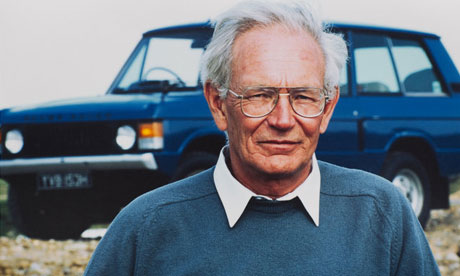
Far from envisioning the celeb-piloted Rodeo Drive SUVs,[5] in designing the Range Rover he simply wished to provide some creature comforts to the gloriously rugged Rover.[6] If you've seen Stephen Frears' movie, The Queen, you'll probably recall the sequence where Queen Elizabeth gets stuck while driving her Rover at Balmoral. Her use of the car is the one King had in mind when he designed it.


{King with his Range Rover; source: Guardian}


{Queen Elizabeth driving her Range Rover; as you can see this is by Tim Graham on Getty Images}

This map shows about where the van crashed into King.

View Cross Ln, New St, Price Rd in a larger map


{Range Rover prototype, 1970; source: Ann Lockley's blog}

---------

See also:

Charles Spencer King, wikipedia article

Father Of The Range Rover Dies At Age 85

Charles S. King, Range Rover Designer, Dies at 85, obit in the NY Times

Article by Spen King, The following is an extract of an article which appeared in: The Electronic Telegraph Tuesday 20 June 1995

Range Rover Creator Charles Spencer "Spen" King Dead at 85

father of Range Rover dies following bike accident

Range Rover Legend, Spen King, Dies after Bicycle Accident

First Range Rover designer dies

Charles Spencer King obituary in the Guardian

Charles Spencer King, British engineer who helped create Range Rover, dies at 85, obit in the Washington Post

Charles Spencer 'Spen' King (1925-2010) on the Classic and Performance Cars web site

Charles Spencer King, Creator of Range Rover, Dead at 85 on carguideweb.com

Spen King

Obituary: Farewell to Spen King, the man who made the Range Rover


Creator of Range Rover dies


----------

Notes:

[1] The report is in the Leaminton Courier and sister papers for June 9th. Here it is in full:
AN 85-year-old cyclist was found unconscious by ambulance crews after suffering serious head injuries in a crash with a van in Cubbington. The collision happened in Cross Lane, at the junction with New Street and Price Road near Cubbington Primary School at 3.20pm on Tuesday. An ambulance, a rapid response vehicle, and Warwickshire and Northamptonshire air ambulance attended the scene. A West Midlands ambulance service spokesman said:
On arrival crews found a bicycle and a van that had been in a collision. The cyclist, a man believed to be 85 years old, suffered serious head injuries and is believed to have been unconscious before the ambulance crews' arrival. The man received emergency treatment at the scene and was transferred by land ambulance to University Hospital, Coventry. The ambulance was met by a doctor who anaesthetised the patient, before continuing en route to the hospital for further emergency treatment. The hospital had been alerted to the arrival and his serious injuries. The van driver was not injured.
Police are appealing for witnesses to the accident, which took place near the school. Anyone who witnessed the collision is asked to contact PC Wayne Knight at the Greys Mallory Traffic base on 01926 415415. -- Elderly cyclist injured in crash with van in Cubbington
[2] Oddly, the link he provides with the quote does not lead back to it: http://www.autocar.co.uk/News/NewsArticle/Land%20Rover-Range%20Rover%20LRX/250721/

[3] Range Rover Creator Charles Spencer "Spen" King Dead at 85, British Automotive Legend Dies After Tragic Bicycle Accident, by Bill Baker

[4] Charles Spencer King obituary

[5] I got this from rangerovers.net:
Celebrity is a state of existential otherness, a kind of hyper-leverage in the world such that in any situation the celebrity has more traction, more weight to throw around, more altitude, a bigger nut, the best seat in the house. Such an advantaged state can also describe life behind the wheel of the Range Rover. All of this, it seems to me, presents a branding problem for Range Rover, articulated by no less than the man who invented it, Charles Spencer King. Mr. King, who died June 26, came to loathe the popularity of "Chelsea tractors" with wealthy urbanites—and he was in good company: several European cities have taken steps to ban SUVs from city streets. "Sadly, the 4x4 has become an acceptable alternative to Mercedes or BMW for the pompous, self-important driver," several obituaries noted that Mr. King told the Daily Mail in 2004. "To use them for the school run, or even in cities or towns at all, is completely stupid."
-- Range Rover: Still King of the Hill


[6] The is the rugged rover of post-war Britain.

These images come from an article, Fit for a Queen, which appeared in Land Rover in 2008.

Friday, July 16, 2010

not your usual race tactic

As I mentioned the other day, Joost Posthuma rode the Tour of Austria this year rather than the Tour de France. Österreich Rundfahrt runs only a week, while La Grande Boucle runs a full three. Joost's in training these days rather than racing so, after four years of riding the TdF, he gets to watch it on TV this year. In an interview held earlier this week — posted on his website — He says he's enjoying watching the race, an experience which he finds quite strange and very unlike riding in it. To him the images on the screen make the event seem remote and much less physically and mentally taxing than it is in real life. He gives as an example the bunch sprint that often comes at the end of flat stages. On screen it looks smooth and efficient, but in the pack it's frighteningly fast and chaotic. The speed is extremely high. Riders are tired and some so spaced-out that they can't concentrate as they should.

He said this the day before Mark Renshaw was ejected from the race for head butting Julian Dean. Both were trying to set up the run to the finish line for their teams' respective top sprinters, Mark Cavendish and Tyler Farrar. They and the other lead-out men had cranked up the speed of the peloton to over 40 miles per hour (70 kph). At this speed the tiniest mistake can cause a massive crash. Renshaw accelerated to pass Dean on his left and Dean put his elbow in front of Renshaw's to counteract the move. In most sprints Renshaw would then have countered by leaning into Dean with his shoulder. In this one, Renshaw believed he couldn't use his shoulder without bringing them both down so he bumped Dean's helmet with his own. He did this three times. This image, taken from video, shows one of these head butts.


{source: 3news.co.nz}

Here's a video of the event.


Jon Brand reports that "As Renshaw hit Dean, one fan shouted, 'Zizou, Zizou,' the nickname of former French soccer star Zinedine Zidane. Zidane was famously ejected for head-butting an Italian defender during the 2006 World Cup final in Germany." (As it happens, I did a blog post or two on Zidane back then.)

As in the Zizou incident, no one was injured by Renshaw's unusual tactic.

Interviewed afterward, Dean said he was flabbergasted to get bonked on the helmet. He supported the officials' decision to send Renshaw packing. Renshaw said when Dean hooked his elbow over his own he had no choice but to use his head in order to keep his position. He said, "the object was to hold my line and stay upright."

Most of the articles I've seen say that Renshaw did wrong. They say shoulder bumping and elbowing are permitted in sprint lead outs, but not butting. It's also generally seen as ok to push with the head, but, as one coach says, a sprinter will get in trouble for using his helmet like a hammer. Others say head butts are a legitimate tactic for maintaining position. A former racer is quoted as saying "I’ve been mixed up in bunch sprints where I have been the lead out man or I have been having to sprint myself and people have head butted me. I've done it back. I've even taken my hand off to fend people off me."

Here's a smattering of news accounts.

Mark Cavendish's team-mate Mark Renshaw disqualified

Head butting is part of the cycling game

Tour de France Stage 11 turns into 'gladiator arena'

Head Butts Mar Stage Finish at Tour de France

Dean says ejection a fair punishment for head-butting rival

----------

This photo, from Joost's website, shows him on the podium after he won the time trial in the Tour of Austria last week.

Thursday, July 08, 2010

Hot Town

Heat Wave

1. From New York City in 1944.


{August 1944: Columbus Circle during heat wave. Large Coca Cola sign and thermometer registering 100 degrees on top of building next to the Mayflower Hotel, New York. Photo by Marie Hansen for Life Magazine; source: Life archive}

2. New York's tenements in 1900.


{Summer 1900: Mulberry St. in New York; Free ice by Byron (Detroit Publishing Co.); source: Library of Congress}

Detail views of this image:


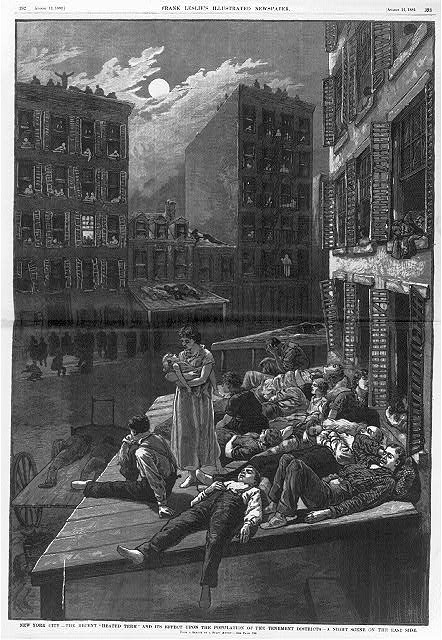
3. 1870s-'90s: Prints and drawings of residents of the New York tenements in the heat of summer from illustrated weeklies and other sources.


{August 12, 1882: New York City - The recent "heated term" and its effect upon the population of the tenement districts A night scene on the East Side / / from sketch by a staff artist. Frank Leslie's illustrated newspaper, Aug. 12, 1882, p. 393. Source: Library of Congress}


{August 1, 1885: The roof was a place to escape the heat of the summer night — "On The Roof of A Tenement House"; Harper's Weekly; source: Maggie Land Blanck's web page called New York City, Tenement Life}


{1899: Illustration from the book, The New Metropolis; source: Maggie Land Blanck's web page called New York City, Tenement Life}


{1878: Among the Tenement Houses During the Heated Term - Just Before Daybreak; Harpers Weekly; New York Public Library ID 809927; source: Maggie Land Blanck's web page called New York City, Tenement Life}

4. Summer sports: Robert Capa took this shot during the Tour de France in 1939.

{In the summer of 1939 Capa spent twenty days following the 2500 mile Tour de France. Capa followed the race on a motorbike riden by his friend. The resulting photographs were published in Match magazine. From Match magazine 27th July 1939 Tour De France. My source: fansinaflashbulb by erinbarnett}

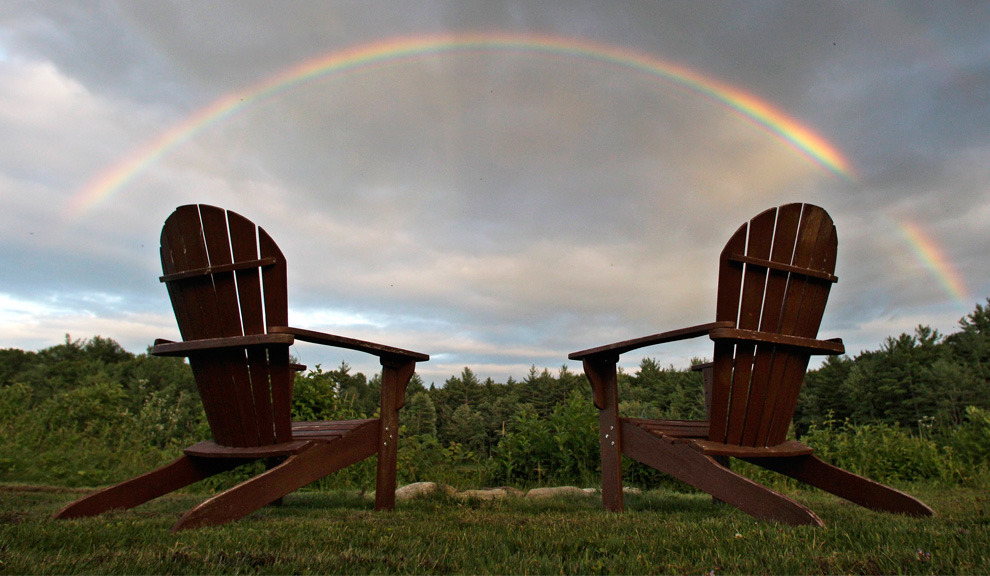
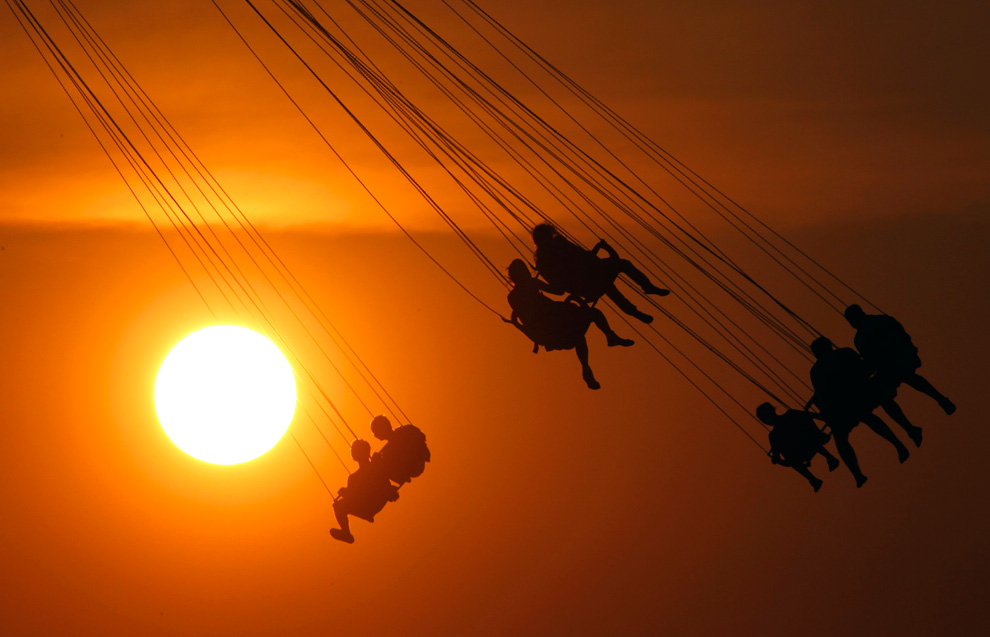
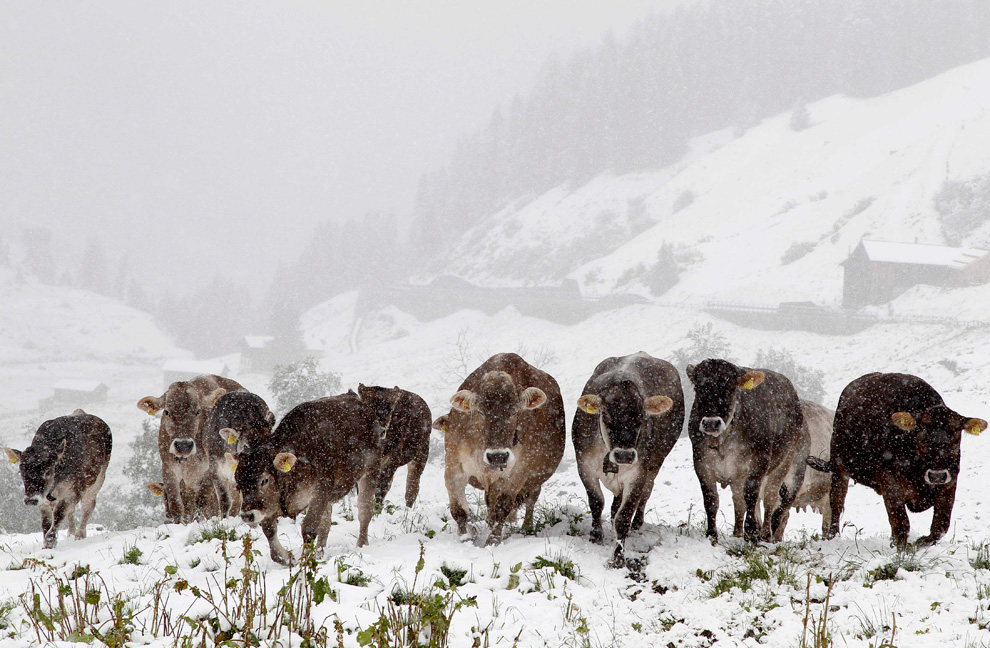
5. Some images from the ever excellent Big Picture on boston.com: Summer is here


{People cool off from the heat of the day under water sprayed from a fire engine on Independence Day in Philadelphia, Sunday, July 4, 2010. (AP Photo/Matt Rourke)}


{With two empty Adirondack chairs next to a fire pit, a rainbow stretches across the sky at Adams Pond in East Derry, New Hampshire on July 1, 2010. (AP Photo/Charles Krupa)}


{Youngsters enjoy a swing ride in an Athens amusement park at sunset in Greece on July 6, 2010. (REUTERS/Yannis Behrakis) }


{Cows graze on a snow covered pasture at Tschuggen above Davos, Switzerland on Sunday, June 20, 2010. One day before the astronomical beginning of summer the snow line in Switzerland dropped down to 1,500 meters. (AP Photo/Keystone/Arno Balzarini)}


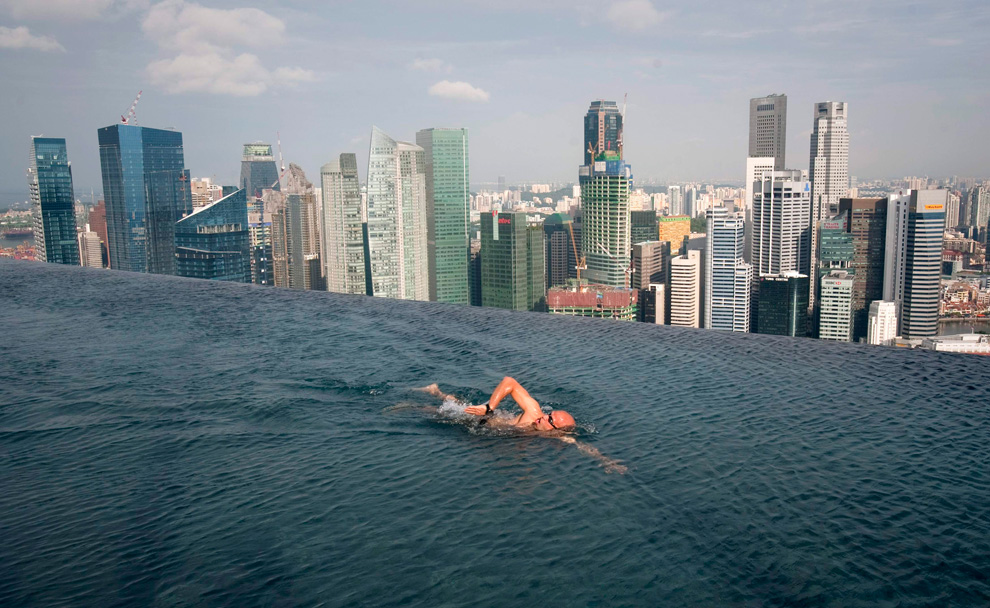
{A guest swims in the infinity pool of the Skypark that tops the Marina Bay Sands hotel towers in Singapore June 24, 2010.}

5. Some Lovin' from the Spoonful.

The Lovin' Spoonful — Summer in the City

Hot town, summer in the city
Back of my neck getting dirty and gritty
Been down, isn't it a pity
Doesn't seem to be a shadow in the city

All around, people looking half dead
Walking on the sidewalk, hotter than a match head

But at night it's a different world
Go out and find a girl
Come-on come-on and dance all night
Despite the heat it'll be alright

And babe, don't you know it's a pity
That the days can't be like the nights
In the summer, in the city

Cool town, evening in the city
Dressing so fine and looking so pretty
Cool cat, looking for a kitty
Gonna look in every corner of the city
Till I'm wheezing like a bus stop
Running up the stairs, gonna meet you on the rooftop

But at night it's a different world
Go out and find a girl
Come-on come-on and dance all night
Despite the heat it'll be alright

And babe, don't you know it's a pity
That the days can't be like the nights
In the summer, in the city

Hot town, summer in the city
Back of my neck getting dirty and gritty
Been down, isn't it a pity
Doesn't seem to be a shadow in the city

All around, people looking half dead
Walking on the sidewalk, hotter than a match head

But at night it's a different world
Go out and find a girl
Come-on come-on and dance all night
Despite the heat it'll be alright

And babe, don't you know it's a pity
That the days can't be like the nights
In the summer, in the city

Wednesday, March 24, 2010

Milan-San Remo

Milan-San Remo, the Spring classic bike race which bills itself as La Classicissima went off very well this year. At the line, Oscar Frere proved to have the right tactics and the best legs. He rides for the Rabobank squad and although the rider I follow most closely, Joost Posthuma, wasn't in this race, the result is a satisfying one. 'Tho it was the third time Oscar won, the announcers and the race cameras picked out other former winners and current favorites in the run up to the finish. I kept seeing the bright orange flash of his jersey behind or nearby the guys the photogs were watching. The replays showed both his skill in maneuvering himself into position leading up to the sprint and the enormous surge with which he pulled away from contenders.


Julian Dean's race diary blog tells a different story. Milan-San Remo is so very long and so very fast that — after a few hours of riding — racers who get shelled out the back have little hope of rejoining the front bunch. About half way through, Dean got caught up in a crash, was unable to reconnect, and lost so much time that he and another sufferer lost more than an hour on the lead group. He writes, in typical New Zealand idiom:
I was out the arse because I was going bad, now I had to keep going to the finish, hoping that at some point I might see someone coming from the finish to collect me after they finally realised I was MIA. But it didn't happen and I had to ride a miserable 100km to the finish with no fluids or food on one of the worst days I’ve had on the bike for as long as I can remember. . . .

Eventually, after almost 8 hours, I rolled into San Remo to the team bus feeling more than a little cheesed off and disillusioned as to the lack of consideration of the welfare the team has for its riders - especially for an athlete who’s struck a bad day and needs a little more support than they might need on regular occasions. What added to my frustration was that in my heart I knew I had done all I could to get back on top of my form after being crook and even though I couldn’t contribute much on this particular day, I still buried myself for the team.

Anyway that’s often what you get when you have a bad day. Unless you are running at the top of your game, professional sport can be very demoralizing and disheartening no matter how long you’ve been in it and how much stature you have. Everybody prefers to be with a winner....


{Dean at MSR on another day; source: his team's website}

A couple of days ago, a race page I follow called Cyclingnews did an article on an experience similar to Dean's from twenty-five years ago: Phinney and Kiefel recall 7-11's wild Milan-San Remo

At that time the American team, 7-Eleven, had just begun racing in Europe. They entered MSR hoping to put someone on the podium but expecting just to gain some valuable experience. Davis Phinney and Ron Kiefel were their two star riders, both successful in US races, and, eventually, in European ones as well. This day, March 16, 1985, was not to be Phinney's best. Beforehand he's given what he takes to be valuable advice to eat constantly in order to avoid running out of energy at the end — the race being so very long and hard. He fills his jersey pockets with the pannini that riders ate in those days and ate one after the other. For this, he's derided by one of the best racers of all time. As he tells it, "After about 60km Sean Kelly pulls up next to me while I'm stuffing my face. My gut is so full that my knees are banging into it while I'm pedalling. Kelly says, 'What are you doing? You're eating like a pig! You'll never make the finish like that'."

Then: "As we came into the little town before the Turchino [climb] started I was on the far right side, in the second row, and we're just flying along. There's a sharp left turn and the pack drifted a little bit wide to the point where I was pushed off the road. I went flying off the road, crashed into this chain fence separating the road from the sidewalk and dislocated my finger."

It was very cold and wet that day. Fellow team member Eric Heiden stopped to help Phinney and manages to pull the dislocated finger back to normal, but Phinney had lost steam. Heiden managed to get himself back in the race, but Phinney did not. He remembers: "Here I am at this big race, Milan-San Remo, off the back with three other knuckleheads, still riding with race numbers on. I'm dirty, wet, cold and hungry, because I have no food, and we're still a long way from San Remo. We realized that we're screwed."

Two of the four struggle on but Phinney and a Belgian rider decide to leave the course and see whether they can't hitch a ride to the finish on the nearby autostrada — a limited-access tollroad. They're stopped at the tollbooth and since neither knows the dialect which the tolltaker uses, they're near out of hope until the tolltaker finally figures out why these two bike riders are plaguing him and calls race headquarters. Phinney's team manager eventually sends a car for them. I'd love to see a photo of the two, dirty, cold, wet, hungry, dejected; standing by their bikes at the entrance to an Italian superhighway.


{Kiefel and Phinney at a warm and sunny race in Colorado a year or two before their MSR adventure; source: rbaction.net}

Friday, September 04, 2009

women awheel, 1896

Few of those now with us can recall the time when bicycles were far more prevalent than cars, SUVs, crossovers, pickups, and minivans, and when cycling was a valuable step toward the liberation of women from the confines of Victorian repression.

Looking for something else, I found an article on women bicyclists in 1896. It's from the Reivew of Reviews of that year. Here's the whole item:

CYCLING FOR WOMEN.

THERE is an article in the Nineteenth Century, by Dr. W. H. Fenton, entitled "A Medical View of Cycling for Ladies." Dr. Fenton — sensible man that he is — recognizes that, far from being dangerous to health, cycling has done more to improve the health of women than almost anything that has ever been invented:
Let it at once be said, an organically sound woman can cycle with as much impunity as a man. Thank heaven, we know now that this is not one more of the sexual problems of the day. Sex has nothing to do with it, beyond the adaptation of machine to dress and dress to machine. Women are capable of great physical improvement where the opportunity exists. Dress even now heavily handicaps them. How fatiguing, and dangerous were heavy petticoats and flowing skirts in cycling even a few years ago, the plucky pioneers alone can tell us.

DRESS WARMLY.

Inappropriate dress has a certain number of chills to account for. When fair practice has been made, and the 'hot stage,' so to speak, is over, the feet, ankles, neck and arms get very cold when working up against wind. Gaiters or spats, high collars, close-fitting sleeves meet this difficulty. Summer or winter it is far safer to wear warm absorbent underclothing and avoid cotton.

The diseases of women take a front place in our social life; but if looked into, 90 per cent, of them are functional ailments, begotten of ennui and lack of opportunity of some means of working off their superfluous, muscular, nervous, and organic energy. The effect of cycling, within the physical capacity of a woman, acts like a charm for gout, rheumatism and indigestion. Sleeplessness, so-called 'nerves,' and all those petty miseries for which the 'liver' is so often made the scapegoat, disappear in the most extraordinary way with the fresh air inhaled, and with the tissue destruction and reconstruction effected by exercise and exhilaration.

A FOE TO INVALIDISM*.

The large abdominal muscles do little in riding down hill or on level ground; but in hill-climbing great strain is thrown upon them. There are many reasons why women should not overtax this group. Already thousands of women, qualifying for general invalidism, have been rescued by cycling. Women are very subject to varicose veins in the legs. Cycling often rids them of this trouble. A girl who has to stand for hours and hours serving behind a counter gets relief untold from an evening spin on her 'bike.' Her circulation has been improved, and the aches and pains which would have shortly made an old woman of her have gone, and a sense of exhilaration and relief has taken their place.


{Lady cyclists at the cycle track, Grand Hall, Olympia, Kensington, London, March 1896. Notice that the ladies are not conventionally wasp-waisted; presumably it was ok not to wear those horrendous whale-bone corsets if you were a bike racer. Source: Mlle Serpolette at Olympia, users.senet.com.au}


{Society ladies cycling in Hyde Park, London, 1896. From "Vanity Fair" (London, June 1896). These women and the ones in the illustration that follows definitely are confined in the tight corsets of the time. Source: Heritage Images}


{Fashions for Cycling, The Ladies Standard Magazine, Vol. XVII, No. 4 (June 1897). You might think that the artist made these women appear to have smaller waists than is anatomically possible, but wikipedia says "wasp waist measurements of 18 to 16 inches were not uncommon and were often striven for as the reigning standard of feminine beauty in the period." Source: Library of Congress}


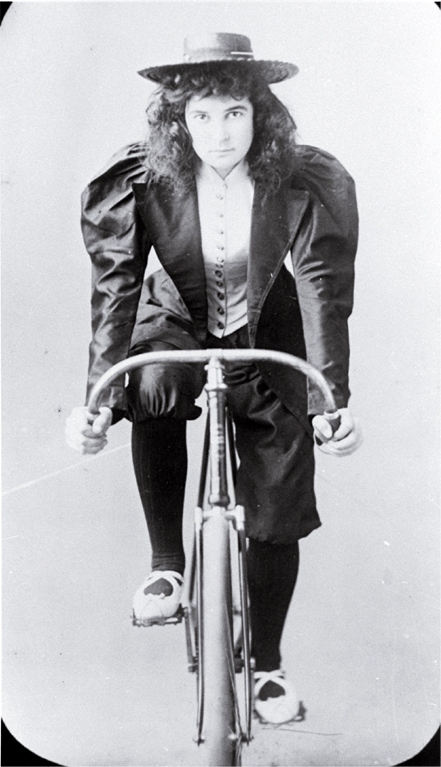
{Lady racing cyclist, Lancaster Park, Christchurch [ca. 1896]; source: Christ Church City Libraries}


{Women's cycling attire in 1896; source: cyclingfunmontreal.blogspot.com}


This issue of The Review of reviews contains a few other articles on the pervasiveness and benefits of cycling, including:
1. The World's Sporting Impulse, by Charles D. Lanier, It would be weak to heap bicycle statistics on the heads of readers who have each day a procession of evidence on every smoothly paved street that the world is awheel. . . . Nowadays the world may easily be divided into people who wheel and people who do not, and the former class seem to hold the balance of power, possessing as they do the solidarity due to this single enthusiasm. The bicycle has become a power in economics and politics. . . .


2. THE CONQUERING "CYCLE."

SARAH A. TOOLEY gives in The Woman at Home a pleasing sketch of Princess Maud of Wales, and does justice to the royal maiden's independence of character and love of fun. Incidental evidence is borne to the way in which the cycle is ousting the horse in the circles which have most influence on fashion:
Knowing how devoted Princess Maud is to animals, and that she has always been the best equestrienne in the family, her friends have felt some surprise at the enthusiasm with which she has taken to the bicycle. At one time she rode her saddle horse daily, but now that beautiful creature sighs in vain for his fair and fearless rider, for the horse of wheels has quite superseded him in her favor. A characteristic reason was given for this change by a man on the estate. 'Yes,' he said to me, 'the Princesses don't often come out on horseback now — you see they finds the bicycles so much handier.'

It would be impossible to find a more graceful and expert rider of the bicycle than Princess Maud. She sits perfectly upright, without the slightest approach to the stoop which so many cyclists seem unable to avoid, and her feet work the pedals without any apparent effort. Her cycling dress is of black or navy blue, and consists of a short, narrow, serge skirt, tight fitting jacket and vest, and a small hat turned up at the sides, or a toque to match her dress. She appears to find this costume easy and comfortable and has never adopted any approach to the rational dress. Mud has no terrors for her, for I have had the pleasure of seeing her spinning along the Sandringham roads just after a thaw, when one hardly knew where to walk to avoid the slush. She is a very rapid rider, and is generally seen well in advance of her sister, the Princess Victoria, who, though an equally graceful rider, is less adventurous. When the Princesses are out cycling it will generally be found that their mother's pony carriage is not far away.
At Mentmore, too, where one might have thought the cult of St. Ladas would cast out any foreign god, we learn from Fred. Dolman's paper in Cassell's Family Magazine, the bicycle has taken the place of the pony in the affections of Lord Rosebery's two sons.


Note:
*This topic has interested me since, some years ago, I was helping my daughter review notes for an American History exam and read how invalidism was an indirect product of the economic prosperity that the first few generations of US citizens enjoyed. Her text book said the expansion of the middle class permitted a growing specialization of the sexes, and women, in leaving the workplace and taking responsibility for managing servants in the home, would — often enough — develop this invalidism. This evolutionary change was accompanied by the movement to distinguish between morally pure and strong womenfolk and morally corrupt and weak men — the dressing of women in white clothing and placing them on pedestals. Some sources on invalidism:

Saturday, July 25, 2009

inside view of the Tour de France

This is the last day of this year's edition of the Tour de France. By tradition there's no real competition until the very end on the boulevards of Paris. While I'm writing, the riders are rolling through the countryside conversing casually with each other. In pre-race interviews they say the race was unusually tactical and hard, building from a relatively undramatic beginning to a major conflict in yesterday's stage ending with the fierce climb of Mont Ventoux. They also point out that the number and enthusiasm of spectators was astounding this year, culminating with huge crowds of joyful people on Ventoux. And they point out that drug testing seems finally have succeeded in eliminating illegal performance-enhancing substances: a huge amount of controls and no detections.

I'm confident that one racer whose career I've been following off and on for the past few years hasn't used any such substances. He's a personable and modest guy of relatively modest achievements who's Dutch born riding for a Dutch team: Joost Posthuma.

This photo, taken last year, shows him in less garish clothing than his blue and orange Rabo kit:

{source: dailypeloton}


There are short biographies and early photos of him on his own web page and at this Dutch site: http://www.owc-oldenzaal.nl/?RubriekID=2399

His personal web site also has an extensive photo gallery.

Quite a few riders have personal blogs and a growing number of them tweet and some regularly blog.

This year, Joost has been doing daily interviews from his mobile phone while on the massage table each evening.

Here are some highlights from his calls.

His work day can seem surprisingly mundane. He loves his morning coffee, gets cranky when he's delayed at an airport and looks forward to a pre-dinner shower at the end of a short flight; he puts in his day's work and relaxes in the evening by reading a book, watching sports on TV, catching up with friends and family on his mobile phone, and accessing the Internet with his notebook.

Although he's won some of the less-well-known races, here at the Tour de France he's a support rider, helping to give the team's leading riders a chance at winning stages and placing highly in the overall classification. He's looked out for opportunities to get in breaks during the flat stages but missed the deciding break of the day until yesterday's great stage to Mont Ventoux. This 16-man break stayed away from the third kilometer until nearly the last of this 167 k stage. He worried that the peloton would catch the group and increased his pace to keep them off.

This photo shows him at peak effort as lead rider on the lower slopes of Mont Ventoux:

{source: cyclingnews}


Not a mountain specialist, Joost's effort helped give his teammate, Juan Garate, the wherwithal to win the stage at the top of the mountain.


{Garate pulling away to win;source: cyclingnews. Click here for a thumbnail page of cyclingnews images from this stage.}


Most of this tour's 21 stages, he helped protect the leaders and ferried food and drink from the cars at rear back to team members in the peloton. Although the team's managers were growing increasingly upset with the team's performance until it's success yesterday, Joost never felt that he'd performed poorly and reports times he won praise for doing good work from both his fellow team members and the team's managers.

An even-tempered and friendly kind of guy, he's not prone to make controversial statements. He can be pretty funny as for example in his comments on the Tour's radio-free day. Calling the stage a race without ears, he said race organizers, in seeking ways to back off from technological advances, should require riders to go back to using toeclips and hairnets (which he calls "sausage hats").

Perhaps it's odd that Joost doesn't say much about performance-enhancing drugs. Along with other team members, he was recently called to to give information as evidence is accumulated against a former member of his team. He only just mentions that and his other comments deal with the extensive test program of the Tour, which he takes in stride.

In response to the interviewer's question, he says he's never broken a bone, though he's had his share of injuries. The topic arises because, as usually happens, a couple of riders have crashed and been forced to abandon because of bone breaks. He's strained his knee but has avoided scrapes and bruises as well.

He appreciates encouragement he's received from the many Dutch fans who line the roads but didn't like being thumped on the back by an over-enthusiastic (and probably over-beered) Netherlander on one mountain stage.

He's content with the cold and wet as well as the hot and dry weather they've encountered and didn't complain about the winds of Provence which raged yesterday.

He looks forward to visits with his parents and other relatives, and with his girl friend of course, when they're able to attend stages. He looks forward to getting back to his garden at home and being reunited with his dog.

Friends and family members write in the "guestbook" on his website to give words of encouragement during the unsuccessful stages of this year's Tour and congratulations on his success yesterday. One couple say, roughly: "Hey beautiful mountain goat. We've been watching this afternoon's ride you with awe and admiration. We congratulate you, on the team's stage victory, and your own performance 1.56 behind the winner on the Mont Ventoux." A woman admirer writes: "Congratulations on the victory of Mont Ventoux. You rode very strongly today. Echt Klasse! Yesterday night I rode back from the Tour along with your parents who were sitting in our bus. I had a nice week's holiday at the Tour."


Notes:
--------------------
Some previous posts about Joost:

---------------------
Some examples of rider blogs:


----------------
Joost on "ears:"
No oortjes - ears: "I just got a phone voice mail from my mother. She is angry and disappointed in the [radio-free] stage today. She's a major cycle racing fan, and is upset at how tame the racing is right now. Today there was no real competition.
------------------------

Joost on radio-free day:

The interviewer asks Joost whether there was tacit agreement to take the day easy in protest. Joost says nothing concerted, but a kind of consensus to ride easy. He says, "It is ridiculous that we possess modern communications and can't use them." What's next? he says, will tomorrow they require the riders to used toeclips and wear sausage helmets. "Back in time."


{toeclip pedals; source: wikipedia}


{toeclip cleats; source: wikipedia}


{"sausage helmet"; aka hairnet or vegetable basket; source: labicletta}


{Laurent Fignon with toeclips; source: grahamwatson}


{Fignon with "sausage helmet"; source: pezcyclingnews}


------------

Drug testing:
According to Pat McQuaid, the head of the International Cycling Union, the Tour de France will be the most rigorously tested sports event in history. There will be about 520 doping tests, and several of the 180 riders are already in the cross-hairs even before the three-week showcase even begins. {source}


----------------

This shows Laurens ten Dam scraped and bruised. He fell on a fast descent and posted this photo of himself afterward.


{photo by Laurens ten Dam posted on Twitter}

Thursday, April 02, 2009

3 Days of De Panne: Joost takes 2nd

Joost Posthuma took second place overall in the mid-week Belgian bike race, Driedaagse De Panne. It was an amazing achievement for him. The riders who took the first three stages are among the best in the world. He arrived well to the front in the first stage, but lost almost a minute in the second. In the third stage this morning he lost more time when he got caught in a crash near the finish. However, Joost is a time trial specialist and he was able to make up what he'd lost in the final TT stage this afternoon. At the end, his position in the general classification was only 19 seconds behind the winner, Frederik Willems.

{Joost is on the right; his team mate,
Tom Leezer, took third; photo from his team}

There's a good interview with him (in Dutch) on the team's home page: Na de 2e plaats in 2007 en de 1e in 2008 wordt Joost Posthuma dit jaar 2e in de 3Daagse De Panne.. He says he's happy to have finished second today after having placed first last year and second the year before. The competition was greater than ever before and, although Willems edged him out, he beat Manuel Quinziato this year just as he did last year. (Quinziato ended up in fourth place.) Asked whether he's a threat at the most famous of the spring classics this weekend (the Ronde van Vlaanderen), he said the favorites are in great form and he sees himself a notch below them; still, anything can happen in a major race like that.

Cycling News has a wrap-up in English: 33rd KBC-Driedaagse De Panne-Koksijde

Wednesday, April 01, 2009

bike race in Belgium

The northern classics are now fully underway in the Belgian world of pro cycling as the Three Days of De Panne enters its second day. My favorite rider, Rabobankk's Joost Posthuma is defending his win last year, but the competition is fierce.

He good-naturedly complains that a late-race break by Frederik Willems was aided by two of the media-motorcycles that left too small a gap enabling him to draft as he jumped away. Filippo Pozzato , whom Joost and everyone else calls Pippo, was able to bridge up to Willems and the two of them managed to keep a winning margin over a chase group that included Joost and more than a couple dozen others.

You can read race reports here, here, and here or on the official site (Dutch and French only) here.

Cycling news has the first page of photos.

Joost writes on his blog that he'd hoped to get on the podium yesterday, but the pace was outrageously too quick. He's OK with his current position in the general classification, feels his form is excellent, and still has hopes for a top-three finish tomorrow.


This photo, from his web site, shows Joost in the leaders jersey at the last race he won -- the Ruta del Sol.

Wednesday, March 18, 2009

why not?

I just finished reading Tom Vanderbilt's book, Traffic, which details causes and results of Americans' passion for motor cars. He summarizes study after study on the difficulties to which this passion leads and again and again tells the reader how we lose out by preferencing cars and pickups over cycling, walking, and cruising on public transit.

He loves paradox and his subject yields up many, and partly for this reason I found it poignant that my burg, Washington DC, a car-mad city, was host recently to a National Bike Summit at which Andreas Røhl, the head of Copenhagen’s Bicycle Office, detailed how very different things could be.

It's easy to think, and say, dismissively, "well Copenhagen, what have we in common with that place?" But it takes little research to uncover some big time commonalities. Both C and DC are capitol cities, both have about the same population size, their climates are similar (C's is a bit colder and wetter and, being farther north, its winter nights are longer). Both have wealthy, mostly liberal and forward thinking, clusters of residents. From a cyclist's point of view, DC has the advantage in its compactness, but C is a bit flatter. C, overall, is safer, but DC's crime is largely located outside the areas where its upscale residents live and work.

So... Why is DC's bike policy so lame? (Not nonexistent, I'm happy to say, but truly lame all the same.)

Here's what Copenhagen can brag about.

First, a write up of Røhl's presentation from the Examiner newspaper: Best of Copenhagen bike manager's address to National Bike Summit attendees

Second, a compelling photo of bikes parked at a transit station in Copenhagen:
{Bikes in Copenhagen, click to view full size; source: procsilas' photostream on flickr}

Third, a photoblog of cycling-chic in Copenhagen: Copenhagen Cycle Chic - Streetstyle and Bike Advocacy in High Heels

Fourth, a Copenhagen bike advocacy blog: Copenhagenize

Fifth, here are extracts from the roundup on The Wash Cycle, DC's advocacy blog:
National Bike Summit Summary

I went to several free components of the National Bike Summit, but I had work to do that week so I couldn't attend much. Luckily many other people have twitblogged about it on the interspace. First Adam Voiland wrote about the Tuesday night presentation by Andreas Røhl, the head of Copenhagen’s Bicycle Office, and I watched a similar presentation by Rohl on Wednesday night. Some highlights we both gleaned.
There are about 500,000 bikes in Copenhagen. 25% of people now have cargo bikes and that is requiring them to build unique facilities to handle them. 60% of voters own bikes.

As of 2003, there's more bike traffic in downtown that automobile traffic, meanwhile safety has increased (there were 50% fewer deaths in 2003 than in 1995). The more cyclists there are the fewer accidents they have, because, he theorizes, people get used to it. They still have less than half as many cyclist as they did in 1950.

He listed the usual reasons to encourage biking: less congestion, a better environment, better health, improvement of urban life, bike changes can be implemented in a single election cycle, they're cheap and have visible effects, they reduce CO2 footprint.

They've calculate that every mile biked gives $1 in health benefits. “A 10 percent increase in cycling would save $10 million per year”

They've been instituting a Green Wave (which means retiming lights for "cyclist speed" on certain streets. This reduces travel time by 15% and makes cycling more pleasant since cyclists use less energy). They're also pulling the ASL line back for motorists, so that cyclists (who are usually placed to the right, in their own lane) are clearly visible and ahead of the motorists. This reduces the chances for right-turning cars to hit straight-going cyclists. They're also creating carless streets (which allow buses, cyclists and pedestrians).

Bike parking at train stations is a serious problem, because the train stations are handled by the National government.

The average bike trip is around four miles.

“Nobody in Copenhagen sees themselves as a 'cyclist.'"

"In the last 15 years the distance traveled on bicycle has risen by 15 percent.”
GGW found this highlight
One of Røhl's many interesting statistics came from a biennial survey of Copenhagen cyclists. When asked for the primary reason why they bicycle, a combined 61 percent of respondents said it was either because cycling was easy and fast or because it was the most convenient mode of transportation. 19 percent cited exercise, 6 percent pointed to financial reasons and a paltry 1 percent were motivated by environmental concerns.
Røhl's conclusion was that, in order for cycling to become a mainstream transportation option, it has to be promoted and planned for based primarily on its convenience.
For more on Copenhagen you can check out presentation here, here and here. And for full coverage of Røhl's talk go to bikeportland.


Additional Links:

Cycling in Copenhagen

Copenhagen, City of Cyclists (pdf)

Livable Copenhagen: The Design of a Bicycle City (pdf)


More Copenhagen cycling photos:


{Rush hour in Copenhagen; source: Photo: Mikael Colville-Andersen / Copenhagen Cycle Chic.com via LA times}


{Waiting patiently at an intersection; lights are frequently timed to facilitate bike flow rather than auto flow; source: Photo: Mikael Colville-Andersen / Copenhagen Cycle Chic.com via urbanvelo.org}


{highly functional three-wheelers are popular; source: Photo: Mikael Colville-Andersen / Copenhagen Cycle Chic.com via velorution.biz}


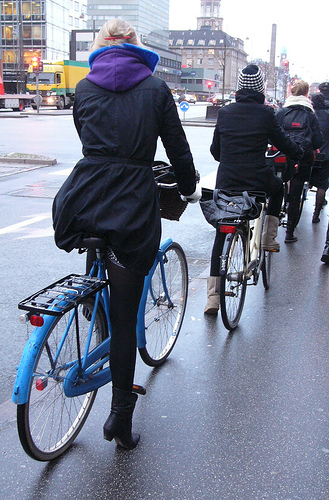
{High-heel cycle chic; source Photo: Mikael Colville-Andersen / Copenhagen Cycle Chic.com via momentumplanet.ca}


{Winter cyclist; source: Photo: Mikael Colville-Andersen / Copenhagen Cycle Chic.com}


'
{More winter cyclists; source: sfucity.com}


Comparing DC and Copenhagen:

Copenhagen has a population of 530,000 residents. It occupies 175 sq. mi. and is located on 12.58 degrees longitude, and 55.67 latitude. Washington, D.C. has a population of 570,900 residents. It occupies 68 sq. mi. and is located on -75.02 degrees longitude, and 38.82 latitude. Both have copious land set aside for parks. Both are national capitals. Both have moderate climates (although Copenhagen is colder and wetter). Washington has potential advantages of smaller area and greater population density. However, it has a lower per-capita standard of living and, of course, lacks commitment to cycling.