Showing posts with label marion post wolcott. Show all posts

Sunday, March 13, 2011

make me a pallet


Mississippi John Hurt, Make Me a Pallet on Your Floor
I've been listening to this over and over. Like good poetry it gains from repeated hearings. As others have pointed out, this is not mean blues, it's graceful, subtle, and sweet. The music is more complex than at first it seems. The voice is whiskey mellow and the phrasing is relaxed rather than intense.

Although this recording is an old friend, it hasn't lost any of its appeal through familiarity. I first heard John Hurt sing it back in 1964 when a bunch of us drove to Newport for the Blues Festival. With crowds of other happy people we slept on the beach, ate hot dogs, and soaked up music. As it happens you can find me in a photo of the audience listing to John Hurt that memorable time. The image appears on the sleeves of the LP record set that Vanguard issued some months later and it looks like this.

I'm located at about 11 o'clock next to my brother, by two college classmates, and behind my best friend and suitemate.


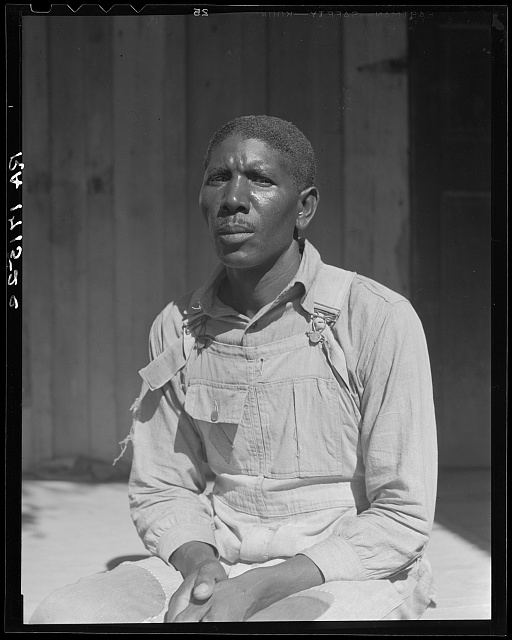
Mississippi John Hurt had a face that showed his soft-spoken gentleness and dignified, poised bearing. To me it also showed his resilience, something of the hardships he'd endured, and the patient endurance often seen in photos that show sharecroppers of his generation.

{image source: mleddy.blogspot.com}


{source: Ordinary finds}


{source: delta-slider.blogspot.com}

He was a field hand, later a share-cropper in a tiny hamlet called Avalon, Mississippi. Hardly anything remains of Avalon today. There had to be a country store because, with just a mule-drawn wagon or their own feet for transportation, most share-croppers couldn't survive without one, and the remains of that store can still be found in Avalon. There's hardly anything else — a few houses plus his old home, now the Mississippi John Hurt Museum which looks like this.

{museum: msjohnhurtmuseum.com}

Like most institutions in the Jim-Crow South, farming on shares was exploitive, but, within that harsh environment, it was also a repository of many rural virtues. Share-croppers could easily move their few possessions from one shack to another, seeking better land, better land-owners, better contracts regarding the provisions needed before planting and the division of proceeds after the crop was in. The work required families to work together, each member except the very youngest taking part in running their borrowed bit of farmstead. Having little or no money they bartered and, in hard times, tended to give one another unselfish communal support.

There were many men and women who grew up with memories of rich black soil warming their bare feet and hot sunshine making intense shadows in the crop rows as they hoed out weeds or picked off weevils. And many of them felt privileged to have lived through that time despite the recurrent periods of suffering they were forced to endure.[1] Hurt himself turned down opportunities to leave saying he "just never wanted to get away from home."[2] Though hours were long, the life was not one of unrelenting work. When very young, Hurt found time to teach himself to play a borrowed guitar and later developed his skill while doing music for Saturday night dances near home. Once "discovered" and recorded, he spent time in cities and festivals like the one I attended, but always returned home and, at the end of his life, died in Avalon as he had long lived there.

The lyrics to Make Me a Pallet give you no sense of the art he brings to their expression. The story is fairly routine in the country blues genre — a man and woman together, each seeking to hide from a jealous lover — but there's nothing salacious in Hurt's treatment of the theme. He asks for comfort not ecstasy. He's tired and will be happy to be bedded down low, warm and safe, away from cold sleet and snow. He wants to keep close, to be kept close.

Hurt uses the song's broad vowel sounds to express a longing for a temporary refuge. He makes wonderful use of its long "o" sounds — low, door, and floor, along with more, snow, and go. The repeated sounds, words, and phrases subtly alter with each iteration. In its many variations, the word me attains something special that I find difficult to express, particularly when held, as they are in the last two lines of the chorus.
Make Me A Pallet On Your Floor

Mississippi John Hurt

Make me down a pallet on your floor
Make me down
Make me a pallet down soft and low
Make me a pallet on your floor

Up the country forty miles or more
I'm goin up the country while there's cold sleet and snow
No telling how much further I may go

Just make me down
Make me down
Make me a pallet down soft and low
Make me a pallet on your floor

Well, sleeping, my back and shoulders tired
The way I'm sleeping my back and shoulders tired
Gonna turn over and try it on the side

Oh make me down
Make me down
Make me a pallet down soft and low
Make me a pallet on your floor

Don't you let my good girl catch you here
Don't let my good girl catch you here
Oh she might shoot you, like to cut and starve you too
No tellin what she might do

Yes make me down
Make me down
Make me a pallet down soft and low
Make me a pallet on your floor

Make it baby close behind your door
Make me a pallet close behind your door
Make it where your good man'll never go

Oh make me down
Make me down
Make me a pallet on your floor
-----------

Here are some photos that Dorothea Lange and Marion Post Wolcott took for the Farm Security Administration between 1936 and 1939. All come from collections in the Prints and Photos Division of the Library of Congress.


{Mississippi Delta Negro children by Dorothea Lange, 1936 July}


{Sharecropper's cabin and sharecropper's wife, ten miles south of Jackson, Mississippi, by Dorothea Lange, 1937 June}


{Negro sharecropper and wife. Mississippi. They have no tools, stock, equipment, or garden. By Dorothea Lange, 1937 June-July}


{Feet of Negro cotton hoer near Clarksdale, Mississippi, by Dorothea Lange, 1937 June}


{Negroes fishing in creek near cotton plantations outside Belzoni, Mississippi, by Marion Post Wolcott, 1939 Oct}

-------------

Notes:

[1] I've done a number of blog posts on aspects of share-cropping, including these: [2] The quote is given in the wikipedia article on MJH. It is taken from Lawrence Cohen's essay accompaying Avalon Blues: The Complete 1928 Okeh Recordings. (Columbia/Legacy, CD, 1996)

Thursday, October 14, 2010

coal miner's wife, 1938

On her first shoot for the FSA in September, 1938, Marion Post Wolcott went to Marine, West Virginia, which exists now only as a few houses on Tunnel Hill Road by County Road 7, a couple of miles outside a tiny place called Davy. There, living in abandoned houses and an old store, lived the families of miners who could find no work. And there, Wolcott made this memorable image.

{Wolcott's caption: "Wife of unemployed coal miner, suffering from T.B., living in old company store. Abandoned mining town of Marine, West Virginia." 1938, September. Source: Farm Security Administration - Office of War Information Photograph Collection at the Library of Congress}

The photo has much in common with ones taken by other FSA photographers, particularly Dorothea Lang. FSA collections have quite a few images of young mothers on the porches of their dilapidated rural homes. Even the somewhat surprising smile and engaging facial expression are not particularly unusual. The FSA photographers were pleasantly surprised to find that poverty did not always grind down its victims. They encountered people whose sense of oppression did not keep them from cooperating among themselves and whose poverty did not remove all hope for betterment; people who showed themselves able to experience moments of contentment, even joy.[1]

However, this photo succeeds not just for showing a refusal to give in to despair, but also for its overtones of sensuality, even glamor. As other women photographers were able to do, Wolcott has overcome the subject's resistance to being made an object of pity and there's an evident rapport between the person behind the camera and the one in front of it. Wolcott has given the woman a pose that reminds one (reminds me anyway) of provocative poses used in fashion photography and, by having her lean forward, has brought out the subject's sensuality, even eroticism.

It's reasonably possible that the woman was, as the image makes it seem, unconscious of her sexual appeal. It seems to me that she's not trying to appear sexy and that her flimsy dress is open at top not for allure but because she's a nursing mother and because it's a hot day. Other photos that Wolcott took at this time, shown below, support this conjecture. The first of them shows that the youngest of her five children and own mother were close by when Wolcott made the woman's portrait. The third, taken inside with flash, suggests that the open-top dress was a convenience for nursing. The second photo gives an indication of the diseases which afflict her. Wolcott took another photo during this session showing the woman holding her fist to her mouth during a tuberculosis fit of coughing.

Years later, Wolcott recalled her subject and the image she made.
This woman had TB. I think she was living in an abandoned store. It was in West Virginia, down near Welch, on that first trip I made for Roy. I can see the road in. I can see her leaning over that railing talking to me. There may have been four or five families living in that store. They were all piled together. She's pretty erotic, isn't she? I probably admired that. I knew immediately I wanted to shoot her. She was so beaten down by life and yet there was all this sexuality in her, not just sexuality but sensuality. I talked to her for a while and then I went on. But I knew I had it. -- quoted in Looking for the light: the hidden life and art of Marion Post Wolcott by Paul Hendrickson (Knopf, 1992)
You can see the preparation for such a high level of creative portraiture in Wolcott's upbringing and previous experience. She was daughter of a highly conventional father and a decidedly unconventional mother. Raised in affluent conditions, she was sent to a progressive boarding school when her parents divorced and later chose to spend her time much more with her bohemian mother in a tiny Greenwich Village flat than at her stuffy father's suburban home. She completed her formal education at the New School for Social Research and NYU and spent a couple of years studying dance in Paris and Vienna. In these environments she mixed with artists, poets, and students; with a radical theater group and with women who struggled to achieve social independence and creative freedom.

Returning to America she tried and quickly abandoned teaching as a career and took up photography when a close friend of her sister's saw that she had a talent for the craft. She was able to find work as a photo-journalist but didn't like being assigned to cover fashion and do "ladies stories."[1] With recommendations from New York photographer friends, she was, in 1938, able to land a position with the FSA.

She liked the government work and appreciated the creative freedom she was given in carrying it out. She also liked being part of a collective effort to expose the hard lives endured by Depression-era American families and to show the benefits of New Deal efforts to make things better for them.

Here are three other photos from Wolcott's visit with the woman and her family.


{Mother, wife and child of unemployed coal miner, Marine, West Virginia, 1938 Sept.; source: Farm Security Administration - Office of War Information Photograph Collection, Library of Congress}


{Wife and two children of unemployed mine worker. She has TB and syphilis. They are one of five families living in old abandoned company store in abandoned mining community of Marine, West Virginia, 1938 Sept.; source: Farm Security Administration - Office of War Information Photograph Collection, Library of Congress}


{Wife and two children of coal miner. She is sick, has five other children. Marine, West Virginia, 1938 Sept.; source: Farm Security Administration - Office of War Information Photograph Collection, Library of Congress}

----------

This shows four of the woman's five children. Wolcott rejected this one by punching a hole in the negative.


{Untitled reject; source: Farm Security Administration - Office of War Information Photograph Collection, Library of Congress}

----------

This shot shows what there was to see of the hamlet of Marine at that time.

{Carrying water to one of the houses in abandoned mining community, Marine, West Virginia, 1938 Sept.; source: Farm Security Administration - Office of War Information Photograph Collection, Library of Congress}

-----------

This is a satellite view of Marine today.

View Larger Map

This shows the nearest village, Davy (A), and Marine (B).

View Larger Map

----------

Here's another fine portrait by Wolcott. Taken two years later, this one is somewhat less alluring.

{Mountain woman by her home up Stinking Creek, Pine Mountain, Kentucky, 1940 Aug.; source: Farm Security Administration - Office of War Information Photograph Collection, Library of Congress}

-----------

My interpretation of Wolcott's photo of the unemployed miner's wife is little different from others I've read with the exception of one over-the-top Marxist-feminist interpretation by Jacqueline Ellis, an associate professor at New Jersey City University. In a book called Silent witnesses: representations of working-class women in the United States, she says the FSA was set up in order to reassure middle-class Americans that the working classes were harmless, that its photographers were required to toe the line in supporting a conservative political perspective, and that its output was a collection of photographs which reflected "traditionally democratic and idealistic American values" and which "often excluded economically and socially marginalized subjects from official representation." Wolcott did not address these assertions directly, but she did contradict them in an oral history exchange conducted in 1965.[3]

Having attacked FSA, Ellis makes some pretty wild claims for Wolcott's "miner's wife" photo:
The photograph was a manifestation of Post Wolcott's feminist impulses. The woman is positioned at the center of the image where her body symbolically dominates the front of the house which as the title states, is owned by the mining company. This emphasis is compounded by the way the wooden rail reframes the woman's body around her exposed breasts and her hip. From this construction, her figure seems to counteract the economic situation that has defined her material circumstances. According to this perspective, Post Wolcott has portrayed the radical power of female sexuality in dialectic opposition to the oppressive force of industrialized capitalism which, in contrast, is logically defined as male.
This is just a bit more than Wolcott herself would claim for the photo and her experience with FSA. In the oral history interview she expressed pride at having served with FSA, having collaborated with the other photographers enjoying considerable artistic freedom over choice of subject and manner of treatment, and having contributed to a literature of what she called "propaganda," that is, a government effort to convince the American public of the existence of extreme poverty and the importance of programs aimed at eliminating it.

---------

Some sources:

Bibliography of primary and secondary sources on Marion Post Wolcott

There's another short bibliography on the University of Virginia web pages on Wolcott

Silent witnesses: representations of working-class women in the United States by Jacqueline Ellis (Popular Press, 1998)

And see my earlier post on Wolcott for many sources.

----------

Notes:

[1] Wolcott recalled her surprise at this resilience in an interview conducted many years later. She said of this first FSA assignment in Marine, "I found the people not as apathetic as I had expected they might be. They weren't too beaten down. Of course, many of them were but they were people with hope and some of them still had a little drive, although, of course, their health was so bad it was telling." (quoted from Oral history interview with Marion Post Wolcott, 1965 Jan. 18, conducted by Richard Doud at Artist's Home in Mill Valley, California, January 18, 1965)

[2] Addressing a conference on Women in Photography, she told what her first days on the newspaper were like:
When I took the FSA job, I already had battle scars. I had weathered…the first weeks as a female full-time staff photographer on the Philadelphia Evening Bulletin…The ten male photographers with whom I was to work, immediately put out their cigarette butts in my developer, spit in and hypoed it, probably peed in it; threw spit balls into my cubby-hole darkroom until my aim and speed became better than theirs. Finally, I exploded—telling them I was there to stay…I told them how and when I could be very useful to them, and that I needed their help in return; that they could teach me about a Speed Graphic and how to develop and print for a newspaper, that they could openly use their accustomed language and the four-letter words which I’d heard and used, and would welcome the opportunity to feel free to use them myself, again. That did it; we reached a truce…soon each one confidentially telling me that the others were wolves and he was going to be my protector. -- The Photography of Marion Post Wolcott by Linda Wolcott-Moore
[3] The Ellis quotes are from Silent witnesses: representations of working-class women in the United States by Jacqueline Ellis (Popular Press, 1998). The oral history is Oral history interview with Marion Post Wolcott, 1965 Jan. 18, conducted by Richard Doud at Artist's Home in Mill Valley, California, January 18, 1965)

Friday, October 30, 2009

working from can to can't

In June and early July 1937 Dorothea Lange took these dramatic photographs on the Aldridge Plantation, a 4,000-acre cotton farm in Washington County of the Mississippi Delta region.1 The photos show tractors as a symbol of the federal and local policies which were enabling plantation owners to consolidate their holdings, mechanize operations, and force Black farmers off the land.

A book by Clyde Adrian Woods2 explains this use of racial domination to destroy of Southern Black communities and shows how the established power of White supremacy attempted to portray this economic and social revolution as a beneficial transition from an inefficient labor-intensive mode of agriculture to a modern capital-efficient one based on a benign and progressive market economy.3

Another book by a man named Russell Lord gives the land-owner's point of view.4 He writes lyrically of the "triumph of the machine over the old cabin," of deliverance from "hand hoe and mule labor," of "economic salvation," and "an assurance of all the blessings of progress." He quotes the owner of the plantation, Joseph H. Aldridge, as saying "I got sick of trying to do business with one hand and play Santa Claus with the other. . . . I wish I knew how to make plain to you the way it gets to you, having that many people dependent on you yet not being able to deal with them in a direct, businesslike way."5

Here are some of the photographs that Dorothea Lange took at the Aldridge Plantation in June and July 1937. She took them as an employee of the Farm Security Administration and they are all found in collections of the Library of Congress Prints and Photos Division. Click to view full size. Captions are by LC staff from information provided with the negatives. Note that one of them quotes Aldridge himself, another quotes one of his workers, and others give some details about working conditions on the farm.


{The riding boss.6 Aldridge Plantation, Mississippi}


{Old Negro. He hoes, picks cotton and is full of good humor. Aldridge Plantation, Mississippi}


{A crew of two hundred colored hoers were brought to the Aldridge Plantation to hoe cotton at one dollar a day. Many of them are ex-tenant farmers. Near Leland, Mississippi}


{Lunchtime for cotton hoers. Mississippi Delta.}


{Tractor driver. Aldridge Plantation, Mississippi}


{Aldridge Plantation, Mississippi}


{Wife and child of tractor driver. Aldridge Plantation, Mississippi}


{Wife of tractor driver on the Aldridge Plantation. Mississippi}


{Negro on the Aldridge Plantation, Mississippi. "We know our white folks (planters) and just what to say to please them"}


{A tractor pioneer of the Mississippi Delta. In 1927 he had 160 colored tenant families working his land, in 1936 he won thirty Farmall tractors and employs thirty families on day labor basis. He says, "Now I can make money. Hours are nothing to us. You can't industrialize farming. We in Mississippi know how to treat our niggers"}


{Plantation owner with one of the Negro plantation children. Aldridge Plantation, Mississippi}

----------


{[Not from the Aldridge Plantation but germane:] This man was a tenant on the same farm for eighteen years. He has six children. This year he was forced into status of day laborer on the same farm. The farm owner employed twenty-three tenant families last year. This year, the same acreage, using tractors, requires seven families. Ellis County, Texas}

----------

Notes:

1When one of the Aldridge Plantation photos appeared on the Shorpy blog, two commenters gave some information about the place:
a) Aldridge plantation
Submitted by Mims Aldridge on Sun, 06/29/2008 - 5:48pm.

Does anyone have any information on the Aldridge plantation outside of Drew, Mississippi? The original owner, Jack Aldridge, passed it on to his son Clem. After Clem died the property was taken over by Martha Aldridge. I am trying to get any information that I can about this property and its history.

b) Submitted by Bud on Thu, 03/26/2009 - 3:42pm.

I think the Aldridge Plantation worker picture here was near Leland, Mississippi. My family still owns land just south a couple of miles from here. There was another picture of old Joe Aldridge and some workers in the FSA pictures. There were several Aldridge family plantations in the area. One at Wilmot (Suitsme Plantation) and another at Estill. Both on Deer Creek but farther south. I don't know about the Drew Aldridges. It's a small world.
2 Development arrested: the blues and plantation power in the Mississippi Delta, by Clyde Adrian Woods (Verso, 1998)

3 Here is a link to some extracts from the book by Clyde Adrian Woods

4 Men of earth, American farmers and the rise of agribusiness, by Russell Lord (Longmans, Green, London, 1931)

5 Here is a link to some extracts from the book by Russell Lord

6 The term riding boss carried over from the slave plantations; he was a mounted field foreman.

This image by another FSA photographer shows the riding boss on horse.

{Riding boss checking off cotton brought in by pickers, Marcella Plantation, Mileston, Mississippi Delta, Mississippi, 1939, by Marion Post Wolcott for the Farm Security Administration}

Additional sources on the riding boss: