Showing posts with label FAP. Show all posts

Thursday, July 22, 2010

more Berenice Abbott

Here is a second set of photos by Berenice Abbott. My blog post, New York in the '30s, contains the first. As before, all come from the 1930s and appear in chronological order.


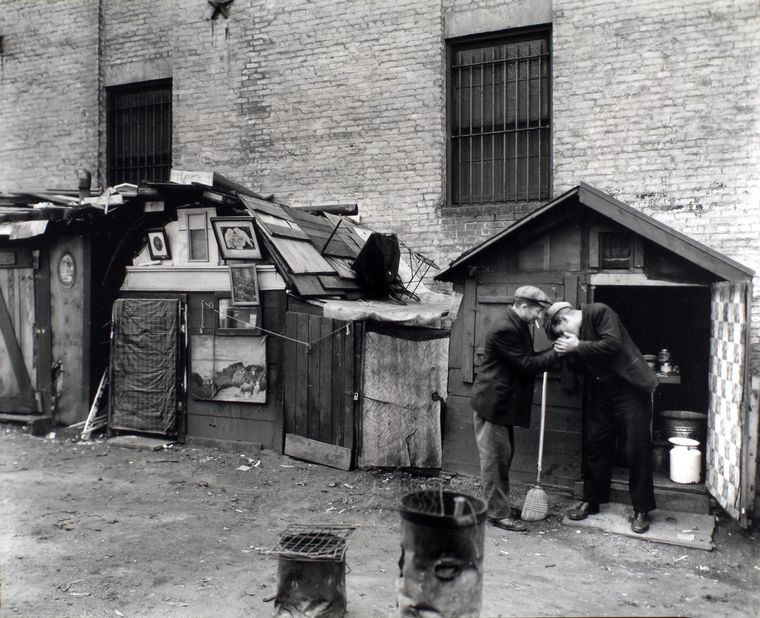
{Huts and unemployed, West Houston and Mercer Street, Manhattan. October 25, 1935. Source: John McNab's photostream on flickr}
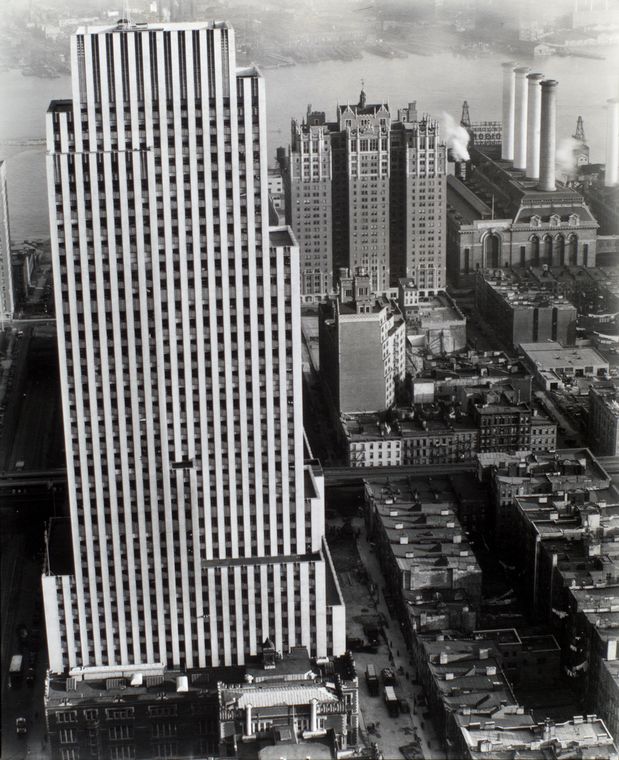

{Daily News Building, 42nd Street between Second and Third Avenues, Manhattan — looking toward East River from tall building, News Bldg., brownstones, the Con Edison plant and an apartment building. November 21, 1935. Source: wirednewyork.}
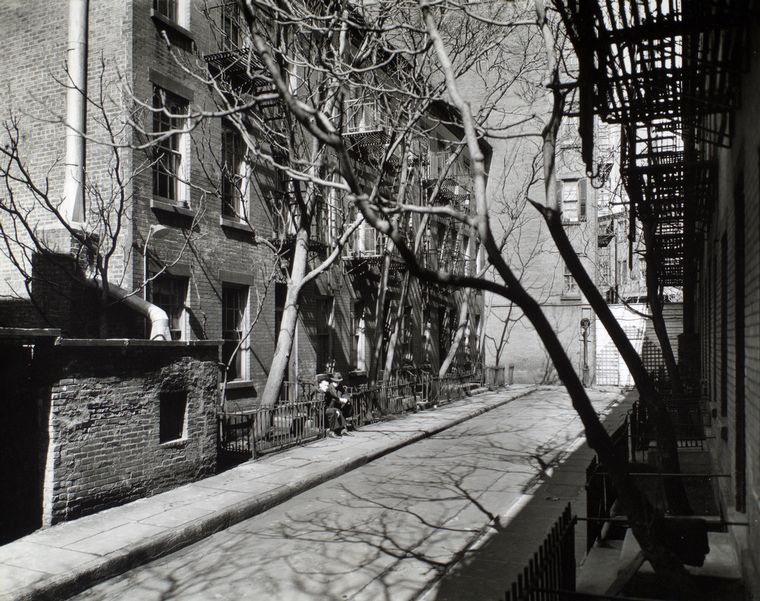

{Patchin Place, Manhattan. Men sit on steps in dead-end Patchin Place, bare trees in front of the house, gas lamp at end of block. March 20, 1936. Patchin Place lies off West 10th Street in the Village. Caption: "Built around 1850 as living quarters for the Basque waiters working at the nearby Brevoort Hotel, the 3-story houses didn’t have electricity or running water until the teens, about the time the waiters moved out and artists, actors, and writers moved in." Source: Summertime theater in Patchin Place on ephemeralnewyork}


{Nos. 1-3-5-7-9 Poplar Street. May 14, 1936. Caption from Museum of the City of New York: "On May 14, 1936, Abbott made eight photographs of houses in Brooklyn Heights. This view shows a row of pre-Civil War houses against the Manhattan skyline. At the end of Poplar Street is a holding tank for the adjacent Squibb pharmaceutical factory, a clear indication that these houses were too close to the industrial waterfront to be fashionable. In 1950, this stretch of Poplar Street was demolished for the construction of the Brooklyn-Queens Expressway and the pedestrian Promenade, which cantilevers over it." Source: Vintage Pictures}


{Radio Row, Cortlandt Street, Manhattan. Men window shop in store selling radios, elevated railroad station, Ninth Avenue line, right center, subway entrance visible. April 08, 1936. My source: John McNab's photostream}


{"El," Second and Third Avenue Lines, April 24, 1936. Caption: "In an image from Berenice Abbott’s Changing New York, the El blocks out the sky, and the few people gathered on the streets below appear as menacing shadows. The scene is one of excitement and energy, but is also cold, dangerous, and uninviting." Source: The Elevated blog post on fansinaflashbulb}


{Brooklyn Bridge, Water and Dock Streets, Brooklyn, from the series Changing New York. May 22, 1936. Source: Smithsonian American Art Museum}


{Travelling tin shop, Brooklyn. Tinker looks over his shoulder at camera while he ties box to wagon already loaded with pans, brushes, basins, etc. May 22, 1936. Source: NYPL's flickr set: Changing New York, 1935-1938. Caption from ephemeralnewyork: "Once the lifeblood of New York’s poorer neighborhoods, vendors like this traveling pots-and-pans salesman were a disappearing breed when Abbott took this photograph in 1936. The location of Abbott’s photograph is not specified, but the neighborhood resembles Talman and Jay Streets, which she photographed the same day." -- The Brooklyn pots-and-pans peddler}


{Henry Street. November 29, 1935. Caption from Museum of the City of New York: "Just east of New York's civic center lay some of the city's oldest slums. Abbott made the most of this stark juxtaposition, showing the Municipal Building and the Woolworth Building rising above the old-law tenements of Henry Street. Monuments to civic pride and private enterprise, both skyscrapers were built on the eve of World War I. The Henry Street Settlement and the Jacob Riis Settlement House lie just outside the area depicted in the photograph. Ironically, the ancient tenements of Henry Street remain exactly as they did in Abbott's day, accommodating the overflow from Chinatown of recent Asian immigrants. The Woolworth and Municipal Building towers still rise up over the tenements, but they were dwarfed by the twin towers of the World Trade Center, completed in the 1970s. My source: wiredinnewyork}


{Union Square, 14th Street and Broadway, Manhattan, July 16, 1936. Source: John McNab's photostream}


{Flat Iron Building, Madison Square. MAY 18, 1938. Caption: "Berenice Abbott photographed the Fuller building, nicknamed the Flatiron, from the top floor of a six-story commercial building nearby." Source: artcritical.com}


{Broadway to the Battery. May 4, 1938. Caption from the Museum of the City of New York: "In Broadway to the Battery, the foreground (right) is dominated by the Adams Building. At the foot of Broadway is Battery Park (left); rising from the waterfront on West Street is the Whitehall Building (right; see Battery, Foot of West Street); and in the distance is the Statue of Liberty. Abbott had anticipated the arrival of the ocean liner Ile de France in the composition. Source: flickr}

-----------

Additional sources:

About Changing New York by Julia Van Haaften for the New York Public Library, 1996

Berenice Abbott Works Online, article in artcyclopedia


-------------

Sunday, July 18, 2010

New York in the '30s

Berenice Abbott is famous for her photographs of New York City in the 1930s. In 1935 she was taken on as a photographer in the Federal Art Project and assigned to continue work she had already begun in a self-directed program called "Changing New York." Using a large-format Graflex camera she took a bit more than 300 photos over the next four years. All the negatives are now in collections of the Museum of the City of New York.

The New York Public Library, which holds copies of the photos, has put 160 of them on flickr. The images are also in NYPL's Digital Gallery. Because Abbott was an FAP employee, all are in the public domain.

Here are some of the 160 that I like best. They're in chronological order and encompass most of a year from October, 1935, through August, 1936. The captions contain the title of the photo. In many cases there's also a description by an NYPL curator.


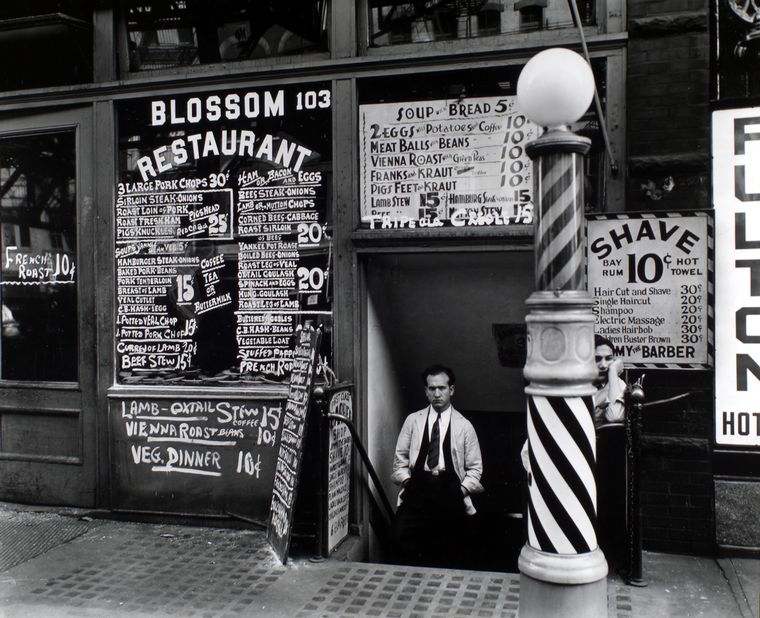
{Blossom Restaurant, 103 Bowery, Manhattan. October 03, 1935}


{Tri-boro Barber School, 264 Bowery, Manhattan. October 24, 1935}


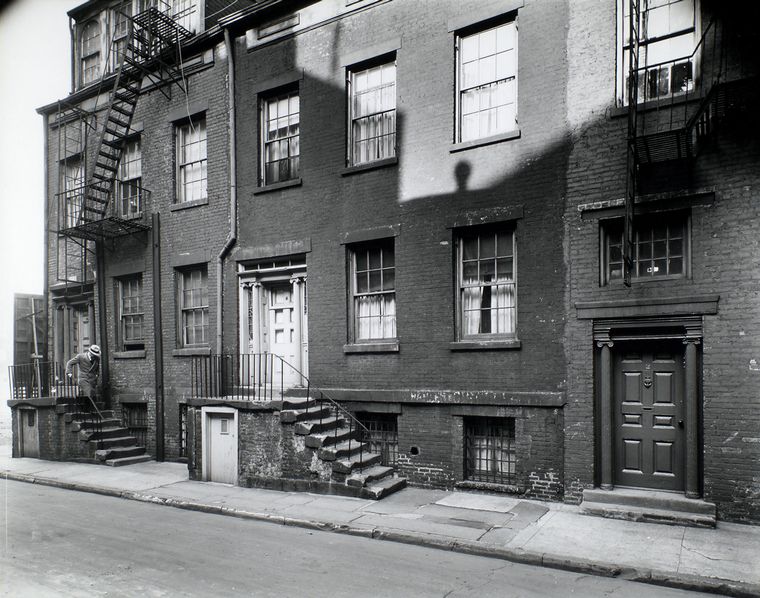
{Man descends steps of #2 Minetta street, doorways of each house are adorned with ionic columns; November 21, 1935}


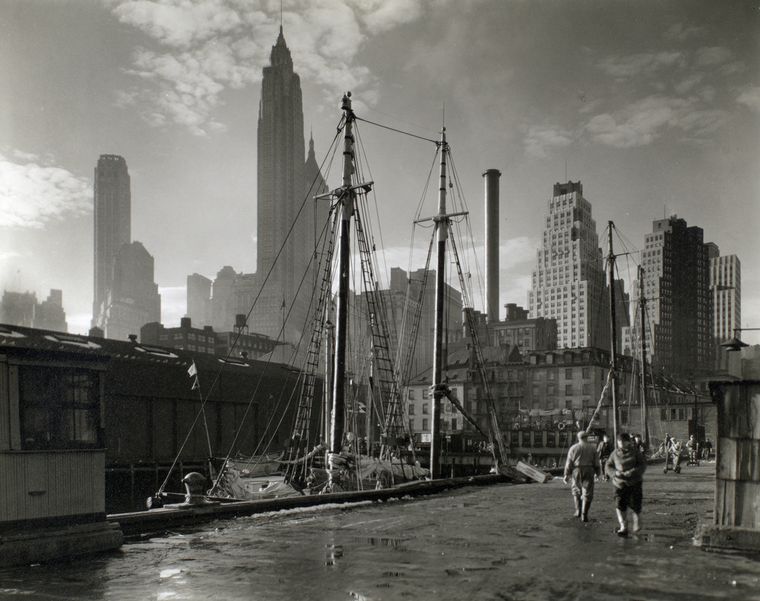
{Fulton Street Dock, Manhattan skyline, Manhattan. Men walk on pier where sailing vessels are moored, skyline beyond. November 26, 1935}


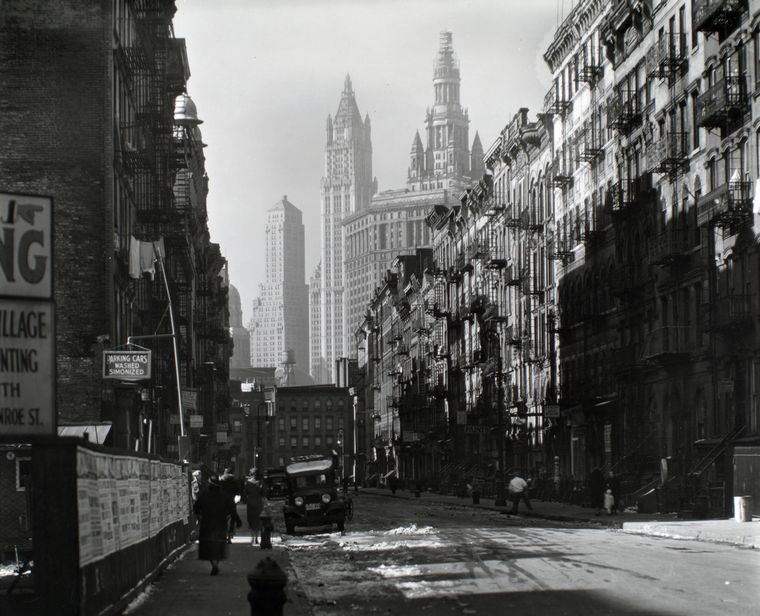
{Henry Street, Manhattan. Snow remains in the shady parts of Henry Street which is lined with 6-7-story buildings, the Municipal and other buildings rise above end of st. November 29, 1935}


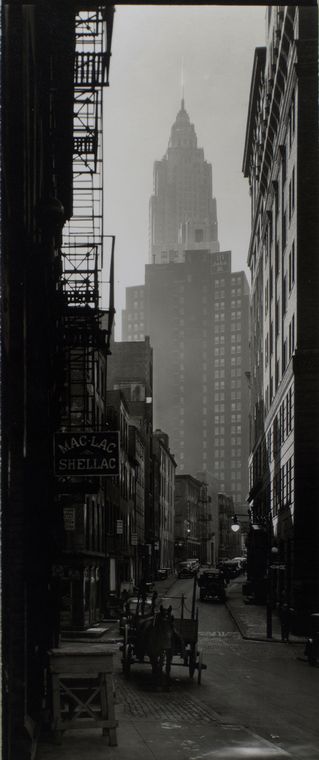
{Cliff and Ferry Street, Manhattan. Wagon and cars line narrow street lit by a street light, though skyscrapers above are still in sunlight. November 29, 1935}


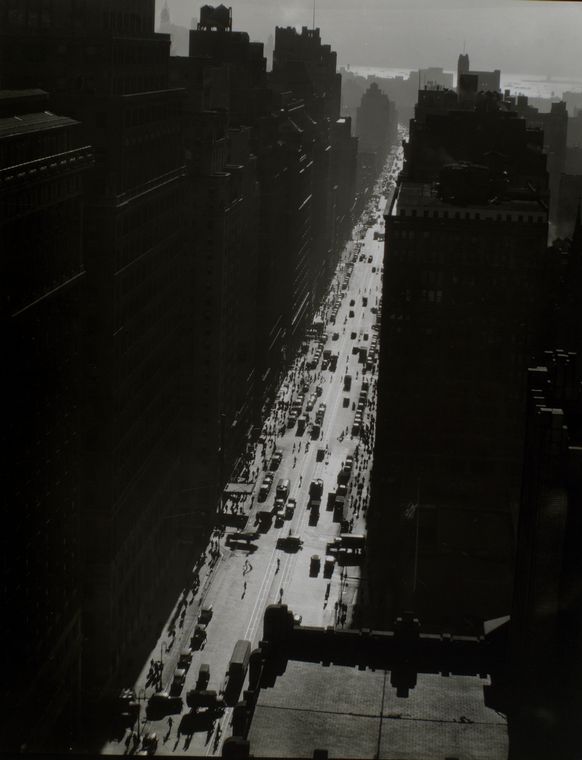
{Seventh Avenue looking south from 35th Street, Manhattan. Low winter sun illuminates Seventh Avenue and the harbor brightly, buildings along avenue almost silhouettes. December 05, 1935}


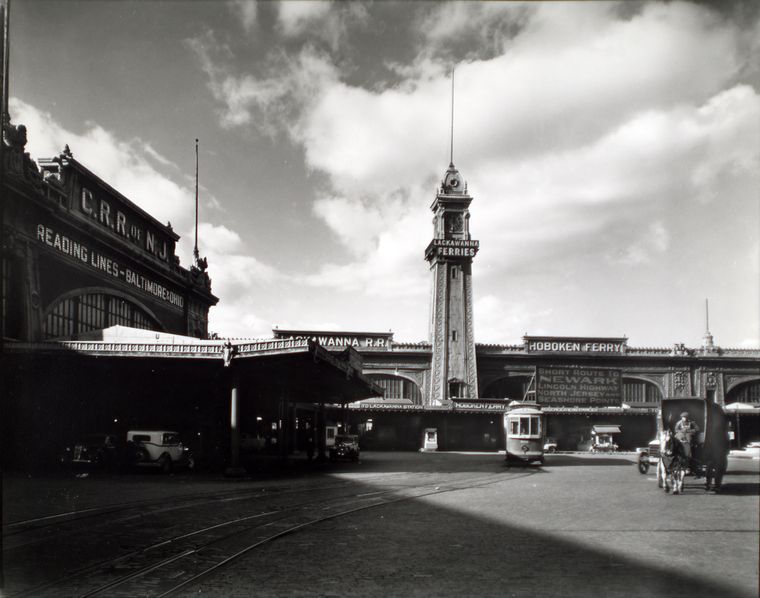
{Ferry, West 23rd Street, Manhattan. Lackawanna and Hoboken ferries, with clock tower above, C.R.R. of N.J. ferry, left, 14th St. trolley and cars and wagons. December 23, 1935}


{'El' station, Sixth and Ninth Avenue Lines: downtown side, 72nd Street and Columbus Avenue, Manhattan. Men gather near stove, woman waits by door, turnstiles in foreground inside 'el' station with etched glass, carved wood details. February 06, 1936}


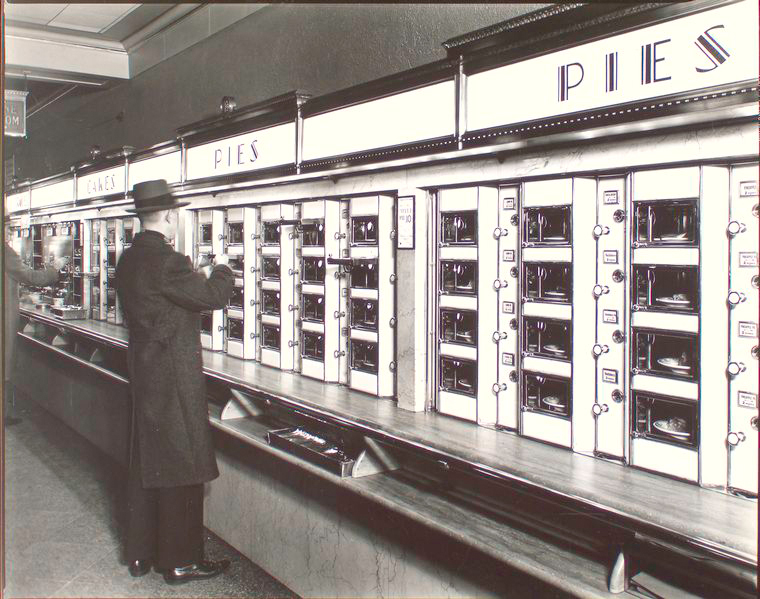
{Automat, 977 Eighth Avenue, Manhattan. Man takes pie out of Automat, stone counters and walls below metal and glass display. February 10, 1936}


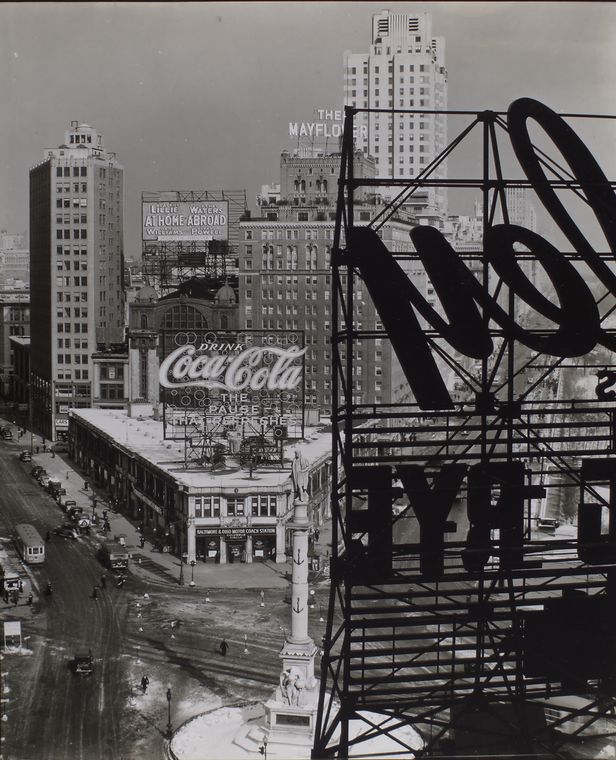
{Columbus Circle, Manhattan. Looking Northwest from above the circle, statue of Columbus, B&O bus station topped with Coca-Cola sign, other signs, Central Park with snow. February 10, 1938}


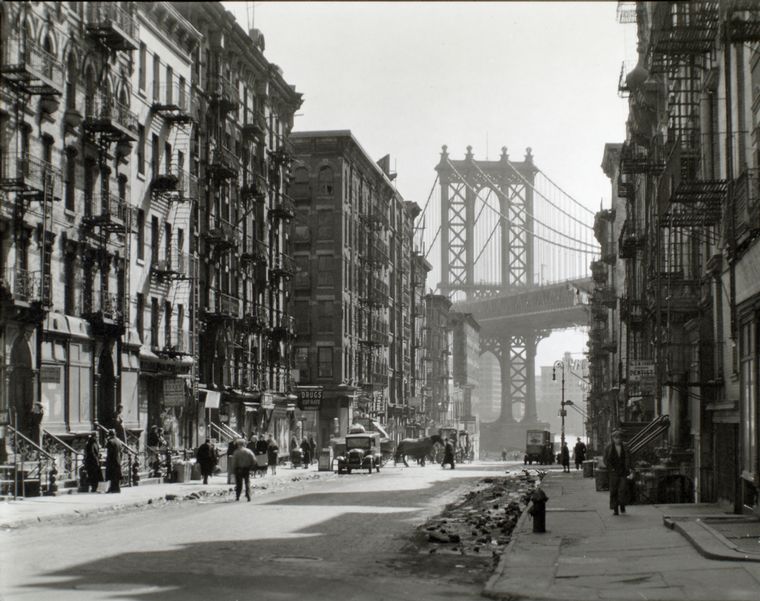
{Pike and Henry Streets, Manhattan. Looking down Pike Street toward the Manhattan Bridge, street half in shadow, rubble in gutters, some traffic. March 06, 1936}


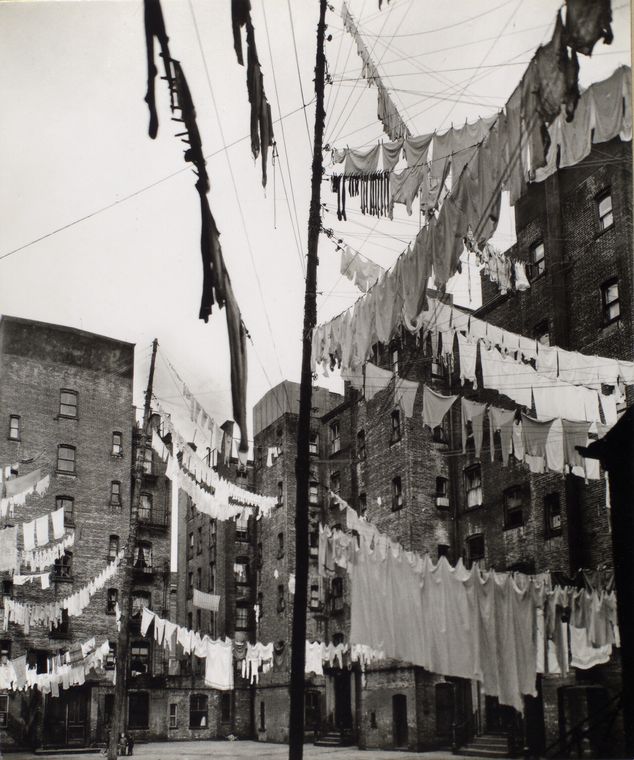
{Court of first model tenement house in New York, 72nd Street and First Avenue, Manhattan. Poles in courtyard support lines loaded with laundry, apartment houses beyond. March 16, 1936}


{A & P (Great Atlantic & Pacific Tea Co.), 246 Third Avenue, Manhattan. Window display showing can goods, eggs, crackers, etc. and signs for sale items, ads with Kate Smith inviting you to try 2 different coffees. March 16, 1936}


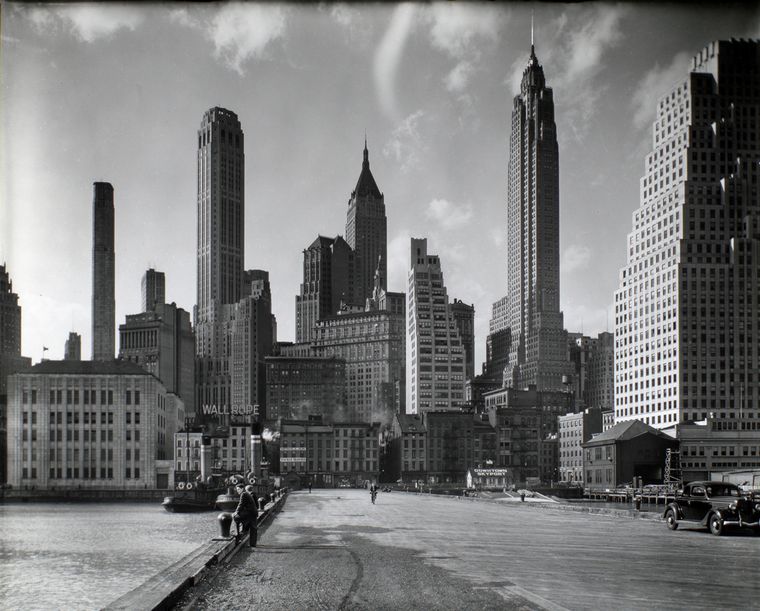
{Manhattan Skyline: I. South Street and Jones Lane, Manhattan. Looking from pier toward Manhattan, tugboats moored left, Downtown Skyport, right, skyscrapers in the background. March 26, 1936}


{Fifth Avenue, Nos. 4, 6, 8, Manhattan. Three large row houses, including one of marble (#8) and traffic on Fifth Ave. and 8th St., and trolley tracks in 8th St. March 20, 1936}


{Theoline, Pier 11, East River, Manhattan. View from aft of ship looking toward lower Manhattan, men line pier to view ship. April 09, 1936}


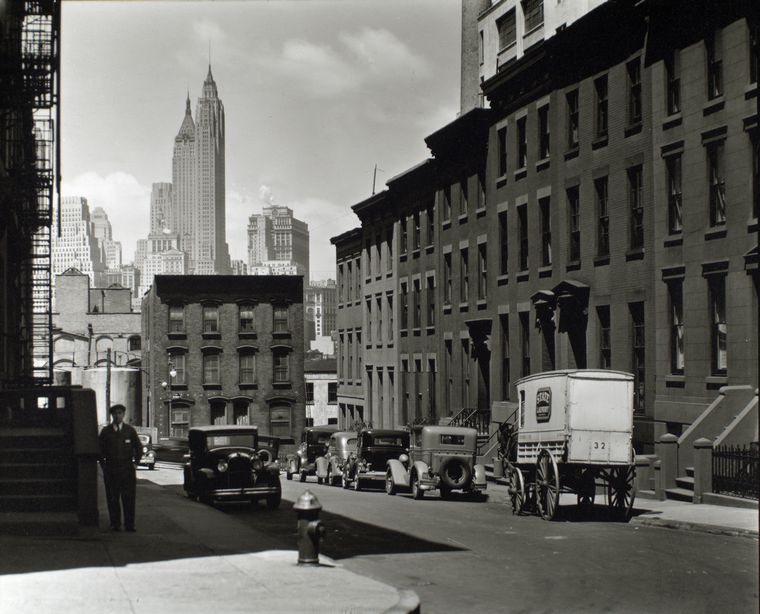
{Willow and Poplar Street, looking toward Manhattan, Brooklyn. Laundry wagon, cars, along sloping street lined with rowhouses, skyline of Manhattan visible above buildings at end of the street. May 14, 1936}


{Talman Street, between Jay and Bridge street, Brooklyn. African American woman sits at street edge with two children, empty lots on either side of street, old 2 and 3 story clapboard houses further up. May 22, 1936}


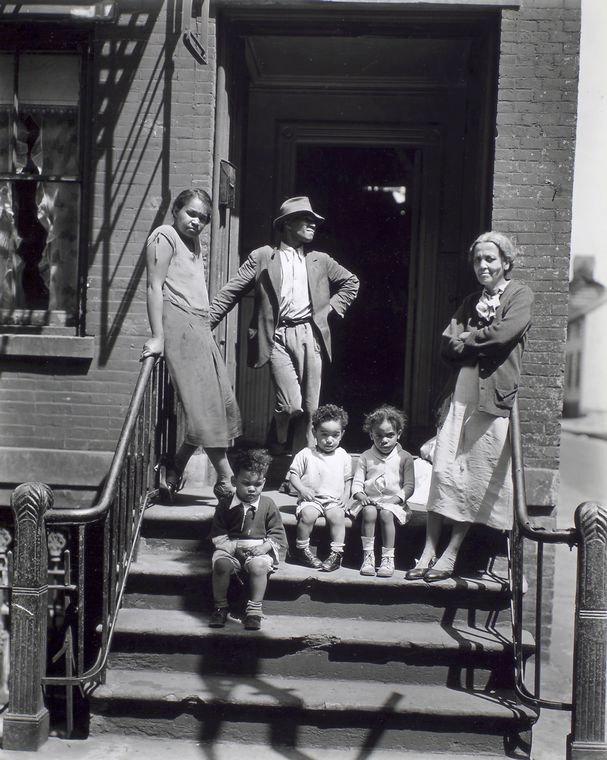
{Jay Street, No. 115, Brooklyn. Three generations of African Americans on stoop of brick home with iron rails on steps. May 22, 1936}


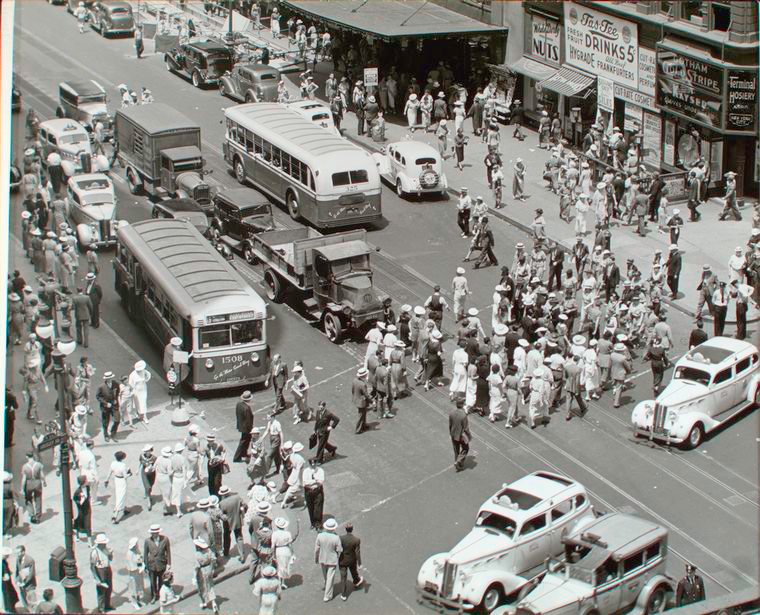
{Herald Square, 34th and Broadway, Manhattan. Looking down on busy intersection, people crossing, buses, trucks, cabs, other autos, Macy's entrance just visible with union picket in front. July 16, 1936}


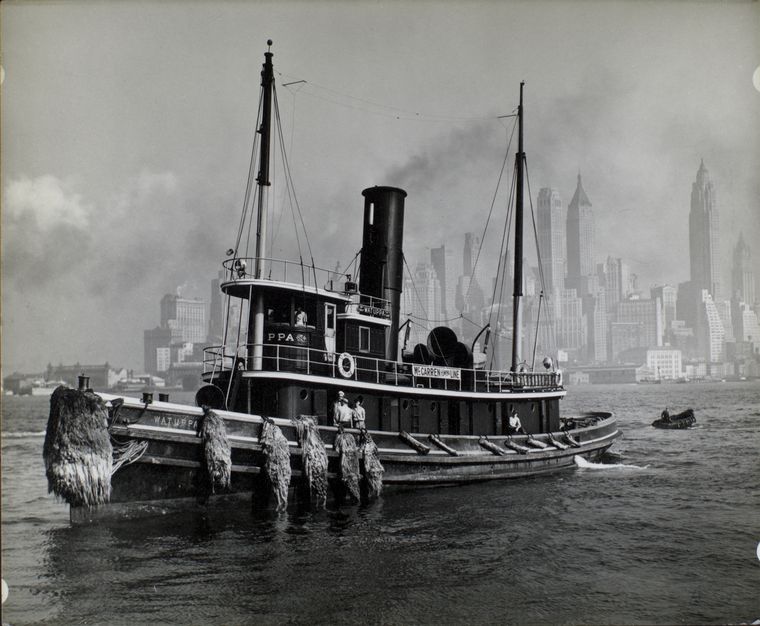
{Watuppa, from water front, Brooklyn, Manhattan. Looking broadside at the tugboat Watuppa, with the lower Manhattan (from the Municipal Bldg. south) skyline in the background. August 10, 1936}


{Tugboats, Pier 11, East River, Manhattan. Looking along beam of tugboat Bess and at bow of McAllister Bros. tugboat, other boats in background. August 12, 1936}


{Construction old and new, from Washington Street #37, Manhattan. Wash hangs from lines outside 6 story tenement which is dwarfed by large buildings around it. August 12, 1936}


{Reade Street, between West and Washington Streets, Manhattan. Looking into street where goods are stacked below awnings, trucks and wagons at curbs. 1935-1938}

-------------

Photo of Berenice Abbott by Man Ray

-------------

Some sources:

Berenice Abbott's Changing New York, 1935-1939, Museum of the City of New York; A Fantastic Passion for New York, by Bonnie Yochelson

Seeing America: Women Photographers Between the Wars by Melissa A. McEuen (University Press of Kentucky, 2004)

Berenice Abbott, photographer: an independent vision by George Sullivan (Houghton Mifflin Harcourt, 2006)

Berenice Abbott article in wikipedia

Berenice Abbott Minneapolis Institute of Arts

About Berenice Abbott, NYPL

Changing New York: Photographs by Berenice Abbott, 1935-1938, NYPL

Berenice Abbott: Changing New York, Museum of the City of New York

Berenice Abbott, Getty Museum

NEW YORK CHANGING. Since 1997 Douglas Levere has been rephotographing Berenice Abbott's Changing New York, 1939.