Friday, January 23, 2009

a right way of government

In my mind, one of the main reasons for Obama's success -- first in the Democratic primaries and then in the presidential election -- was his rejection of the political process as winner-take-all competition. I believe both the Clinton and McCain campaigns sought to emulate the Karl-Rove tactics of the two Bush campaigns in framing debate. For an instance of these tactics see this 2005 blog post by the prince of framing, George Lakoff. Their essence is a use of emotional sound-bites to distract voters from serious consideration of issues. Those who employ them see politics as no more than a game of winners and losers in which the smart and unscrupulous will always defeat the reflective, well-meaning player. Just writing that sentence I felt the urge to deploy framing as a rhetorical technique by pitting one set of values against another in a simplistic way and I'm not sure I avoided doing so.

To me, the Obama campaign countered the cynical rhetoric of framing with a strong negative statement: the need to abandon the poisonous political climate of the Bush years, and a strong positive one: a politics of inclusion in which winning is not the primary objective but it is rather the testing of competing and conflicting ideas, listening to hostile as well as friendly voices in order to establish effective policies. Writing that, I think how frequently such debate leads to indecisiveness and indecision, but if the early days of the Obama administration make anything clear, it's that this administration does not suffer from these weaknesses.

Tim Burke writes of these things in an interesting post to his blog Easily Distracted: Mr. Obama’s Neighborhood

In it he takes what I've said a step further. He says the new administration has shown itself up to the task and asks whether we are willing to rise to that level ourselves.

The piece begins with comments on his experience in a digital storytelling workshop he's been attending and he tells how his approach to a storytelling assignment differs from that of other participants. This leads to comments on how differing approaches to such an assignment can be seen as choices of modes of discourse and how these choices -- this framing -- can be seen as a zero-sum game of power.

So he says: "At a storytelling workshop, for example, it may be that to insist on the legitimacy of a much more reticient male voice is to suddenly make more emotional and personal stories feel like an exception rather than expectation, to put everyone on their guard. On the other hand, what if that is honestly the way that someone wants to approach the exercise?"

This leads him to consider first, the difficulty of being honest in self-expression while at the same time being a cooperative participant in a group activity and next, the implications of this small-scale difficulty in politics, leadership, and government.

He says:
The hardest challenge, in many ways, falls in the space in between the titular, symbolic Presidency and its interior deliberative work, in the way that the President and his officers operate within the public sphere, in how they formulate and present and defend policy in front of and in dialogue with the public. This is hard because it requires a very fine distinction between the voices that authentically speak from a habitus or perspective that’s at odds with the worldview of the President and his advisors and much more calculated and cynical bids at “framing” that come from a well-oiled machine that approaches public dialogue as a pure instrument, as a zero-sum exercise which either advances or defeats narrow self-interests.

The distinction between the two is most easily glimpsed if you cultivate a taste for the unlike, force yourself to speak in unfamiliar and uncomfortable tongues, travel across ways of seeing and talking as one might travel across geographies. This commitment is not a safe, happy kind of venture of unity-in-difference, not a boat ride through “It’s a Small World”. Listening to the unlike, speaking the unfamiliar, can be draining, painful, frustrating. And at the end of any journey, you’re perfectly entitled to conclude that you like your established ways of talking best, that there’s something wrong with a stranger’s world and voice. But I think the person with the taste for the unlike can hear better the difference between a public voice that comes from somewhere real and a cynical attempt at framing that comes from some rag-and-bone shop think tank. If there’s anyone in public life whose personal journey has given him an ear for unlikeness, it’s Obama, so I have high hopes that he’ll guide his Administration through the narrow divide that will allow him to ignore tired old constructions, to make real the promise that “the ground has shifted beneath” the cynics, while never losing sight of ways of speaking and thinking that are authentically different from his own. . . .

If all you can praise is work which conforms to your own particular tastes, ideologies, and preferences, you’re not trying to inaugurate the institutional or political future which you ardently demand. It isn’t just Obama that has to go beyond the “stale political arguments”. Anybody who demands or values that kind of commitment in others has to try to live it out in their own practices.

Thursday, January 22, 2009

inauguration photos


{Source: The Big Picture on Boston.com, photo by Jason Reed, Reuters; this copyrighted image is reproduced under fair-use provisions of copyright law.}

The Inauguration of President Barack Obama

Alan Taylor and those who work with him on The Big Picture web page at Boston.com have outdone themselves. This is a very good set of photographs.

I particularly like the following ones:

3 - GeoEye Satellite Image. This shows the Capitol west to the Washington Monument.

18 - The Rev. Joseph Lowery gives the benediction

19 - US Army Command Sgt. Maj. Julia Kelley. She weeps as she watches the inauguration of US President Barack Obama at Camp Liberty in Baghdad.

23 - Vertie Hodge. She weeps during an Inauguration Day party near Martin Luther King, Jr. Blvd. in Houston.

25 - President Barack Obama and his wife Michelle stand with former US president George W. Bush and Laura Bush on the steps of the US Capitol

36 - President Barack Obama signs his first act as president. It's a proclamation declaring a national day of renewal and reconciliation and calling on Americans to serve one another.

40 - U.S. President Barack Obama and first lady Michelle Obama walk in the inaugural parade

42 - U.S. Navy Chief Petty Officer Bill Mesta. He's replacing an official picture of outgoing President George W. Bush with that of newly-sworn-in U.S. President Barack Obama, in the lobby of the headquarters of the U.S. Naval Base January 20, 2009 in Guantanamo Bay.

46 - U.S. President Barack Obama and first lady Michelle Obama dance their first dance at the Neighborhood Inaugural Ball. This is the one I've reproduced at top.

The comments are worth scanning as well. There are many of them and they come from many places throughout the US and the rest of the world. A few are nasty. Some are pessimistic. But most are jubilant and show a cheering hopefulness. Here's a small sample:

Comments on The Big Picture's Inauguration Photos
1. Fantastic photos once again. It's an exciting time for America right now, if not the world. Posted by Jason January 21, 09 12:36 PM

13. He's our hope, too. Federico (from Italy)

23. the world is watching us more then ever now, i really hope we dont letthem down again. Posted by 66577 January 21, 09 12:53 PM

34. What a fantastic perspective these photos give us of our place in the world. They brings tears to my eyes. Welcome back. Posted by Claudia Chang

35. "It's an exciting time for America right now, if not the world." Posted by Oliver - Brasil

41. The collection of photos is down right perfect. Certainly, this is why it's so great to be human. Posted by Kloche

137. Ca c'est vraiment fantastique. Congratulations President OBAMA!!! Je choisis d'ecrire ton nom en lettre d'or. Pour la premiere fois dans l'Histoire du monde, "Un noir elu president des Etats-Unis". Martin Lutherking devrait etre vivant ce jour-la. Posted by Ijchade

158. @21 the wrist band is a KIA (Killed In Action) bracelet. It is a common way for service members and family members to memorialize their fallen brothers and sisters, particularly for OIF and OEF. President Obama wears a bracelet given to him by the mother of Sgt. Ryan David Jopek, who was killed in 2006 by a roadside bomb. Posted by Dan

175. IT NOT A JOKE!!!
Ì.Ñ. Ãîðáà÷åâ: "Ïåðåñòðîéêîé òåïåðü äîëæíà çàíÿòüñÿ Àìåðèêà"
07.11.2008
Gorbachev calls on Obama to carry out ''perestroika'' in the U.S.

Former Soviet leader Mikhail Gorbachev has said that the Obama administration in the United States needs far-reaching 'perestroika' reforms to overcome the financial crisis and restore balance in the world.
The term perestroika, meaning restructuring, was used by Gorbachev in the late 1980s to describe a series of reforms that abolished state planning in the Soviet Union.
In an interview with Italy's La Stampa published on Friday, Gorbachev said President-elect Barack Obama needs to fundamentally change the misguided course followed by President George W. Bush over the past eight years.
Gorbachev said that after transforming his country in the late 1980s, he had told the Americans that it was their turn to act, but that Washington, celebrating its Cold War victory, was not interested in "a new model of a society, where politics, economics and morals went hand in hand."
He said the Republicans have failed to realize that the Soviet Union no longer exists, that Europe has changed, and that new powers like China, Brazil and Mexico have emerged as important players on the world stage.
He told the paper that the world is waiting for Obama to act, and that the White House needs to restore trust in cooperation with the United States among the Russians.
Posted by Snton
187. I didn't sleep nearly all night for watching the live - televised of Obama Inauguration ceremony on Phoenix Satellite TV . The scence was spectacular , President Obama's manner is charming and handsome , his speeches was inspiring and meaningful . Hereby congratulations Obama to be 44th president of the United States and may he lead the America to a prosperous and bright future ! Posted by Yue Guomin

188. We liberated Chinese envy you unliberated American. Posted by lmanpig

318. I did not vote for President Obama. However, yesterday, I could not have been more proud of being an American. I do not care what color one categorizes him to be; call him the color of the rainbow for that is what he demonstrated by the Inauguration speech he gave quite eloquently. All of America should be proud, if only for the unity demonstrated by the crowds on the Washington Mall, even if you voted for John McCain. President Obama had the class and grace to commend Senator McCain for his service to our country, just prior to his swearing into office. President Obama is a class act. Hooray for America. Posted by Julie

327. Todo el mundo esta a la expectativa de que tenga un gran desempeño en su mandato, pero necesitara de la ayuda de Dios y el mundo entero, Felicidades!!! siempre espero las imagenes de este sitio, son vedaderamente increibles. Que dios bendiga a America y a los Americanos. Posted by Fernando

340. I cried like a little baby because I never thought it would happen in my years of living I thought it was going to happen when my children's children children generation. I want to know how do the poor people help. What can we do the low income people us who live in the projects how can we help. Posted by ppjctlouisianahood

369. The US election was held at the same time as our own here in New Zealand. But I was far more interested in what went on in the US, and the effect this would have on the world. Now that President Obama is in power, it's time for him to set to work and achieve everything he has promised. The new President Obama has inspired a nation, and the world, to have hope, to look forward and be a positive force for change. That hope can clearly be seen in these photos. In the face of each and every person. Posted by @rachel_a

381. thank you for these pics.....obama is great and i m a great fan of obama.........
now the change has come to the world........
mandy D
student B.TECH (ECE)
INDIA
PUNJAB,LUDHIANA

394. I congratulate all Americans on a worthy choice. I hope, it will be the continuer of politics of Mikhail Gorbachyov. Posted by Genrietta Kalmarovna Mudakova

432. This is the dawn of a new era in american and world politics. President Obama is the right man to lead the United States and the world at this juncture in an uncertain and troubled time. His humanity shines through and generates good will in the citizens of the world. No, he can't solve all the world's problems, but he has the goodwill of the citizens of the world. That is a healthy starting point. Good Luck Mr President and may you have the wisdom and humility to lead . Posted by Dele, London. UK

epitath on a year lost forever


{Source: Project Gutenberg}
This is Byron's Epitaph on the expiration of his 33rd year of life. He wrote it in his journal on this, his birthday, not much less than two centuries ago. On the subject of growing older, he had previously written:
It was one of the deadliest and heaviest feelings of my life to feel that I was no longer a boy. From that moment I began to grow old in my own esteem?and in my esteem age is not estimable.
("Detached Thoughts," no. 72)

I shall soon be six-and-twenty. Is there anything in the future that can possibly console us for not being always twenty-five? (Journal entry for 1 Dec. 1813)

My time has been passed viciously and agreeably; at thirty-one so few years months days hours or minutes remain that "Carpe Diem" is not enough. I have been obliged to crop even the seconds--for who can trust to tomorrow? ( 20 Aug. 1819)

Wednesday, January 21, 2009

a fine clear frosty day

From the Journals of Lord Byron
January 21, 1821.

Fine, clear frosty day—that is to say, an Italian frost, for their winters hardly get beyond snow; for which reason nobody knows how to skate (or skait) — a Dutch and English accomplishment. Rode out, as usual, and fired pistols. Good shooting — broke four common, and rather small, bottles, in four shots, at fourteen paces, with a common pair of pistols and indifferent powder, Almost as good wafering or shooting — considering the difference of powder and 'pistols — as when, in 1809, 1810, 1811, 1812, 1813, 1814, it was my luck to split walking-sticks, wafers, half-crowns, shillings, and even the eye of a walking-stick, at twelve paces, with a single bullet — and all by eye and calculation; for my hand is not steady, and apt to change with the very weather. To the prowess which I here note, Joe Manton and others can bear testimony! for the former taught, and the latter has seen me do, these feats.

Dined — visited — came home — read. Remarked on an anecdote in Grimm's Correspondence, which says that "Regnard et la plupart des poetes comiques etaient gens bilieux et melancoliques; et que M. de Voltaire, qui est tres gai, n'a jamais fait que des tragedies — et que la comedie gaie est le seul genre ou il n'ait point reussi. C'est que celui qui rit et celui qui fait rire sont deux hommes fort differens." —Vol. VI.

At this moment I feel as bilious as the best comic writer of them all (even as Regnard himself, the next to Moliere, who has written some of the best comedies in any language, and who is supposed to have committed suicide), and am not in spirits to continue my proposed tragedy of Sardanapalus, which I have, for some days, ceased to compose.

To-morrow is my birth-day — that is to say, at twelve o'the clock, midnight, i.e. in twelve minutes, I shall have completed thirty and three years of age! !! — and I go to my bed with a heaviness of heart at having lived so long, and to so little purpose.

It is three minutes past twelve. — "Tis the middle of night by the castle clock," and I am now thirty-three!
Eheu, fugaces, Posthume, Posthume,
Labuntur anni; —
but I don't regret them so much for what I have done, as for what I might have done.
Through life's road, so dim and dirty,
I have dragged to three-and-thirty.
What have these years left to me?
Nothing — except thirty-three

Notes to the text:

wafering - A coinage of Byron's; from the context he seems to mean accuracy in shooting pistols.

Joe Manton - A well-known gunsmith.

Grimm's anecdote - This reads: "Regnard and the majority of the comic poets were bilious and melancholy, and that M. de Voltaire, who is very merry, has forever made tragedies - and the merry comedy genre is the only kind in which he did not succeed. [The point] is that he who laughs and he who makes others laugh are two very different men."

bilious - In Byron's time this meant choleric, wrathful, peevish, ill-tempered.

Regnard - Seventeenth-century French comic poet, second in fame only to Moliere himself.

tragedy of Sardanapalus - A play the Byron wrote: Sardanapalus, a Tragedy. Text and description here.

"Tis the middle of night by the castle clock," - First line of Coleridge's Christabel.

Eheu, fugaces, Posthume, Posthume, / Labuntur anni - "Alas, Postumus, Postumus, the fleeting years are slipping by;" (Horace, Ode 2.14).

Through life's road, so dim and dirty - Byron

Notes about Byron at this time:

On January 4, 1821, Byron began writing a journal. This was his third. See Chronology of Byron's life in the 1820s.

When he began the first journal in 1813, he wrote:
If this had been begun ten years ago, and faithfully kept!!! — heigho! there are too many things I wish never to have remembered, as it is. Well, — I have had my share of what are called the pleasures of this life, and have seen more of the European and Asiatic world than I have made a good use of. They say 'Virtue is its own reward,' — it certainly should be paid well for its trouble. At five-and-twenty, when the better part of life is over, one should be something; — and what am I': nothing but five-and-twenty — and the odd months. What have I seen ? the same man all over the world, — ay, and woman too. Give me a Mussulman who never asks questions, and a she of the same race who saves one the trouble of putting them. But for this same plague — yellow fever — and Newstead delay, I should have been by this time a second time close to the Euxine. If I can overcome the last, I don't so much mind your pestilence ; and, at any rate, the spring shall see me there, — provided 1 neither marry myself, nor unmarry any one else in the interval. I wish one was — I don't know what I wish. It is odd I never set myself seriously to wishing without attaining it — and repenting. I begin to believe with the good old Magi, that one should only pray for the nation, and not for the individual;— but, on my principle, this would not be very patriotic.
When he began this third one he wrote:
Ravenna, January 4, 1821.

A sudden thought strikes me. Let me begin a Journal once more. The last I kept was in Switzerland, in record of a tour made in the Bernese Alps, which I made to send to my sister in 1816, and I suppose that she has it still, for she wrote to me that she was pleased with it. Another, and longer, I kept in 1813-1814, which I gave to Thomas Moore in the same year.

My sources:
Life, letters and journals of Lord Byron

life, letters, and poetic works of George Gordon, Lord Byron

eBooks@Adelaide jpage on Byron

Online Books by George Gordon Byron Byron

Project Gutenberg page on Byron


Extract about Byron in this time:
In 1815 Byron married Anne Isabella Milbanke but the relationship came to an end the following year. Byron moved to Venice where he met the Countess Teresa Guiccioli, who became his mistress. Some of Byron's best known work belongs to this period including Don Juan (1821). The last cantos of Don Juan is a satirical description of social conditions in England and includes attacks on leading Tory politicians. Lord Byron also began contributing to the radical journal, the Examiner, edited by his friend, Leigh Hunt. Leigh Hunt, like other radical journalists had suffered as as result of the Gagging Acts and had been imprisoned for his attacks on the monarchy and the government.

In 1822 Byron, Leigh Hunt, and Percy Bysshe Shelley travelled to Italy where the three men published the political journal, The Liberal. By publishing in Italy they remained free from the fear of being prosecuted by the British authorities. The first edition was mainly written by Leigh Hunt but also included work by William Hazlitt, Mary Shelley and Byron. Three more editions were published but after the death of Shelley in August, 1822, The Liberal came to an end.

For a long time Lord Byron had supported attempts by the Greek people to free themselves from Turkish rule. This included writing poems such as The Maid of Athens (1810). In 1823 he formed the Byron Brigade and joined the Greek insurgents who had risen against the Turks. However, in April, 1824, Lord Byron died of marsh fever in Missolonghi before he saw any military action.


Personal Note:

I became interested in Byron on reading his satiric poem, Don Juan, which is both funny and quite good poetry. Earlier I'd avoided reading him because I disliked the byronic associations, was unimpressed by the man's chaotic life, and felt his work demeaned the -- as I thought -- more authentic romanticism of Keats, Wordsworth, Shelley. I didn't know about the journals until I thought to find something to write about this day, birthdate of three people -- a sister-in-law and two nieces -- whom I love (though not byronically).

Monday, January 19, 2009

strike!

In the US this day we honor Martin Luther King, Jr., assassinated a bit more than four decades ago. He was in Memphis at the time to support striking sanitation workers. The evening before his death he told them: "We’ve got to give ourselves to this struggle until the end. Nothing would be more tragic than to stop at this point in Memphis. We’ve got to see it through." Months later most of the strikers demands were met. AFSCME, the public employee's union, which eventually won the right to represent the strikers, has a web page giving a chronology of the strike. There are many photos of the strike on Google Image Search.

This photo comes a blog called Lynnertic. The author says: "Martin Luther King, Jr. died 40 years ago as he helped black sanitation workers in Memphis strike for fair wages, fair working conditions, dignity and human rights. The signs reading I am a Man became an iconic symbol of the cause for which Dr. King and many others died. The photograph was taken by Ernest Withers, a civil rights photographer who passed away in 2007."

{Click image to view full size. Source: These are the Best of Men}
Out of the huts of history's shame - I rise
Up from a past that's rooted in pain - I rise
I'm a black ocean, leaping and wide,
Welling and swelling I bear in the tide.

Leaving behind nights of terror and fear - I rise
Into a daybreak that's wondrously clear - I rise
Bringing the gifts that my ancestors gave,
I am the dream and the hope of the slave.
I rise
I rise
I rise.

- This is the conclusion of the Maya Angelou poem Still I Rise
LC's Prints and Photos Division has a set of photos from a much earlier garbage strike, one that took place in New York City in November 1911. The strikes had little in common. The one for the dignity of man, the other for better working conditions; the one in an environment of obdurate racial hostility, the other in a city that was generally disposed to support the rights of labor; the one confronting a reactionary mayor, the other a determined but reformist one. Looking back from our vantage point here in early 2009 the principles at stake in Memphis are clear, those in New York ambiguous.

If parallelisms are weak, the LC photos are nonetheless interesting.

An article in the New York Times gives some background. The men demanded that they be able to work during daylight hours, mainly for reasons of safety, and the Sanitation Department, which employed them, refused to grant this demand. A snide letter to the editor gives one person's reaction:
The reason for the cleaners' strike
Is plain to one who's smart;
Like most of us they want to choose
Their hours a la carte.
The city hired strikebreakers and the work stoppage was soon brought to an end. Times letter writers saw the conflict as a test of power between the Teamsters Union and city government. Some supported the union and some supported government, but most simply wanted their ashes collected and the streets cleared of accumulating trash.

LC's photos are from its Bain News Service collection. The garbage trucks of the day consisted of one man, one horse, one cart. The city operated more than 20,000 of them. I appreciate the dignity of the horses shown in the photos: alert, patient, and strong. The images seem to show a police force intent on preserving order without taking sides. In them the faces of strikebreakers show a lack of confidence, maybe just nervousness, maybe fear. The faces of the crowds in the street show everything from anger, to interest in the spectacle unfolding before them, to the well-known New Yorker's seen-it-all aloofness.


{Click image to view full size. It was taken early November 1911. As the caption says, strikebreakers were given $5 a day. It doesn't sound like much, but -- at least by this set of calculations -- it was. Although the men on strike worked solo, the strikebreakers appear to have preferred working in pairs.}


{Click image to view full size. This detail shows the horses more clearly.}


{Click image to view full size. In this further detail I like the faces on man and boy, the outfit that the boy is wearing, and the obvious power latent in the observant horse.}


{Click image to view full size. Taken November 13, 1911.}


{Mounted policeman keeping order}


{Click image to view full size. Policeman protecting garbage carts}


{Click image to view full size. Strikebreakers}


{Click image to view full size. Garbage carts protected by police}


{Click image to view full size. Garbage wagon stoned - driver is inside}


{Click image to view full size. Cart being stoned; driver is hiding inside}


{Click image to view full size. Carts protected by police}

Wednesday, January 14, 2009

H.E.F. in his den


This interesting photograph comes from the National Photo collection in the LC Prints and Photos division. Click to view full size. The LC curator says it has the title "H.E.F. in den, 2227 Nichols" and was taken between 1910 and 1925. The Shorpy blog says it shows Herbert E. French, the owner of the photo company and the author dates it ca. 1920. Nichols Avenue is now Martin Luther King Avenue SE, Washington, DC. The address 2227 is on MLK Av. between W and 13th Sts.


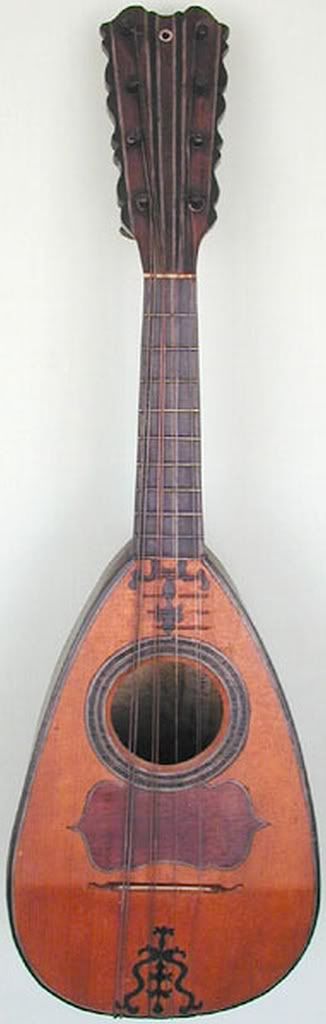
This detail shows a photo mounted on what seems to be headboard of a bed on the floor behind French. The photo seems to have been taken in the same office (the curtains are the same). It may show French trying to learn to play the mandolin.


French appears to have liked to make playing cards out of photos. A commenter on the Shorpy blog connects this with his (obvious) love of illustrations showing men and women ca. 1900-1914.


The pattern on this gauzy curtain is very handsome. What's the style? Is it Art Nouveau?


This a detail from French's desk chair. A commenter says it's Roycroft work. In general the commenters agree that it looks uncomfortable.


This says
"Man is made of dust,
Dust Settles
Are You a Man?"


This motto, over the entry door, says "Opportunity knocks daily
Usually in the morning
."


This says
You should be ve-ry careful, you know,
you might get interested
in your work, and
let your pipe go out.
-- James McNeill Whistler


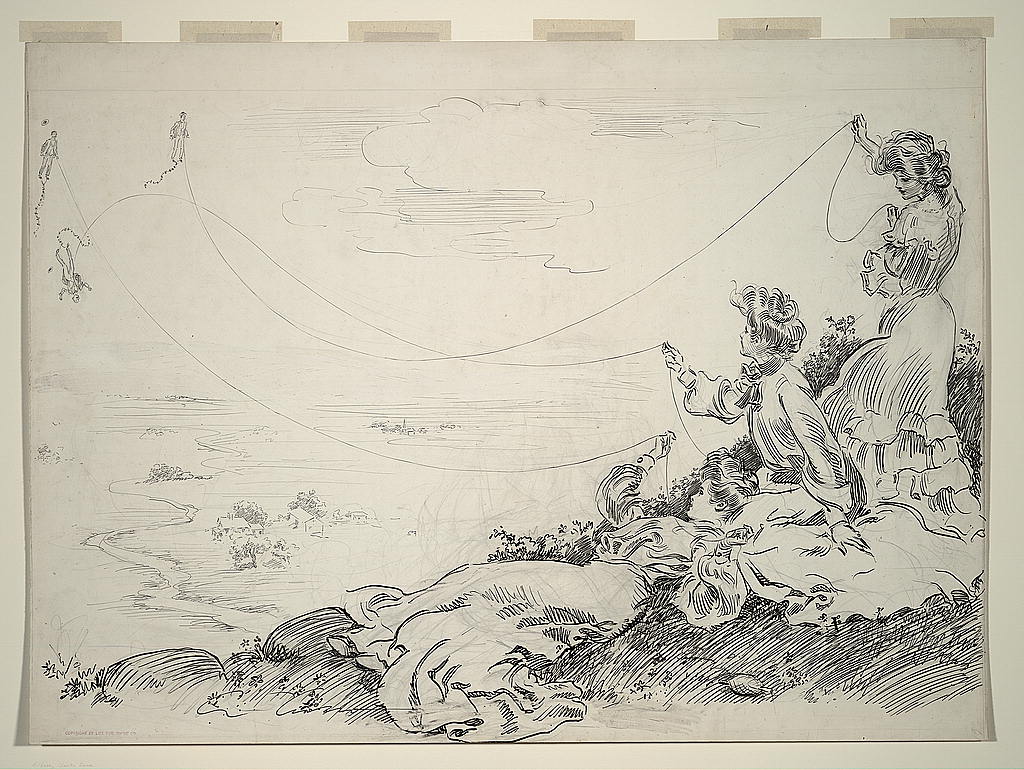
A glance at the walls shows that French was fond of drawings by Charles Dana Gibson (and his ilk). These two cushions, each found on one of the window seats, show that he liked the subjects and style of this artist well enough to acquire more than just prints.


A commenter shows the original of this poster. It's an advertisement for hat bands.


The be-ribboned object looks like a walking stick or maybe a large crop or swagger stick.


It's clear French was fond of dogs. The white object is probably something he uses as a paperweight. It looks like a socket for an electric light bulb.


There are many interesting things on the desk. Commenters wonder what the flexible tubing is for: a nautical speaking tube, a hose, a humorous found object? There's tobacco, ink, and related stuff.


Comments suggest this is a naval weapon, a harpoon gun, or a navigational device for ships. I suggest the latter. It appears the operator looks through the left-side narrow end of the telescope-like tube.


Commenters say this is a walking stick made to look like a snake, or a rubber snake, or just a snake replica of some kind. One commenter includes a better detail than mine. It's a polished wooden snake.


You can't miss the abundance of illustrations mounted all over French's office. They show a version of feminine beauty that was popular early in the 20th-century as well as the sense of humor of the times. It's all pretty solidly upper middle-class and all of the style associated with Charles Gibson. The period was supposed to be a golden age for the upper classes, La Belle Époque in fashion and high culture. LC has a collection of Gibson drawings that bears out this observation. Here is a representative sample from that collection:


Caption: "I want you to like me, Jose : I want to be able to like you : I shall have need of friends, she said half to herself." ca. 1911


No caption. Early 20th c.


Caption: "The weaker sex. II." Early 20th c.


No caption. Early 20th c.


No caption. Early 20th c.


Caption: Molly Bawn. 1910 or 1911. This is an illustration for Margaret Hamilton's novel Molly Bawn.


Caption: "Summer sports." ca. 1904


Caption: "A 'quick change' -- for the rest of the afternoon. ca. 1901


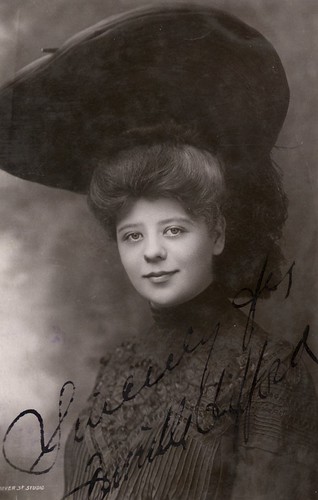
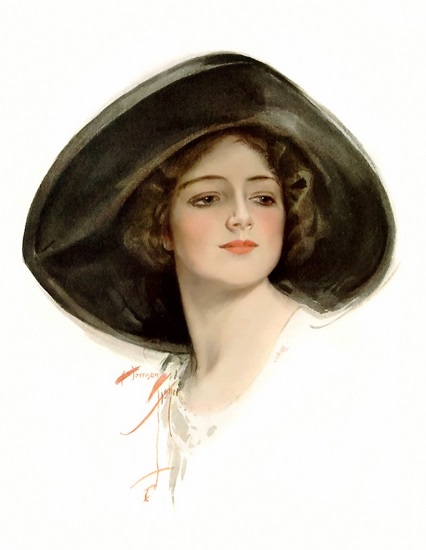
The following images, from other sources, show the prevalence of the Gibson style at the time. These first ones show the big-hat style that French seemed particularly to admire.


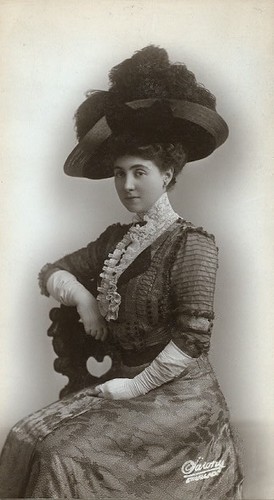
This photo shows the wasp waist that he also seems to have favored.


These drawings are typical of the humor he seemed to enjoy.


Caption: "Accident to a young man with a weak heart."


Gibson, "One Difficulty of the Game: Keeping Your Eye on the Ball," from the magazine Americans, 1900.

Grey Lady no more

Newspapers have been suffering a long, slow slide as ad revenues in print media decline and revenues in online media fail to compensate. The slide has accelerated in the current recession and most papers either fear for their survival or have plans to leave the scene. The big nationals -- Washington Post, Wall Street Journal, NY Times -- at first seemed primed to pick up the pieces. It's been thought that, as in past economic slumps, the businesses with greatest capitalization will be able to expand by purchase of failed competitors and will emerge stronger than ever when the economy's downturn reverses.

In the news business, most of us can think of dailies that were bought out by competitors during hard times. Ones that come to my mind include the a bunch of NY papers including the Press, PM, Daily Mirror, Evening Graphic, Brooklyn Eagle. The mastheads of surviving papers tended to grow and grow. The World, Telegram, and Sun survived the three papers in its name, and then it died. The Evening Journal and the American merged to the Journal American and then that paper died. The Herald and Tribune merged and then the Herald Tribune died.

This time around it's unlikely that the big papers can count on a survival of the fittest. There's no rosy future for the big national papers, even the very biggest and strongest, unless they find ways to -- as it's said -- successfully monetize the internet.

Of the biggies, I have been thinking the WSJ and FT have the best chance of achieving this success. They both have a relatively well-heeled readership, both have current pay-per-view internet policies that seem to work ok, and both have highly-respected knowledge bases that are not easily duplicated (meaning they can't easily be knocked out of their niche positions by bloggers or other competing online media).

I've respected the NYT for the strengths it's shown along similar lines. As newspaper-of-record you'd think it had much the same advantages as do WSJ and FT. But apparently this is not so. An attempt to charge readers for online views failed miserably.

And now we're getting reports of serious problems. Last month the paper said it needed to raise millions of dollars by mortgaging its headquarters building and more recently it began putting ads on the front page. As one paper reported:
The cash-strapped New York Times put up for sale on Monday its most treasured piece of property: the front page. After staff cuts, page reductions, and plans to re-mortgage the gleaming Manhattan headquarters, the daily has now opened its editorial holy of holies to advertising. The maiden ad, a color banner display for CBS television across the bottom of the page, might seem innocuous. But it reflects troubling economic times in the battered US newspaper industry. The daily described the invasion of advertising into the once sacrosanct page as "the latest concession to the worst revenue slide since the Depression."
It's sad. Particularly so since the Times web presence has gained a well-deserved popularity. The Times pages are among the most popular sites on the web with high ratings not just for number of views but also for the length of time spent viewing pages.

And it's sad because the Times has made some excellent innovations in its web presence, not just placing itself on social sites like Facebook, with a couple hundred thousand fans, but also producing good stuff of its own. Here are three that I like.

1. The Annotated New York Times which the paper calls "The New York Times... Remixed." There are descriptions here and here.


2. Blogrunner, which the Times says, "is a news aggregator that monitors articles and blog posts and tracks news stories as they develop across the Web." (See the FAQ: What is Blogrunner?.)


3. Week in Review
This, in paper form, goes back to my childhood; we used to receive free copies in the classroom back in the 1950s.


Online, it offers much more than the paper version does or ever did, with categories such as LaughLines, Ideas, and Cartoons as well as Most-Emailed and Most-Blogged stories, a Weekly News Quiz, This Week's Headlines, Editors' Choices (In Case You Missed It), and a graphic link to an online version of the paper copy:


This, from the current issue, is a nice example of its content:
The Buzzwords of 2008.

Here's the first entry:
Largely used online, this is a verb turned into a mass noun, as in “A bucket of fail.” Common forms include epic fail, meaning a huge overall tendency toward failure or a great example of failure, and FAIL! as an interjection or derogation. Often an antonym of win, seen online in forms like “Full of win!” which means, “It’s good!”
It's not an objection, to me, that some the stuff in these three pages -- Annotated Times, Blogrunner, and Week in Review -- is repurposed from other Times pages. Its packaging of them and the value added to them make the three standout nicely.

----------------

A couple of pages for further info on the main topic of this blog post:

State of the News Media 2008
Newspapers

Defunct New York City newspapers