Showing posts with label bike. Show all posts

Monday, February 07, 2011

cycling newsies

Tom Vanderbilt muses about paper boys in the current issue of Time. I've enjoyed his writings, beginning with Traffic a couple of years ago. You don't have to be a transportation wonk to learn from and enjoy that book. That's true also of his articles in Slate and other press outlets, his tweets, and his blog posts. He writes about Americans' intense, but frequently absurd love affair with the car[1] but just as much about the silliness of traffic engineers and politicians who pander to us car lovers. And he writes about those of us, too, who, whether we're car lovers or not, yearn for more livable urban and sub-urb spaces for walking, jogging, and cycling.

The Time piece is The Rise and Fall of the American Paperboy. In it he says those of us who were carriers tend to have intense memories of that time. I agree. At 14 I was barely old enough for the required work permit and had never shouldered responsibility anywhere near that heavy. I'm pretty sure I signed up because my much-admired-but-never-successfully-emulated older sister had pointed the way. By that time she'd been earning what seemed big sums as a babysitter for a few years. I wrote once before about the paper route and my propensity to earn and save. The post is Secondat: Margaret Atwood and me.

My job was to deliver the Citizen Register weekday afternoons, in good weather and bad. My mom had cause to remember the bad because there were times when the route was either too wet or too icy to be bikable and I begged her to drive me (she did not like this task and I think I tried not to call on her too often). I can't recall how the job opportunity came my way, but I do have a vivid memory of the training session I received from the outgoing carrier, a one-time shadowing which left me on my own to work out a passably efficient means for receiving, counting, bagging my 60 or so papers and getting them into their roadside tubes over the ups and downs of the route's 3.6 miles. I carried Dogbone treats in a vain attempt to stay a couple of aggressive dogs in the first few houses I served. After the dogs my main challenge was a handful of steep climbs. I couldn't handle them in an American one-speed, like my old Columbia (which was less luxurious than this 1955 Schwinn Black Phantom[2]). You couldn't get an affordable 10-speed "racer" at that time[3], but fortunately my big cousin Carl was done with his English three-speed which looked like this.[4] I've a vivid memory of a guy in a truck yelling out "put it in low" one afternoon as I struggled up one of the steepest inclines. (Though struggling, I did have it in third already.)

Toward the end of my career in that work I was photographed and interviewed for the Register's annual carrier-of-the-year fluff piece. Needless to say I'd no prior experience of this kind of thing and I'm sure I failed to give the poor journalist a single interesting quote. It mystified me that the photog wanted a shot of my stringing my laminated, recurved yew-wood bow,[5] but I'm pretty sure a prop was needed to make me look even a little bit relaxed.

Here are some map images that show the route. I began my afternoon's ride at the circle on the right, rode west, then south and west until I reached the last customer. At that point I reversed myself and wheeled back to the beginning and onward to my parents' home nearby. Because examining these maps brings forth some memories, I've indulged in a brief nostalgic reverie somewhat further down the page.

Click these images if you wish to view them full size. The first is a USGS topo map from the later 1930s. If you're good at reading gradients, you'll notice that I start off in a little valley and don't encounter much climbing until the longish south-west straight (which you'll find when you scroll down is called Aspinwall Road). At that point I go up to the route's high point, then down and up again to a very steep but short little "Y" at the end.

{This is a detail from a map published in 1943 from survey data collected in 1936. It's the Ossining, NY Quadrangle, USGS 7.5 Minute Series, Latitude 41.1875 Longitude 286.1875, and I got it from Historic USGS Maps of New England & New York}

This topo map represents how the same area looked in 1964.

{This is a detail from a USGS topo map in the same series. It was published in 1979 from data collected in 1964. NYSGIS Clearinghouse}

This up-to-date contour map shows the ups and downs pretty clearly.

{source: Google}

This hybrid satellite image adds little to the other maps other than indicating how woodsy is this part of the world.

{source: Yahoo}

-----------

Here's the nostalgic reverie.

I was born the year before the first map was published. Population density was then quite low. There'd been less than a thousand residents when the village was incorporated in 1910. By 1940 the total has risen to near 1,500. At the time I had the paper route it was somewhere around 3,000 and the 2000 Census found it to be close to 8,000. As a paperboy and in my other local jobs (service station gas jockey, summer clerk in the high school, drug store stock boy, house painter, and doer of odd jobs) I got the sense that I knew maybe half of the 700 households, including their cars and their dogs.[6]

Many of the village's breadwinners spent their workdays 30 miles south in Manhattan, but many others worked locally. Some were wealthy, but others quite middling and less. This admirable diversity did not extend to racial or ethnic composition. We were predominantly white Protestants and Catholics with family roots in continental Europe and the British Isles.

The excellence of the school system was a major draw for many who moved there, including my parents. Following a couple of part-time stints in local nursery schools, I spent my K-12 years in one building. Sometimes on bike, but mostly on foot, I'd work my way the mile and a half to and from school, municipal pool, playing fields, and tennis courts, or (if cold enough) the iced duck pond that adjoined. You walked by the side of the road and cut through friendly back yards to paths that snaked through the woods. If there were no golfers about, you could cut the trip down by crossing the fairways either to the village stores (for candy mostly) or the school. This detail shows the long route in green and the two shorter ones in burgundy and blue.

This little piece of map shows a lot of my young universe, from the village park, school, and pond, to the village stores, golf course, and, on the opposite ridge, steeply wooded hillside leading up to the Lodge (which had become Edgewood Park, a college for upper-class girls when I was growing up and, after some years' vacancy, King's College, an evangelical Christian school). One of my earliest memories is a kindergarten "class trip" to the little-used single-track Putnam Line that shows on the right of the map. We saw the semaphore, the bags of mail, and inhaled the special train smell of the station; then watched a steam engine pull a couple of cars on a south-bound route.

Until I got involved in high school sports and took on some part-time jobs, I'd lots of free time to spend with friends. We did sports together — shot hoops in each others' driveways, found some favorite fields for tag football games, and played ice hockey on the iced over swimming pool. Lots of neighboring kids would get together for glorious softball games on the golf course fairway and a one or two of us would bring a few old clubs so as to play a few holes when we thought we could get away with it. We'd fish in the Lodge Pool and create Huck Finn rafts to navigate it. We'd climb tree vines and run helter-skelter down the wooded slopes. There was a big open field down the street that was a constant attraction for romps.

I'd one friend with whom I'd like to set out on random adventures. We'd climb the golf course hill and pick a distant landmark then try to walk there in a straight line, going into people's yards and over their fences. Mostly we'd find ourselves in woods but never to such an extent that we lost our way. Sometimes we'd end up where there were boulders and tall trees to climb. Once we found ourselves at an old quarry whose face we proceeded to climb as far as we could (it was a bit icy then and I'm happy now to have survived that feat). Once we kept walking until we got to Millwood some two towns distant. We wore sneaks and had no water or snacks and the trek back was, that time, a sore trial.

I didn't know then what a privilege it was to grow up in that place and that time.

-----------

Fair use claim: To the best of my knowledge my reproduction of images on this page complies with fair use provisions of US copyright law. I'll remove any for which fair use does not apply on being shown that I've infringed.

------------

Some sources:

Paperboy, in wikipedia

Village of Briarcliff Manor, the village web site

10510 Zip Code Detailed Profile, i.e., Briarcliff Manor, on eachtown.com

Briarcliff Manor in wikipedia


WESTCHESTER COUNTY DEPARTMENT OF PLANNING (pdf), for census data

------------

Notes:

[1] "Car" is used for so many different conveyances that it's use as synonym for automobile always demands some context to be properly understood. As well as motor vehicles, cars are what locomotives pull down the track, what's strung under a hot-air balloon, what carries people up and down skyscrapers within elevator shafts, and what carries tourists and skiers to the top of the mountain (and, some of them, back down again). Formerly, it was a favorite conveyance for poetic beings — as in the fiery carr of Phoebus, the weary Sun's fiery car, or the Carr of Jove's Imperial Queen, or, as might be, a special type of horse-drawn cart or carriage (jaunting car), car as hansom cab, a kind of drag used in making road repairs, or yet even seven stars in Ursa Major (as in "Pleiads, Hyads, and the Northern Car"). -- OED.

Americans distinguish cars from trucks, but a high proportion of these cars are officially (by the government) called light trucks.

[2] Which I found on nostalgic.net, as seen here:


[3] I got this image of a Fuji Deray from OldTenSpeedGallery.com.


[4] My image comes from flickr. So's you don't have to leave the page, here it is.


[5] I still have the bow. It looks like this.

{source: leatherwall.bowsite.com}


[6] This shows the village's growth in population. The yellow bars show the information we're interested in. The blue and burgundy show numbers of people in each of the two townships in which the village is located.

{source: the village web site, briarcliffmanor.org/}

Wednesday, August 18, 2010

Passo di Gavia

I record sporting events to watch while I'm doing my afternoon treadmill run. These days I'm finishing a review of this year's Giro d'Italia and I've just come to Stage 20 for which the numbers are impressive. Only 110 miles long, the stage was short by Giro standards but not the less difficult since five mountains and almost 21,000 feet of climbing were packed into it. The riders crossed the highest point on the fourth of the five climbs. As is normal at that time of year — May 28th — that fourth mountain, the Passo di Gavia, was covered by many feet of snow. For most of the race the weather was windy and clouds were low, but there was no precipitation. However, conditions were so bad at the mountain finish that Italian TV was only sporadically able to provide the video images being captured by its many motorcycle- and helicopter-borne cameras.

During video outages, the race commentators showed clips of the 1988 race over the Gavia. On that memorable occasion, the riders crossed the pass in a snowstorm. Erik Breukink took the stage and Andy Hampsten rose to overall leader, having the lowest cumulative time for all stages to that point. At the end of the three-week race, Erik would end up in second place and Andy in first — the only American (or any non-European) ever to win the Giro. Andy currently divides his time between homes in Tuscany and Colorado. He leads bike tours in Tuscany and sells Hampsten-branded bikes in the US. He reports that life is good. Erik is currently manager of the Rabobank racing team and is pleased with the team's performance in major tours, though wins have been scarce.

Back in 2007, I did a blog post on Erik and Andy on the Gavia: snow, gentle and ferocious.

This photo shows Erik on that occasion:


{source: giroditalia's flickr photstream}

And this one shows Andy:


{Andy Hampsten, Passo di Gavia, 1988; source: outyourbackdoor.com}

Here's what the pass looked like this year:


{source: Giro d’Italia Stage 20 on cyclingtipsblog}

This year's race profile map gives an idea of the stage's climbs and descents.


{source: Giro home page}

This photo of part of the Gavia gives an idea what the riders face in both climbing and descending the mountain.


{source: iegestuhl-und-action.de}

Here are links to two Youtube videos from this year:

Giro 2010 Stage 20 Passo di Gavia (pt.1) on Youtube

Giro 2010 Stage 20 Passo di Gavia (pt.2) on Youtube

And here's one from 1988:

Giro d'Italia 1988, Passo di Gavia on Youtube

-----------

Some sources:

Update: Gavia Pass for Saturday on the ItalianCyclingJournal blog

Giro’10 St. 20 on Pez Cycling News

Andy’s Epic Day On The Gavia on Pez Cycling News

Gavia Pass on wikipedia

Friday, April 23, 2010

Dylan's Bonneville


Dylan on a Triumph Bonneville

The site where I found the image says he's riding a red-and-silver ’64 Triumph Tiger 100, but that's just plain wrong. The Bonneville was successor to the Tiger T110 was its model number was T120. There's no doubt Bob's riding a T120. Though it made that error, the site is a good one, having lots of Dylan-on-bike photos.


source: oscarapparel.blogspot.com

See also:

My post on Steve McQueen

HIGHWAY 61 REVISITED...ON A TRIUMPH

Dylan's Motorcycle

Triumph Bonneville on wikipedia

Bob Dylan on his Triumph motorcycle Bearsville, New York, summer 1964

Bob Dylan Triumph

Wednesday, March 24, 2010

Milan-San Remo

Milan-San Remo, the Spring classic bike race which bills itself as La Classicissima went off very well this year. At the line, Oscar Frere proved to have the right tactics and the best legs. He rides for the Rabobank squad and although the rider I follow most closely, Joost Posthuma, wasn't in this race, the result is a satisfying one. 'Tho it was the third time Oscar won, the announcers and the race cameras picked out other former winners and current favorites in the run up to the finish. I kept seeing the bright orange flash of his jersey behind or nearby the guys the photogs were watching. The replays showed both his skill in maneuvering himself into position leading up to the sprint and the enormous surge with which he pulled away from contenders.


Julian Dean's race diary blog tells a different story. Milan-San Remo is so very long and so very fast that — after a few hours of riding — racers who get shelled out the back have little hope of rejoining the front bunch. About half way through, Dean got caught up in a crash, was unable to reconnect, and lost so much time that he and another sufferer lost more than an hour on the lead group. He writes, in typical New Zealand idiom:
I was out the arse because I was going bad, now I had to keep going to the finish, hoping that at some point I might see someone coming from the finish to collect me after they finally realised I was MIA. But it didn't happen and I had to ride a miserable 100km to the finish with no fluids or food on one of the worst days I’ve had on the bike for as long as I can remember. . . .

Eventually, after almost 8 hours, I rolled into San Remo to the team bus feeling more than a little cheesed off and disillusioned as to the lack of consideration of the welfare the team has for its riders - especially for an athlete who’s struck a bad day and needs a little more support than they might need on regular occasions. What added to my frustration was that in my heart I knew I had done all I could to get back on top of my form after being crook and even though I couldn’t contribute much on this particular day, I still buried myself for the team.

Anyway that’s often what you get when you have a bad day. Unless you are running at the top of your game, professional sport can be very demoralizing and disheartening no matter how long you’ve been in it and how much stature you have. Everybody prefers to be with a winner....


{Dean at MSR on another day; source: his team's website}

A couple of days ago, a race page I follow called Cyclingnews did an article on an experience similar to Dean's from twenty-five years ago: Phinney and Kiefel recall 7-11's wild Milan-San Remo

At that time the American team, 7-Eleven, had just begun racing in Europe. They entered MSR hoping to put someone on the podium but expecting just to gain some valuable experience. Davis Phinney and Ron Kiefel were their two star riders, both successful in US races, and, eventually, in European ones as well. This day, March 16, 1985, was not to be Phinney's best. Beforehand he's given what he takes to be valuable advice to eat constantly in order to avoid running out of energy at the end — the race being so very long and hard. He fills his jersey pockets with the pannini that riders ate in those days and ate one after the other. For this, he's derided by one of the best racers of all time. As he tells it, "After about 60km Sean Kelly pulls up next to me while I'm stuffing my face. My gut is so full that my knees are banging into it while I'm pedalling. Kelly says, 'What are you doing? You're eating like a pig! You'll never make the finish like that'."

Then: "As we came into the little town before the Turchino [climb] started I was on the far right side, in the second row, and we're just flying along. There's a sharp left turn and the pack drifted a little bit wide to the point where I was pushed off the road. I went flying off the road, crashed into this chain fence separating the road from the sidewalk and dislocated my finger."

It was very cold and wet that day. Fellow team member Eric Heiden stopped to help Phinney and manages to pull the dislocated finger back to normal, but Phinney had lost steam. Heiden managed to get himself back in the race, but Phinney did not. He remembers: "Here I am at this big race, Milan-San Remo, off the back with three other knuckleheads, still riding with race numbers on. I'm dirty, wet, cold and hungry, because I have no food, and we're still a long way from San Remo. We realized that we're screwed."

Two of the four struggle on but Phinney and a Belgian rider decide to leave the course and see whether they can't hitch a ride to the finish on the nearby autostrada — a limited-access tollroad. They're stopped at the tollbooth and since neither knows the dialect which the tolltaker uses, they're near out of hope until the tolltaker finally figures out why these two bike riders are plaguing him and calls race headquarters. Phinney's team manager eventually sends a car for them. I'd love to see a photo of the two, dirty, cold, wet, hungry, dejected; standing by their bikes at the entrance to an Italian superhighway.


{Kiefel and Phinney at a warm and sunny race in Colorado a year or two before their MSR adventure; source: rbaction.net}

Tuesday, April 22, 2008

Davis Phinney

Update: The outcome of surgery has been good so far. An article on Yahoo Sports says Davis Phinney experienced the expected immediate relief Doctors promised. The article quotes his wife: '“We saw an almost immediate response,” Connie Carpenter-Phinney said. “The actual tremor is almost gone but not totally gone. His gait was really good. His arms were swinging. I’m super-relieved. Literally, it brought tears to my eyes to watch the process, and it’s a very moving experience to watch what might be possible down the road.”

Davis Phinney was exhausted after Friday’s procedure, but squeezed in one key event before settling down for an afternoon nap.

“We went out for a celebratory ice cream,” his wife said.'

I watch videos of old bike races while I tread the mill for exercise. Currently, I'm engrossed in the 1987 Tour de France. Lately I've been reading about the struggles with Parkinson's Disease of a bike racer of that time, Davis Phinney. He's just undergone surgery to reduce some of the worst symptoms. He and his family won't know whether the surgery worked until this Friday. His wife, Connie Carpenter Phinney, is a world champion cyclist and now their son Taylor looks to be following in their footsteps.

Davis won a stage in the 1987 Tour, one of the few Americans to claim that victory at the time. He spoke to the camera a couple of times early in the race, always charming, articulate, upbeat, and interesting to hear. Then he caught a bug and had to retire. (Professional cyclists are particularly vulnerable to infections; one of the many mishaps that can sideline them.) Seeing the man in his 1987 prime brought out much compassion in me toward his 48-year-old self brought low by Parkinsons.

Saturday, November 03, 2007

a crime and its outcome

I've been meaning to do a post about my bicycle commute: my accident a week or so ago, my encounters with wildlife, the effects on me of the weather transition we're going through, how I cope with age-related pain in lower back and hips, other bicyclists, ....

Yesterday morning, while this intention was still pretty vague, I saw the flashing blue and red lights of emergency vehicles a few blocks ahead as I rode down 11th St leaving the Mt. Pleasant area and entering Shaw and the vicinity of Howard University and Logan Circle. Closing in on the activity, I saw that it was all police cruisers and noticed that there was a police helicopter overhead with its search light beaming down on a neighborhood a bit to the south. I never stop and gawk at scenes where lots of blue shirts are gathered. Neither do the others out on the street. Where there are guns, I think we all agree it's best to keep in motion.

Usually if I chance to check local news for the event, I learn nothing about it. Either it was not newsworthy or the news media couldn't get on top of it for one reason or another (I think sometimes they don't cover events when there's no visual component, for example.)

Yesterday, was different. It was newsworthy because a police officer was struck by a stolen vehicle, because the event was caught on closed-circuit tv, and because the video was made available for viewing.

Here's a map showing my route, north to south, down 11th St. The block with all the action is shown in blue. The gas station where the hit-and-run occurred is in green.

{click to view full size - credit: Mapblast}

Here are some extracts from the DC Police account of the event. There's a link to a video at the end. Do view this video. If you look carefully, you can observe what occurred at the gas station pretty much as described in the police report.
November 2, 2007
Police-Involved Shooting in the 2800 Block of Sherman Avenue, NW

Shortly after 5:00 this morning, Friday, November 2, 2007, officers from the department's Third District Substation were investigating the report of a stolen vehicle in the 2800 block of Sherman Avenue, NW. Officers were able to locate a 2007 Chevrolet Trailblazer matching the description of the vehicle being sought at the Apex Gas Station located at 2830 Sherman Avenue, NW. That vehicle was being occupied by one male subject in the driver's seat while two other male subjects had apparently exited the vehicle. Officers subsequently attempted to approach the suspect vehicle when one of the officers exiting his marked unit was struck by the suspect vehicle as the operator apparently rammed the officer in an effort to escape. The impact threw the officer upon the hood of the moving vehicle, injuring the officer and forcing him to fire his service weapon in fear of his life as it appeared the vehicle could run him over.

A short time later, the Trailblazer was located unoccupied, after witnesses reportedly observed a male suspect running from that vehicle. A subsequent investigation eventually located the suspect inside of an apartment building ... suffering from an apparent gunshot wound to the chest. He was taken to an area hospital and admitted in stable condition. His wounds are not believed to be life threatening. He is currently being charged with one count of Assault on a Police Officer; however other charges may be pending. Investigators are attempting to determine if the suspect was wounded as a result of police gunfire.

One of the other suspects was apprehended at the gas station without incident. The third suspect in this case apparently made good his escape.

* Download a video of the incident (Must have Windows Media Player to view this WMV file)
Thinking about this now, I'm intrigued by a number of things: (1) The event occurred only about half an hour before I rode by the scene, (2) the DC Police web site had this account up the same day, (3) the video was captured on a Police CCTV camera, one of many that have been set up in crime neighborhoods, and (4) although the helicopter, a large Police presence on the ground, and the CCTV were used to help locate the driver of the stolen car, it was information given by witnesses that enabled Police to find first the car and (presumably) then the man himself, holed up in an apartment building.

I hadn't been aware that the Police used CCTV video cams as much as they do. There seem to be 90 or 100 in place now. Here's a link from the Police web site: locations of the CCTV cameras designed to combat crime in DC neighborhoods. Many are in areas where high-profile events take place (anti-war and anti-globalization demonstrations, for example), but many also are in residential neighborhoods, including ones like the Shaw/Howard/Logan Circle area, which are known for their drug-related crime activity. CCTV makes me uneasy, but it's comforting to know that it's used in low-income areas and not just the big-money, high-power districts. It's also a bit comforting to discover that the DC Police are able to get a full account of a crime on their web site not much later than the local media give their coverage to it. There are many ways to combat crime, including better education in the schools of low-income areas, more job opportunities for poorly-educated people, improvements in the welfare system, and the like. I believe good policing is as important as any of the others in this list.

It's also comforting to know that witnesses are willing to help police. We're often told that witnesses keep silent out of fear of retaliation. As in this case, the suspects are often from the same neighborhood as the witnesses and there's good chance the former can learn the identity of the latter.

Addendum: It took me quite a bit of searching to find out about the videocam that caught the action. I checked all the traffic cams and couldn't find one at the right location. Only searching within the MetroPolice site itself eventually brought forward information about the CCTV cameras they operate. I was a little surprised to see the locations listed but didn't do any further research on the politics of their deployment or public disclosure.

Another addendum: I like riding down 11th St. Traffic is very light at 5:45 am as I come through and it's an easy part of the ride (fairly straight, fairly level). When, from a distance, I saw the flashing lights at the Harvard St. intersection I was intrigued by the broad splash of blue, not intense and focused but more like a fan-shaped spray -- hard to describe but quite fascinating at the time -- something like the Northern Lights but of course more concentrated. As I got closer the light source became apparent and the display resolved to a more normal-looking flash, flash, flash.

Monday, September 24, 2007

he didn't fall off his bike

The Tour of Spain ended yesterday with no surprises to speak of. The Rabo web site gives the news of the final stage: "Menchov does not fall off his bike and thereby wins the 2007 Vuelta, thanks partly to an exceptionally good team that did an enormous amount of work for him." The photo shows the three overall winners during a promenade moment before the bunch assembled for the sprinters' mad dash for the finish line.

{click image to view full size; source: http://www.lavuelta.com/07}


Menchov won the competition for best rider in the mountains and for best overall ("combinada" in Spanish). He almost won top place in the points competition as well (winner of most intermediate sprints). He also won the critical time trial on Saturday.

Joost came in 12th in time trial. He said he'd hoped to be one of the top five finishers but, but after all his work in the last few stages, he didn't have the legs for it.

You can read Rabo's wrap-up on their web site. 23/09: Chronicle of successful Rabo Vuelta. It begins thus: "The Rabo ProTeam performed extremely strong in the 2007 Tour of Spain. The cleverly assembled team achieved all of its goals: stage victories for sprinter Oscar Freire and the final victory for Denis Menchov."

Despite (or maybe because of) frequent and thorough testing, there were no drug scandals this time.

Saturday, September 22, 2007

city cyclists

The self-service bike idea continues to spread. Dijon is next-up in France according to Ma Ville a Vélo. The metro area of this city will start off with 400 bicycles. The program models on the Vélib system in Paris, but the contractor is different: Clear Channel, an American company which successfully put self-service bikes in Barcelona last spring.

Not surprisingly, a Dutch company has announced a pilot program for self-service bikes in Amsterdam. Here's a brief account in RedFerret:
The Bike Dispenser - bicycle vending machines reach Europe at last

Bikedispenser3


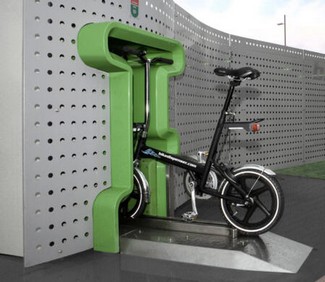
The Bike Dispenser…er…dispenses bicycles. On demand. The service is only at pilot stage at the moment in Eindhoven in the Netherlands, but it sounds perfect for most places if the concept works out. You pay a subscription to obtain a smartcard and PIN number and use that to rent a bike at any of the vending machines you find (the plan is to site them at places like railway stations, park and ride etc). Just stick your card in the slot, enter the code and 15 seconds later out pops a bike for you to use. When you’re done just pop it back into the slot and your rental period ends. The best thing is the fact that you can return them to different dispensers around town, which is v. cool.


Bikedispenser4

The company, Bikedispenser, says they are placing bikes at commuter stations in Amsterdam and that "projects in several other cities are in preparation."

Despite the success of Vélib and the growth of the self-service idea throughout western Europe, the press has been mostly silent. One major exception is an article in the Economist which tells us:
Vélib' (for vélo, or bicycle, and liberté, or freedom) has taken Paris by storm. More than 10,000 bikes have been installed at 750 docking stations, which is half of the scheme's eventual capacity, says Jean-François Decaux, the son of the founder and co-chief executive of the family-controlled firm along with his brother, Jean-Charles. The bicycles have been used by 4m people so far, who have clocked up 100,000 rides a day. Last week Jean-François was in Moscow for talks with the mayor, who is keen to introduce a similar scheme there. The mayor of Chicago also expressed interest in importing Vélib' during a recent visit to Paris.
You wouldn't know it from reading our local papers, but Washington DC is one of the US cities that's poised to experiment with the program. Here's an extract from a statement from by local politician:
DC to Launch Bicycle Rental Program

Smart Bikes (photo credit: Clear Channel Outdoors) DDOT is considering an automated bicycle rental system in DC in partnership with Clear Channel. Similar to car sharing, the system would allow members to swipe a card and release a bike from a kiosk (DDOT says to think of it as kind of like an airport luggage carts -- but better). According to DDOT, Clear Channel is operating similar systems in Europe, and this would become the first of its kind in the Northeast U.S. The proposed contract will allow for 120 bikes at 10 kiosks
The scale of the DC program is small and this bureaucratic timidity seems likely to doom the experiment from the outset. The likelihood that you'll find a bike at your urban start point and a rack in which to leave it at your end point is much too small.

To compare: DC has about 600,000 people; will get 120 bikes. The Dijon metro area has less than half the people but will get more than 3 times the bikes (400 for about a quarter of a million people). Paris has a couple million souls and more than 10,000 bikes at 750 locations.

The DC bike program might expand if there's demand for it and good publicity would help stimulate demand. Unfortunately, there's been very little public annoucement at all. Other than the politician's web blurb, I can find only that the program has been promoted on BikeWashingtonDC, the local bike advocacy discussion list. There, you can read a project description: Subject: Automated Bike Rental coming to DC. Trouble is, most of the people who read this list are already committed to cycling; the people targeted by the self-service systems in Europe are those who don't currently use bikes to get around.

Wired Blog had a post on the Barcelona system soon after it opened last spring. This photo comes from the post (click to see full size):


An editorial on a Spanish site for tourists says the Bicing program has been very successful to the extent that 70,000 bike rides are taken in the city every day and complains that the city needs to create more bike lanes and enforce rules that help bicyclists compete with other traffic on city streets. The editorial includes this photo of Barcelona's mayor on his bike on the day the Bicing scheme was begun:


Addendum: The papers today are happy to tell us about the failure of China to control emissions from motor vehicles. This nation, once so heavily dependent on bike transportation is suffering more and more from automotive gridlock. Here, for example, is the intro to the piece distributed by Agence France-Presse:
China observes 'Car Free Day' with the usual gridlock

BEIJING (AFP) - More than 100 Chinese cities including Beijing staged a "Car Free Day" Saturday to fight congestion and pollution, but the streets of the capital remained defiantly clogged with traffic jams.

Beijing's middle class climbed into their cars to go shopping and touring as usual, apparently disregarding an injunction to leave the vehicles at home -- a pattern that seemed to be repeated in the other 107 participating cities.

Traffic in Beijing ©AFP - Teh Eng Koon

Wednesday, July 18, 2007

a tour encounter

Michael Rasmussen has held on the Yellow Jersey since last Sunday -- that's two days of racing since Monday was a rest day. The Tour is not only the most physically taxing sporting event, it's also one of the more dangerous ones. It's surprising that there are so few crashes given the bunching of riders in the peloton, the extremely high speeds at which they ride, the crowds, the weather, the risk of equipment failure and other factors. Still, if some well-known riders were banned from the Tour for use of performance enhancing drugs, some others were done in by the race itself. (Here's a description of a rider exhibiting both positive drug test and crash.) It's not a laughing matter, nor one for thrill-seekers. At least not normally. Here's something of an exception. Yesterday, on a mountainous stage . . .

. . . a big, galumphy dog wandered out in front of the riders. Here's a video of the encounter. Neither rider nor dog was injured, but look at what happened to the outrageously costly front wheel!


{Caption: Marcus Burghardt collides with a dog on TDF Stage 9 (Val-d'Isère to Briancon). The wheels have been reported to be Lightweight Obermeyers which cost £2800 - well over $5,500 USD. Source: Youtube.}

If you've time, here's a recap of the 8th stage showing Rasmussen's dominance.

Here's a photo of the wheel un-taco'ed.

Friday, July 06, 2007

bike story

Gobbergo has a couple excellent posts on his bike rides on the Madison loop. He rides amazingly fast, sees amazingly much on the way, and has some amazing encounters with locals.

Though not so bucolic, I had a bike experience yesterday that may be worth reporting. On the way home from work I got a flat. This is unremarkable, in fact hardly unexpected since the rubber on my front tire is just about worn through and these summer months bring with them plentiful broken glass on the pavement.

What's worth recording is that my flat occured as I approached the new Victims of Communism Memorial on the little triangle where New Jersey crosses Massachusetts Ave. Just above the star on this map.

{click to enlarge; source: Mapquest}

Without much thinking about it, I had assumed that the heyday of memorial statues had come and gone. But it seems we do keep getting new ones.

This one, the statue, is modeled after the one that was paraded on Tiamamen Square during the democracy demonstrations of 1989. It's not very imposing or particularly aesthetic, but it's well proportioned to the space it's in -- a little triangle-shaped pocket park. I've put some Flickr photos at bottom taken on the day of dedication, as well as a photo from Tianamen, and an image of the dedication program.

I recall the day it was dedicated, just about a month ago. It was a Tuesday. I was doing my usual 6am inbound ride and encountered DC sanitation trucks blocking the street ahead. In fact, cop cars, sanitation trucks, and yellow tape had been used to seal off the whole area surrounding the little triangle where the statue had been placed. Usually, I'm able to by-pass police barriers on my bike. I do this when streets are blocked for fire emergencies and the like. The police almost always let me pass. Not this time. I had to re-route via 2nd street. There, I encountered a woman coming out of her condo building for a morning jog. She told me President Bush was arriving later in the morning to dedicate the memorial and that was the reason for all the security.

So, here I was yesterday in the same place, using the plinth of the statue for a table top as I removed tire & tube, replaced tube, mounted tire & tube, inflated, etc. All the time being grateful that for once I wasn't awkwardly squatting on the ground while doing these tasks. I even sat on the handsome granite bench to re-flate the tire, much easier on my back than the normal bent-over position.

Maybe I wasn't sufficiently respectful. The millions of victims of Russian and Chinese Communism deserve my sympathy and I have no reluctance in according it to them. But I didn't think that at the time, I just felt gratitude at the functionality of the place for my purpose and thought about the extreme preparations for Bush's visit a month before.


{flickr photos}


{Tianamen Square, 1989; source: http://www.wnd.com/news/article.asp?ARTICLE_ID=56097}