Showing posts with label sports. Show all posts

Thursday, September 26, 2013

Fast boats

A boat owned by billionaire Larry Ellison won the 2013 America's Cup series of sailboat races. It defeated the challenger Emirates Team New Zealand in a comeback performance having lost most of the early races and won all the late ones. A costly series of overnight refits is credited with lifting the US boat's fortunes.

There is a compilation of videos documenting the race here: America's Cup 2013.

Run on and off since the middle of the nineteenth century, the race pits boats from two countries against each other. An ornate trophy passes to the winner of the event. Various yacht clubs and syndicates in the United States held the cup for many years, and during the past few decades it has been won, and defended, by Australia, Italy, Switzerland, and New Zealand. Great Britain, the first to accept a challenge for the cup, has never won it. By convention, the defending country determines the rules of each race, including the specifications of the boats.

This year's series of races took place between boats representing the United States and New Zealand. It followed elimination contests among challengers from Italy and Sweden as well as New Zealand. Aiming to profit from interest by local spectators and an international video audience, the US syndicate opted for a location, San Francisco Bay, which offered excellent spectator views and a scenic backdrop for video cameras. It chose a boat design which took advantage of the Bay's strong winds and tidal currents. And it set a course which insured that the boats would achieve maximum speed in long up- and downwind legs. The boats themselves, designated AC72, were large catamarans with sails like airplane wings, rudders analogous to the rudder/elevator combination of airplanes, and daggerboards which (akin to the tail and wings of an airplane) served the dual purpose of keel/centerboard and hydrofoil. During preliminary races, the top speed of these boats proved to be greater than fifty miles per hour.

However, sailing at top speed proved to be too dangerous. During the preliminaries an Oracle boat in the US stable flipped and was wrecked with no injury to the crew and another, Artemis from Sweden, flipped at high speed, killing one member of the crew. As a result the race committee established rules to rein in dangerous maneuvering at high speed.

Over the eleven miles that the boats traveled in each race, the eleven-man teams accomplished complicated changes of course — tacks and jibes — very rapidly and with great skill and they made frequent rapid adjustments when traveling on straight paths at top speed, all aimed at gaining the few seconds advantage that made the difference between victory and defeat. Almost literally flying, the boats were made to travel in the downwind leg of the course at twice the speed of the wind. Explanations of the physics that lie behind this achievement are opaque. The skipper of a sailboat will trim his sails to achieve maximum speed for any given course. When the boat is at rest the true wind and something called the "apparent wind" come from the same direction at the same speed. When the boat is sailing at an angle into the wind, the "apparent wind" is greater than the true wind and we are told that the difference between apparent and true wind is what enables a boat to sail faster than the wind.
As the sail moves into the wind, it "feels" a faster wind on its face. This is called the relative velocity of the wind with respect to the sail. A wind of larger relative velocity exerts a larger force on the sail, which accelerates the boat. The boat moves faster, which increases the relative speed of the wind, which increases the wind-force, which accelerates the boat, and on and on.

-- How Sailboats Sail Against the Wind, Physics for Architects

A boat won't actually sail faster than the wind, however, unless the sails are unusually efficient and the drag of the water on the hull is reduced to a minimum. The most efficient sails are no longer made of cloth but rather carbon fiber and kevlar. Called wingsails, they are composed of fore and aft sections that resemble the wing and flap of airplanes. The wingsail's "flap" is unlike the airplane's, however, being proportionately much larger than the wing itself. The wing and flap are constantly monitored by sensors connected to onboard computers and can be independently adjusted to increase or decrease the amount of lift the wing provides. Greatest lift is needed at slow speeds, but it comes at the cost of increased drag. Thus, like an airplane during take off, in flight, and landing, the boat's wingsail is adjusted to give the best balance of lift and drag as the boat moves faster or slower through the water. This constant adjustment takes the place of much of the sail trimming that's needed when using conventional sails (sheeting in and sheeting out) and in fact the AC72's wingsail is swung off center a great deal less than are conventional sails.

This graphic names the parts of a wingsail and explains its operation.

{source: Wing-Sail-tech on uconnwelcomemat.wordpress.com}

The second major element in achieving flight on water is the reduction in resistance of the water itself. This drag is reduced to a minimum by use of wing-like hydrofoils to raise the hulls out of the water. Once the wingsail has brought the boat to a critical speed one of the two foils, or both, raise the hulls out of the water. Like the job done by the wingsail, the work done by the foils is difficult to fathom. The weight of the America's Cup AC72 boats is something like 13,000 pounds. Once the boat is foiling, it can accelerate to maximum speed, up to about twice the speed of the wind.

The following photo shows the Emirates Team New Zealand boat elevated on one of its two hydrofoils (the other is raised above the port hull). The two aft rudders have adjustable wing extensions, but they are used, like the elevators on the tail section of an airplane to which they are analogous, to keep the hulls parallel with the water surface and not to raise the hulls into flying mode.

{Caption: Emirates Team New Zealand’s AC72 foil sailing on the Hauraki gulf. Auckland, 6 September 2012. Photo copyright Chris Cameron / Emirates Team New Zealand; source: vsail.info}

Below is a computer drawing of an AC72 catamaran such as the ones racing for the America's Cup. I've marked the image to show the articulated wingsail and the starboard hydrofoil, which sailors call a daggerboard. Daggerboards not only provide lift, but also help keep the boat from being pushed sideways against the wind. This function is performed by the keel or centerboard of mono-hulled vessels. Note that AC72 daggerboards are lifted up and down vertically while centerboards swing up and down from a forward pivot (keels are fixed in place). The AC72 boats can carry two jibs, as shown here, but in most races they have carried only one small one. The jibs (also called foresails or softsails) are made of cloth and their main job is to direct air over the wingsail.


This image shows the two boats that competed in this year's America's Cup series. The next one, directly below, shows what America's Cup competitors looked like in 1899.

{Caption: Emirates Team New Zealand leads Oracle Team USA down the first run in race seven on day four of the America's Cup 34, 9/12/2013; source: emirates-team-new-zealand.americascup.com}

The 1899 boats, like all America's Cup boats contenders to 1988, were mono-hulled. They were gaff-rigged sloops with narrow beam. The sail area was enormous. It's evident that they are manned by about twice the number of sailors as are this year's boats (which the rules limit to a total of eleven).

{Caption: Shamrock and Columbia maneuvering for the start, Detroit Publishing Co., Oct. 19, 1899; source: Library of Congress Prints and Photographs Division}

This image indicates how large is the AC72 wingsail. The AC45 is a catamaran which closely resembles the AC72 on a smaller scale. It was used in shakedown and elimination races prior to this years America's Cup series.

{Source: uconnwelcomemat.com}

As the image suggests, it's the height of the AC72 wingsail which most impresses. Its supporting mast is 131 feet high. By comparison, the yacht that won the America's Cup for the first time (1851) and the schooners and sloops that raced for the Cup during the rest of the nineteenth century had masts no higher than 105 feet.

The location of the race in San Francisco Bay and its windward/leeward course as well as the speed-oriented design of the boats themselves were chosen with a view to making money off the event. Huge numbers of on-site spectators and world-wide TV viewers could pretty much be guaranteed by the excitement generated in extremely fast racing close to a major city, offering on-land as well as on-water viewing of spectators, and TV viewing via large numbers of video cameras, in helicopter, in tracking boats, and onboard the AC72s themselves.

In fact, the boats' design proved to sacrifice safety for speed. When, during preliminary races, one accident destroyed a boat and another killed a sailor, rules had to be revised to prevent possible collisions during the critical moments just prior to start and to shut down racing when winds, currents, and wave heights made it too dangerous. "Too dangerous" is a relative measure, however, as the race series has proved to involve a great deal of risk for boats and crews.

This graphic shows the course. The high-speed long legs between windward and leeward gates, which the boats traversed three times during each race, insured that spectators got to see many extremely fast tacks and jibes.


It's difficult for people accustomed to soft-sail racing to comprehend how the AC72s are able to reach their highest speeds when sailing with the wind at their backs. They do not run before the wind in the usual sense but rather jibe and jibe again just as if they were tacking into the wind. That is to say they take a zig-zag course when the wind is astern just as they do when it is coming from the front. During these jibes they actually look like they are tacking since the wingsail is not let out, as a soft sail would be, but is kept close-hauled as in tacking. As one sailor said: "You might have also observed how tight in the sails were trimmed in the 'downwind' heading. They were tight – even the non-winged headsail. This means the AC72s were on a close haul heading downwind. Messes with your mind doesn't it?" (Apparent Wind on Americas Cup AC72's)

So, the defender and the challenger in this year's America's Cup were fast and exciting to watch. During early races in the series they were also evenly matched. The boats seemed to be capable of the same speed and maneuverability. Sailing skill, tactical acumen, and quite a bit of luck mattered most in determining who would win each race in the series. Oracle gained an edge, however, after making a number of adjustments to the boat after it lost enough races to come within one of losing the Cup. The most significant change was apparently the installation or revision of an automatic levelling system. It is said that the Emirates Team New Zealand boat, relying on manual control of its stabilizers, couldn't match Oracle's computerized system. Ironically, the technology used by Oracle was designed and built by New Zealanders under contract to Oracle's owner Larry Ellison. It's worth noting that both boats were built in New Zealand and both were mostly crewed by New Zealanders. Many accounts credited the Oracle Team USA win with increases in sailing skill achieved during the race series rather than changes made to the boat.

Early on, the US team had shown that they were capable of cheating. During preliminary races the crew of the US boat were caught adding weight to the bow in order to improve its fore-and-aft trim. In other sports, it's the norm to exclude cheaters from competition, but, since the United States were the defenders, the entire series of races would have to be canceled if the US side was prevented from sailing. Therefore, although race officials declared that "the seriousness of the breaches cannot be understated," they contented themselves with barring from competition the sailors who were found to be directly involved in the scandal and with giving the challenger a two point advantage in the race series. The two-point advantage meant that the Emirates Team New Zealand boat needed nine points to win while Oracle Team USA required eleven. A "point" in this context is the winning of a race in the America's Cup series.

One might suspect that the lack of sportsmanship shown by the American side had something to do with the billionaires' club atmosphere of the races themselves, billionaires being thought by some to be accustomed to getting their way by fair means or foul.

We are accustomed to the influence of individual wealth in sports: baseball, football, and soccer teams owned by billionaires as well as billionaire owners of race horses and race cars. As owners and participants both, wealthy people dominate elite sports like polo and dressage, and they reserve to themselves certain exclusive ski resorts, golf clubs, and shore properties. The America's Cup races were dominated by men of wealth considerably more than other sports. The cost of competing was calculated at about $100 million per participant. Larry Ellison, owner of the US boats, is said to be the third richest man in America, fifth richest in the world, and the owners or major investors in the challenger boats were mainly billionaires themselves. There were three challengers participating in preliminary races to determine who would sail against Oracle Team USA. Sweden's boat, Artemis, belongs to billionaire Torbjorn Tornqvist, a Swedish oil magnate; Italy's, Luna Rossa, by billionaire Patrizio Bertelli, Prada's chief executive, backed Italy’s Luna Rossa. Although New Zealand's team was partly financed by its government, its main source of funds was the sovereign wealth fund of the United Arab Emirates and that fund is directed by the ruling monarch of the country and his family, who are billionaires.

As we're accustomed to the presence of billionaires in sports, so we're also accustomed to the billionaires' practice of treating sports as investments, or quasi-businesses, whose tax consequences are often the production of massive deductions. I've found little information on this practice in the America's Cup races beyond the obvious concern to maximize revenue from spectators, whether in San Francisco or watching TV worldwide.

The down-to-the-wire racing and a dramatic come-from-behind finish of this year's America's Cup series made for an exciting spectacle, but the sport is so much more outrageously elitist than other spectator sports that this Cup is bound, like most of the others, to be quickly forgotten. As the editor of Slate says,
Oracle Team USA fell way behind and then beat Emirates Team New Zealand, proving once and for all that the mercenary Kiwis who race monstrously expensive death boats for the good old Stars and Stripes perform better in the clutch than the Kiwis who race monstrously expensive death boats for the motherland... There’s really no rational reason for someone who isn't from New Zealand and/or some type of robber baron to care even one bit about the America’s Cup, or to root for Larry Ellison and his team of sailing carpetbaggers.
-- The Miracle on San Francisco Bay; Oracle Team USA’s billionaire-funded, cheat-tastic America’s Cup comeback reveals the awesome power of the inspirational sports narrative. by Josh Levin, Sept. 25, 2013, in Slate

----------------

Some additional images:

This shows the left, leeward, hull of the US boat, Oracle, showing the leeward hydrofoil daggerboard (below the American flag) and the leeward rudder (red). The rudder has a fin which provides horizontal trim to the hull (it raises and lowers the stern) as well as twisting to turn the boat.

source: AC34, Louis Vuitton Finals: Weekend Wrapup on catsailingnews.com

This shows the Emirates New Zealand boat from above. It is here shown headed downwind, but nonetheless close-hauled (both jib and wingsail are close to parallel with the hull). The white dash-marks just to the right of the wing (a wide center-mark and adjacent narrow marks) show how very little the wing swivels from side to side. You can see that the starboard daggerboard is down while the port one is up. It's hard to tell, but it seems that neither hull is touching the water; that is to say, the boat is flying on its starboard hydrofoil daggerboard. You can see the disturbance in the water caused by the port rudder, but it's obvious the port hull is entirely elevated.

source: catsailingnews.com


This list gives the AC72 design parameters:
LOA 22.0 meters (72 feet)
Beam 14.0 meters (46 feet)
Displacement 5,700 kilograms (12,500 pounds)
All-up weight 7,000 kilograms (15,500 pounds)
Wingsail area 260 square meters (2,800 square feet)
Wingsail height 40 meters (130 feet)
Wingsail chord 8.5 meters (28 feet)
Sail trimming Manual grinders
Configuration Twin-hulled catamaran
Crew 11
Sail trimming No mechanically powered systems
Sail area reduction Removable top sections/leech elements
Appendages Maximum of 2 rudders, 2 daggerboards
Construction Minimum 600 grams per square meter outer-skin;
High-modulus carbon-fiber permitted in wingsail spar

-- 34th America’s Cup: New AC72 class, the fast, spectacular, wingsail catamaran unveiled, September 20, 2010

This shows one of Oracle's boats capsizing in preliminary trails a year ago.
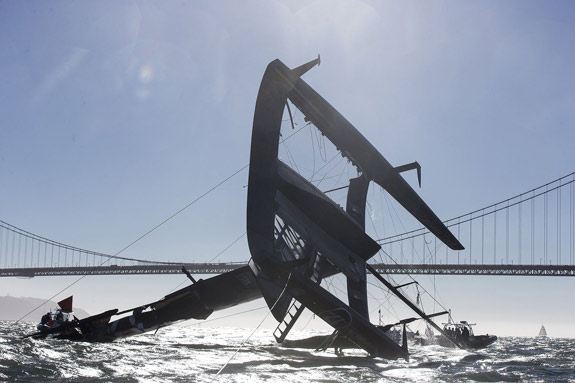
{Caption: Oct 16, 2012: Oracle Team USA's disastrous AC72 capsize; source: cupinfo.com}

This gives an idea of the size of the wingsail.

{Caption: Emirates New Zealand wing sail; source sfgate.com}

-------------

Some sources:

Kiwis Reach Record Speed in AC 72-Foot Catamaran, Associated Press, Jul 19, 2013

The Boat That Could Sink the America’s Cup by Adam Fisher, 05/09/13 on wired.com

America's Cup
on YouTube

Day 6 racing blog
SEPTEMBER 15, 2013
on americascup.com
Race 10 Performance Data

Course: 5 Legs/10.02 nautical miles
Elapsed Time: ETNZ – 22:00, OTUSA – 22:16
Delta: ETNZ +:16
Total distance sailed: ETNZ – 11.8 NM, OTUSA – 11.7 NM
Average Speed: ETNZ – 32.25 knots (37 mph), OTUSA – 31.76 knots (36 mph)
Top Speed: ETNZ – 43.01 knots (49 mph), OTUSA – 44.98 knots (52 mph)
Windspeed: Average – 18.3 knots, Peak – 22.3 knots
Number of Tacks/Jibes: ETNZ – 7/7, OTUSA – 7/7

Emirates Team New Zealand gets leg up on ORACLE TEAM USA
SEPTEMBER 7, 2013
by Sean McNeill

America's Cup: Emirates Team NZ admits AC72 can foil sailing downwind by Richard Gladwell on sail-world.com

Americas Cup Apparent Wind on nauticed.org

Apparent Wind on Americas Cup AC72's on nauticed.org

America's Cup boats use innovative design built for speed and power on latimes.com

The Sailors and Their Flying Machines, nytimes.com

THE WORLD’S FASTEST BOATS on americascup.com

wingsails on wingsails.com

America's Cup News and Information on cupinfo.com

America's Cup on YouTube

America's Cup: How hydrofoiling works in the AC72's on sail-world.com

Image Bank on americascup.com

Severe penalties for cheating Team Oracle by Duncan Johnstone, 4/9/13, on stuff.co.nz

Yet another AC34 Controversy by Adam Cort, Aug 16, 2013, on sailmagazine.com

AC34 Team Oracle Caught Cheating…Again on flyingpenguin.com

Billionaire death race: inside America's Cup and the world's most dangerous sailboat. Capsized yachts and a sailor’s death cast a pall over this week’s finals. by Casey Newton on September 3, 2013, on The Verge

Winging It: America’s Cup Racers Push the Sailboat to Its Limits by Adam Fisher, August 18, 2011, in Wired magazine

The Husky Sailors Take on America…or at least its Cup

The Lawson history of the America's cup: a record of fifty years by Winfield M. Thompson (Boston, Mass., T.W. Lawson, 1902)

Wing-Sail-tech at uconnwelcomemat.wordpress.com

AC34: The Anatomy of an AC72 by Mike Drummond, Jun 19, 2013, in Sail Magazine

AC34: How to Get Around the Racecourse by Kimball Livingston, Sail Magazine, Jun 18, 2013

Well at least the horse racing industry is recovering by Lydia DePillis, September 23, 2013, in the Washington Post

"Valkyrie's Steel Mast Will Be One Hundred and Five Feet Long and Very Light." New York Times, August 6, 1896 (filed Glascow, July 7).

Made-for-TV America’s Cup Imperils Sailors Pursuing Speed by Aaron Kuriloff, Sep 12, 2013, on bloomberg.com

AC72: Ellison's Dream Is Scariest Racing Yacht Yet on bloomberg.com

Larry Ellison's Ahab-Like Quest For The America's Cup by Daniel Fisher, on Forbes, 5/22/2013

Meet the Billionaires Behind America’s Cup by Tara Loader Wilkinson, 14 August 2013, on wealthx.com

Board of Directors, Investment Corporation of Dubai

Larry Ellison's Amazing Victory and Huge Failure by Jonathan Mahler Sep 25, 2013, on bloomberg.com

The Miracle on San Francisco Bay; Oracle Team USA’s billionaire-funded, cheat-tastic America’s Cup comeback reveals the awesome power of the inspirational sports narrative. by Josh Levin, Sept. 25, 2013, in Slate

Kiwi fans ask: 'Did Oracle cheat?' by Tom McRae, 26 Sep 2013, 3news.co.nz

America's Cup: Legal challenge not likely by Paul Lewis, Sep 26, 2013, on nzherald.co.nz

America's Cup on wikipedia

AC72 (America's Cup 72 class) on wikipedia

Sailing faster than the wind on wikipedia

Wingsail on wikipedia

Sailing hydrofoil

-------------

Note: Photos on this page are either in the public domain or are reproduced under fair use provisions of copyright law. Images link back to source and sources are explicitly named. Photos deemed to be infringing will be removed on notification to this blog's owner via comment or email.

Monday, February 20, 2012

Shrove Tuesday football

I recently wrote about the ritual warfare of the Dani people of New Guinea. It was warfare because massed warriors would set upon one another with spears and bows and arrows. Its ritual elements lie in the ceremonies that preceded battle and in the withdrawal of both sides as soon as one or at most a few men were killed or wounded. The men fought not in anger but so as to appease the ghosts of their ancestors.

Reading about Dani warfare, I thought of the racket games played by American Indians. These games, which French observers called lacrosse, pitted one village against another in free-for-alls in which injury was frequent and death a possible outcome. The players participated in rituals before games began and these rituals closely resembled the ones they practiced before going to war. Some referred to the game as analogous to war (as in "little brother of war").

There's another traditional game in which participants would put limb and life at risk. It's the ancient football competition within English villages on Shrove Tuesday.

The English games, like the AmerInd ones, shared with Dani warfare a noticeable religious element. While in the former case, Indians would participate in religious ceremonies before each game and gods were seen as guiding play and determining the victor, in the latter, the game was associated with a religious requirement to be shriven, that is to confess sins to a priest, before sundown that day. (This year Shrove Tuesday falls tomorrow, February 21. One of the three days of Shrovetide, it is the day before Ash Wednesday, and thus the last day before the beginning of Lent.)

Shrove Tuesday football games were, like those of the Indians, not so much recreation, as mock warfare. Like Carnival, held in countries to the south, the games offered a release from many, though not all, cultural inhibitions. They were a letting loose of wild spirits. And it's tempting to see them, as it's common to view Dani ritual warfare and Indian lacrosse, as a means of defusing tensions between neighboring groups of men.

The rules Shrove Tuesday football were traditional ones, varying from village to village, and there were few of them. Early in the sixteenth century one observer saw the occasion as one "wherein is nothing but beastly fury, and extreme violence, whereof proceedeth hurt."[1] While this man went on to complain that "rancour and malice do remain with them that be wounded", modern sources tend to believe the games prevented worse conflict from developing and as a result generally led to better relations between opponents.

Similarly, Dani ritual battles seem to have had the character of games. As one witness wrote, "Dani battles have a conspicuous element of play, with one documented instance of a battle interrupted when both sides were distracted by throwing stones at a passing cuckoo dove."[2]

There's no way to know how ancient were the ritual warfare of the Dani and racket games of the AmerInds. The latter were first reported in the 1630s but the former not until 1938. The football contests of Shrove Tuesday can be dated back to the reign of Edward II who attempted to outlaw them in 1349 out of fear that they kept men from practicing archery and thus imperiled the nation's defense. Claims are made that the practice had antecedents in Roman or possibly Saxon Britain, but there's no real evidence for them.

In the early nineteenth century, just as football was catching on as a sport in the aristocratic public schools, it began to die out as a communal sporting competition. In 1829 a French visitor saw the Shrove Tuesday match between two parts of Ashbourne, in Derbyshire: uppers and the downers, that is to say the neighborhoods from different sides of the river that runs through the place. The Frenchman later wrote "if Englishmen call this play, it would be impossible to say what they call fighting."[3]


{Picture showing a Shrove Tuesday battle at London's Crowe Street originally drawn in the year 1721; source: Mob football on wikipedia}

Football match, 1846, at Kingston on Thames.

{Football match, 1846, Kingston on Thames; source: Kingston upon Thames on wikipedia}

Football evolving into rugby.

{Illustration of a public schools game of football in the 1860s; source: History of Football on spartacus.schoolnet}

Football evolving into what Americans call soccer.

{England against Scotland in 1877; source: History of Football on spartacus.schoolnet}

This shows a modern match of Shrove Tuesday football in Alnwick, Northumberland.

{Traditional Shrove Tuesday football in Alnwick, Northumberland; source: Radical History of Football}

The following image shows an American Indian lacrosse game by George Catlin. A source says: "Catlin was a big fan of Choctaw lacrosse, which he witnessed in Indian Territory in 1834. He described ball-play as 'a school for the painter or sculptor, equal to any of those which ever inspired the hand of the artist in the Olympian games or the Roman forum.' Lacrosse was a physical, even violent, game called 'little brother of war' in Choctaw that included no-holds-barred scuffling and wrestling as players struggled desperately for the ball."[4]

{George Catlin (1796–1872). Ball-play of the Choctaw: Ball-up, 1846–50. Oil on canvas; 65.4 x 81.4 cm. Gift of Mrs. Joseph Harrison, Jr. Smithsonian American Art Museum; source: Smithsonian American Art Museum}

--------------

Some sources:

Ashbourne Royal Shrovetide Football Shrove Tuesday & Ash Wednesday

The history of Royal Ashbourne Shrovetide Football
Extract: "There are many versions as to the true origins of the game - but the most popular seems to be the theory that the 'ball' was originally a head tossed into the waiting crowd following an execution. ... And in 1878 the game was briefly banned after a man drowned in the Henmore. Local land-owners signed petitions and refused to let the game take place on their properties."

Royal Shrovetide Football in Ashbourne on demotix.com

'Shrovetide Football at Ashbourne', 26 February 1952 images on superstock.co

Shrovetide Football: 1 Ball, 2 Days, 3,000 Players on the New York Times, March 7, 2011.

History, topography, and directory of Derbyshire, comprising its history and archaeology: a general view of its physical and geological features, with separate historical and topographical descriptions of each town, parish, manor, and extra-parochial liberty (T. Bulmer & Co, Printed for the Proprietors by T. Snape & Co., 1895)

Old English customs extant at the present time, an account of local observances by Peter Hampson Ditchfield (G. Redway, 1896)
Extract:
Shrove Tuesday is a day celebrated for its famous football encounters, which are not, like ordinary games, fought out on a level field between goal-posts, but are entirely of another character. At Sedgefield the church clerk and sexton had, according to immemorial custom, to find a ball to be played for by the trades-folk and villagers on this day. The goal of the former is at the south of the village, that of the latter is a pond at the north end. The ball is put through the bull-ring in the middle of the village. The game always begins at one o'clock, and is fought out for three or four hours with much ferocity. There are no rules of "offside," or of "no charging or hacking allowed." All is fair in love or war, and also in the old-fashioned football of England and Scotland. At Chester-le-Street they have an annual match between the "up-street" and "down-street" folk on Shrove Tuesday. The contest takes place in the street, the windows being all carefully barricaded; and a burn lies in the course of the players, who rush into the water, and enjoy a fine scrimmage there. At Alnwick the contest used to take place in the street, but the Duke of Northumberland instituted an annual match, which now takes place in "the Pasture" every Shrove Tuesday between the parishioners of the two parishes of St. Michael and St. Paul. The committee receives the ball at the barbican of the castle from the porter, and march to the field headed by the Duke's piper, where the contest takes place, after which a fine struggle takes place for the possession of the ball.
History of Football
Extract: 'Large football games often took place on Shrove Tuesday. In 1796 it was reported that in Derby, John Snape was "an unfortunate victim to this custom... which is disgraceful to humanity and civilization, subversive of good order and government and destructive to the morals, properties, and lives of our inhabitants."'

History of football: And the Rules of the Game

Something for everybody (and a garland for the year) John Timbs (London, Lockwood & Co. Stationers, 1861)
Extract: "Football is another common Shrove Tuesday sport: it is still played in Derby, Nottingham, Kingston-upon-Thames, and a few other towns. ... The people of Kingston claim their ancient custom as a right obtained for them by the valour of their ancestors. Tradition states that the Danes, in one of their predatory incursions, were defeated at Kingston, and the Danish general being slain, his head was cut off, and kicked about the place in triumph. This happened on Shrove Tuesday; and hence the origin of their football on that day."

Ashbourne Royal Shrovetide Football Shrove Tuesday & Ash Wednesday.
The game is still carried on at Ashbourne and Derby. Extract:
Football continues to be played at in many parts of England on Shrove Tuesday and Ash-Wednesday, but the mode of playing this game at Ashbourne and Derby, differs very much from the usual practice of this sport. In the town of Derby the contest lies between the parishes of St. Peter and All Saints, and the goals to which the ball is to be taken are, Nun's mill for the latter, and the Gallow's balk on the Normanton road for the former. None of the other parishes of the borough take any direct part in the contest, but the inhabitants of all join in the sport, together with persons from all parts of the adjacent country. The players are young men from eighteen to thirty or upwards, married as well as single, and many veterans who retain a relish for the sport are occasionally seen in the very heat of the conflict. The game commences in the market-place, where the partisans of each parish are drawn up on each side; and, about noon, a large ball is tossed up in the midst of them. This is seized upon by some of the strongest and most active men of each party. The rest of the players immediately close in upon them, and a solid mass is formed. It then becomes the object of each party to impel the course of the crowd towards their particular goal. The struggle to obtain the ball, which is carried in the arms of those who have possessed themselves of it, is then violent, and the motion of this human tide heaving to and fro, without the least regard to consequences, is tremendous. Broken shins, broken heads, torn coats and lost hats, are among the minor accidents of this fearful contest, and it frequently happens that persons fall in consequence of the intensity of the pressure, fainting and bleeding beneath the feet of the surrounding mob. But it would be difficult to give an adequate idea of this ruthless sport: a Frenchman passing through Derby remarked, that if Englishmen called this playing, it would be impossible to say what they would call fighting. Still the crowd is encouraged by respectable persons attached to each party, and who take a surprising interest in the result of the day's sport; urging on the players with shouts, and even handing to those who are exhausted, oranges and other refreshment. The object of the St. Peters' party is to get the ball into the water, down the Morledge brook into the Derwent as soon as they can, while the All Saints party endeavour to prevent this, and to urge the ball westward. The St. Peter players are considered to be equal to the best water-spaniels, and it is certainly curious to see two or three hundred men up to their chins in the Derwent continually ducking each other. The numbers engaged on both sides exceed a thousand, and the streets arc crowded with lockers on. The shops are closed, and the town presents the aspect of a place suddenly taken by storm. — The origin of this violent game is lost in its antiquity, but there exists a tradition, that a cohort of Roman soldiers, marching through the town to Derventio, or Little Chester, were thrust out by the unarmed populace, and this mode of celebrating the occurrence has been continued to the present day. It is even added that this conflict occurred in the year 217, and that the Roman troops at Little Chester were slain by the Britons. — This game is played in a similar manner at Ashbourne, but the institution of it there is of a modern date.
The history of Royal Ashbourne Shrovetide Football

The every day book, or, A guide to the year, describing the popular amusements sports, ceremonies, manners customs & events incident to the three hundred & sixty-five days, in past & present times by William Hone, Volume 1 (W. Tegg, 1826)
Extract:
"FOOT-BALL.

This was, and remains, a game on Shrove Tuesday, in various parts of England.

Sir Frederick Morton Eden in the "Statistical account of Scotland," says that at the parish of Scone, county of Perth, every year on Shrove Tuesday the bachelors and married men drew themselves up at the cross of Scone, on opposite sides; a ball was then thrown up, and they played from two o'clock till sun-set. The game was this: he who at any time got the ball into his hands, run with it till overtaken by one of the opposite party; and then, if he could shake himself loose from those on the opposite side who seized him, he run on; if not, he threw the ball from him, unless it was wrested from him by the other party, but no person was allowed to kick it. The object of the married men was to hang it, that is, to put it three times into a small hole in the moor, which was the dool or limit on the one hand: that of the bachelors was to drotun it, or dip it three times in a deep place in the river, the limit on the other: the party who could effect either of these objects won the game; if neither won, the ball was cut into equal parts at sun-set. In the course of the play there was usually some violence between the parties; but it is a proverb in this part of the country that "All is fair at the ball of Scone. Sir Frederick goes on to say, that this custom is supposed to have had its origin in the days of chivalry; when an Italian is reported to have come into this part of the country challenging all the parishes, under a certain penalty in case of declining his challenge. All the parishes declined this challenge except Scone, which beat the foreigner, and in commemoration of this gallant action the game was instituted. Whilst the custom continued, every man in the parish, the gentry not excepted, was obliged to turn out and support the side to which he belonged, and the person who neglected to do his part on that occasion was fined; but the custom being attended with certain inconveniences, was abolished a few years before Sir Frederick wrote. He further mentions that on Shrove Tuesday there is a standing match at foot-ball in the parish of Inverness, county of Mid Lothian, between the married and unmarried women, and he states as a remarkable fact that the married women are always successful.
Humble yet violent beginnings
Extract: "Mob Football was a popular recreation activity recognised by its violent, uncodified and rural exterior, a far cry from the Suarez swan dives of the 21st century. The heartbeat of the game was born in these English Villages, where the locals celebrated their only days off work, known as ‘holy-days’, by taking part in ritual festivals of sport and alcohol."

Local derby on wikipedia.
Extract: "The traditional Shrovetide football match was also commonplace in the city. It was renowned as a chaotic and exuberant game that involved the whole town and often resulted in fatalities. The goals were at Nuns Mill in the north and the Gallows Balk in the south of the town, and much of the action took place in the Derwent river or Markeaton brook. Nominally the players came from All Saints' and St Peter's parishes, but in practice the game was a free-for-all with as many as 1,000 players. A Frenchman who observed the match in 1829 wrote in horror, 'if Englishmen call this play, it would be impossible to say what they call fighting'."

Mob football on wikipedia
"Mob Football has been forever imortalized by the writings of William Shakespeare in his The Comedy of Errors: Am I so round with you, as you with me, That like a foot-ball you doe spurne me thus: You spurne me hence, and he will spurne me hither, If I last in this service, you must case me in leather.[9] "

Pancakes and Football

SHROVE TIDE FOOTBALL

SHROVE TUESDAY NO-RULES FOOTBALL

Shrovetide in the New Advent encyclopedia

folk football in Britain

The Radical History of Football

Shrovetide Football, Ashbourne, Derbyshire

History - US - Lacrosse by Thomas Vennum Jr., Author of American Indian Lacrosse: Little Brother of War
Extract: "Apart from its recreational function, lacrosse traditionally played a more serious role in Indian culture. Its origins are rooted in legend, and the game continues to be used for curative purposes and surrounded with ceremony. Game equipment and players are still ritually prepared by conjurers, and team selection and victory are often considered supernaturally controlled. In the past, lacrosse also served to vent aggression, and territorial disputes between tribes were sometimes settled with a game, although not always amicably. A Creek versus Choctaw game around 1790 to determine rights over a beaver pond broke out into a violent battle when the Creeks were declared winners. Still, while the majority of the games ended peaceably, much of the ceremonialism surrounding their preparations and the rituals required of the players were identical to those practiced before departing on the warpath."

Games of the North American Indians Culin, Stewart, 1858-1929 in Twenty-fourth Annual Report of the Bureau of American Ethnology, 1902-1903

"American Indian Games" by Stewart Culin in The Journal of American Folklore, Vol. 11, No. 43 (Oct. - Dec., 1898), pp. 245-252 (American Folklore Society) Stable URL: http://www.jstor.org/stable/534133

History of lacrosse on wikipedia - "Modern day lacrosse descends from and resembles games played by various Native American communities. These include games called dehuntshigwa'es in Onondaga ("men hit a rounded object"), da-nah-wah'uwsdi in Eastern Cherokee ("little war"), Tewaarathon in Mohawk language ("little brother of war"), baaga`adowe in Ojibwe ("bump hips") and kabocha-toli in Choctaw language ("stick-ball")."

Medieval football on wikipedia

Royal Shrovetide Football on wikipedia

Scoring the Hales on wikipedia

--------

Notes:

[1] Thomas Elyot quoted in Famous Football Quotes and FOOTBALL AFTER THE ORIGINAL STYLE 'PLAYED' AT ASHBOURNE ON SHROVE TUESDAY.

[2] From the article on endemic warfare in wikipedia, giving as source eider, Karl Heider's book, The Dugum Dani (Chicago: Aldine Publishing Company, 1970).

[3] From the author(s) of the Local derby on wikipedia. Reference is made to Local derby on The Phrase Finder, but the quote is not given there.

[4] George Catlin and His Indian Gallery, Autry National Center

Tuesday, January 31, 2012

"super" as in "over the top"

I've never developed any lasting fidelities to professional sports teams. It's true though that I've had an interest in the football Giants going back to the glory years of Frank Gifford, Sam Huff, Roosevelt Brown, Andy Robustelli, Alex Webster, and, ultimately, the great old man, Yelberton Abraham Tittle. And so I'll be watching the Super Bowl this Sunday. And so also I've been reading Mike Tanier's blog postings in the NYT, hoping, as he does, that fortune will favor the New Yorkers while expecting that the Patriots will pull off a win.

Yesterday, Mike wrote about the transformation of the Super Bowl's host city. The post has an eye-popping typo in its headline which alerts you to the fact that this is a true weblog and not an article in the Grey Lady herself. The blog post is Everything Indy: The Invastion of the Roman Numerals in
The Fifth Down (New York Times N.F.L. Blog), January 30, 2012.*

Mike says "The N.F.L.’s fascination with Roman numerals is one of the league’s most bombastic traits, but the commitment to classical pretense pays off when the league builds on an epic scale. Park a giant '46' in the middle of a city, and passersby scratch their heads. Erect a hulking 'XLVI' into town central, and watch everyone stop to take pictures in front of it. ... While monolithic and omnipresent, the N.F.L.’s makeover is obviously temporary upon close inspection. The enormous numerals are made of fabric fastened over mesh, the sunburst pattern on the sides of the numerals resembling plywood when viewed from a distance."

{This image is in the public domain. Mike's blog shows one that's similar but copyright protected.}

The giant numerals remind me of another extravagant urban makeover, one that celebrated a naval victory over the Spanish Empire in 1898: the Dewey Arch.

Wikipedia explains:
The Dewey Arch was a triumphal arch that stood from 1899 to 1901 at Madison Square in Manhattan, New York. It had been erected for the parade in honor of Admiral George Dewey to celebrate his victory in the Battle of Manila Bay at the Philippines in 1898.

In spring 1899, planning for the parade, which was scheduled for September, began. Architect Charles R. Lamb found support for his idea of building a triumphal arch amongst the members of the National Sculpture Society, of which he also was a member. A committee of the society, comprising Lamb, Karl Bitter, Frederick W. Ruckstull, John Quincy Adams Ward, and John De Witt Warner, proposed the construction of an arch to the city of New York, which approved these plans in July 1899.

With only about two months left, it was decided to build the arch and its colonnade in staff, a material that had been used for the temporary buildings of several World's Fairs. Modeled after the Arch of Titus in Rome, the Dewey Arch was decorated with the works of 28 sculptors and featured a large quadriga (done by Ward) on top that showed four horses drawing a ship. At night, the arch was illuminated with electric light bulbs.

After the parade on September 30, 1899, the arch quickly began to deteriorate. An attempt to raise money to have the arch rebuilt with more durable materials (as had been done for the arch in Washington Square Park) failed, and thus the arch was demolished in 1901. The larger sculptures were sent to Charleston for an exhibit, and were destroyed afterwards.

Here is a photo of the Dewey Arch taken an employee of the Detroit Publishing Co. and found in collections of the Prints and Photos Division of the Library of Congress. It is a photochrom, that is to say a lithographic print made via an early type of colorizing that was generally used to make postcards.

{Caption: The Naval Arch at Madison Square, New York City, ca. 1900}

Here's the original from which the color version was made. It comes from a large-format glass plate negative.

{Caption: Madison Square and Dewey Arch, New York, N.Y., 1900, 1 negative, glass, 8 x 10 in.}

The photo just below is the right half of a panoramic view of Madison Square Park taken in 1905. It shows what the park and the intersection of Fifth Avenue and Broadway looked like without the Dewey Arch. See my blog post, Madison Park 1905, for details from the photo-pair. (I've written frequently about the park and its part of the city. To find the posts, search 'Madison Park' in this blog.)

{Caption: Madison Square from the Flat-Iron [i.e. Flatiron] Building, New York, 1905, 2 glass negatives, 8 x 10 in.}

Here are some details from the Dewey Arch photo.

1. You can tell that it's 20 past noon on a warm day. The park is full of people enjoying the shady peace it offers. It seems to be a work day; in other photos there are prams and children, but not this one. As usual the streets have lots of pedestrians and you can see bicyclists, two in this case, one of whom you see here, framed by the massive arch.


2. The wagon catches your eye, but also the crumbling imitation rock (called "staff") out of which the arch is constructed.


3. The contrast between Corinthian capitals and self-absorbed bench sitters is pointed, as they say.


3. A nice contrast here, as well, between imaginary heroic figures and a a very real New Yorker, pedestrian, literally, but I think not figuratively.


4. A contrast here between mundane and angelic with our interest falling more naturally with the former over the latter.


5. The great tower atop the old Madison Square Garden shows the only advertising on view in this photo.


-----------
*Update: the headline has been corrected: Everything Indy: The Invasion of the Roman Numerals

Wednesday, August 18, 2010

Passo di Gavia

I record sporting events to watch while I'm doing my afternoon treadmill run. These days I'm finishing a review of this year's Giro d'Italia and I've just come to Stage 20 for which the numbers are impressive. Only 110 miles long, the stage was short by Giro standards but not the less difficult since five mountains and almost 21,000 feet of climbing were packed into it. The riders crossed the highest point on the fourth of the five climbs. As is normal at that time of year — May 28th — that fourth mountain, the Passo di Gavia, was covered by many feet of snow. For most of the race the weather was windy and clouds were low, but there was no precipitation. However, conditions were so bad at the mountain finish that Italian TV was only sporadically able to provide the video images being captured by its many motorcycle- and helicopter-borne cameras.

During video outages, the race commentators showed clips of the 1988 race over the Gavia. On that memorable occasion, the riders crossed the pass in a snowstorm. Erik Breukink took the stage and Andy Hampsten rose to overall leader, having the lowest cumulative time for all stages to that point. At the end of the three-week race, Erik would end up in second place and Andy in first — the only American (or any non-European) ever to win the Giro. Andy currently divides his time between homes in Tuscany and Colorado. He leads bike tours in Tuscany and sells Hampsten-branded bikes in the US. He reports that life is good. Erik is currently manager of the Rabobank racing team and is pleased with the team's performance in major tours, though wins have been scarce.

Back in 2007, I did a blog post on Erik and Andy on the Gavia: snow, gentle and ferocious.

This photo shows Erik on that occasion:


{source: giroditalia's flickr photstream}

And this one shows Andy:


{Andy Hampsten, Passo di Gavia, 1988; source: outyourbackdoor.com}

Here's what the pass looked like this year:


{source: Giro d’Italia Stage 20 on cyclingtipsblog}

This year's race profile map gives an idea of the stage's climbs and descents.


{source: Giro home page}

This photo of part of the Gavia gives an idea what the riders face in both climbing and descending the mountain.


{source: iegestuhl-und-action.de}

Here are links to two Youtube videos from this year:

Giro 2010 Stage 20 Passo di Gavia (pt.1) on Youtube

Giro 2010 Stage 20 Passo di Gavia (pt.2) on Youtube

And here's one from 1988:

Giro d'Italia 1988, Passo di Gavia on Youtube

-----------

Some sources:

Update: Gavia Pass for Saturday on the ItalianCyclingJournal blog

Giro’10 St. 20 on Pez Cycling News

Andy’s Epic Day On The Gavia on Pez Cycling News

Gavia Pass on wikipedia

Friday, July 16, 2010

not your usual race tactic

As I mentioned the other day, Joost Posthuma rode the Tour of Austria this year rather than the Tour de France. Ă–sterreich Rundfahrt runs only a week, while La Grande Boucle runs a full three. Joost's in training these days rather than racing so, after four years of riding the TdF, he gets to watch it on TV this year. In an interview held earlier this week — posted on his website — He says he's enjoying watching the race, an experience which he finds quite strange and very unlike riding in it. To him the images on the screen make the event seem remote and much less physically and mentally taxing than it is in real life. He gives as an example the bunch sprint that often comes at the end of flat stages. On screen it looks smooth and efficient, but in the pack it's frighteningly fast and chaotic. The speed is extremely high. Riders are tired and some so spaced-out that they can't concentrate as they should.

He said this the day before Mark Renshaw was ejected from the race for head butting Julian Dean. Both were trying to set up the run to the finish line for their teams' respective top sprinters, Mark Cavendish and Tyler Farrar. They and the other lead-out men had cranked up the speed of the peloton to over 40 miles per hour (70 kph). At this speed the tiniest mistake can cause a massive crash. Renshaw accelerated to pass Dean on his left and Dean put his elbow in front of Renshaw's to counteract the move. In most sprints Renshaw would then have countered by leaning into Dean with his shoulder. In this one, Renshaw believed he couldn't use his shoulder without bringing them both down so he bumped Dean's helmet with his own. He did this three times. This image, taken from video, shows one of these head butts.


{source: 3news.co.nz}

Here's a video of the event.


Jon Brand reports that "As Renshaw hit Dean, one fan shouted, 'Zizou, Zizou,' the nickname of former French soccer star Zinedine Zidane. Zidane was famously ejected for head-butting an Italian defender during the 2006 World Cup final in Germany." (As it happens, I did a blog post or two on Zidane back then.)

As in the Zizou incident, no one was injured by Renshaw's unusual tactic.

Interviewed afterward, Dean said he was flabbergasted to get bonked on the helmet. He supported the officials' decision to send Renshaw packing. Renshaw said when Dean hooked his elbow over his own he had no choice but to use his head in order to keep his position. He said, "the object was to hold my line and stay upright."

Most of the articles I've seen say that Renshaw did wrong. They say shoulder bumping and elbowing are permitted in sprint lead outs, but not butting. It's also generally seen as ok to push with the head, but, as one coach says, a sprinter will get in trouble for using his helmet like a hammer. Others say head butts are a legitimate tactic for maintaining position. A former racer is quoted as saying "I’ve been mixed up in bunch sprints where I have been the lead out man or I have been having to sprint myself and people have head butted me. I've done it back. I've even taken my hand off to fend people off me."

Here's a smattering of news accounts.

Mark Cavendish's team-mate Mark Renshaw disqualified

Head butting is part of the cycling game

Tour de France Stage 11 turns into 'gladiator arena'

Head Butts Mar Stage Finish at Tour de France

Dean says ejection a fair punishment for head-butting rival

----------

This photo, from Joost's website, shows him on the podium after he won the time trial in the Tour of Austria last week.

Friday, July 09, 2010

a royal visit

There are a hundred thousand Youtubes of (or maybe just someway related to) the 2010 FIFA World Cup.

I particularly like this short one. Queen SofĂ­a of Spain, who, for a royal, has led a most interesting life and is quite photogenic for a 72-year-old dame.

In this video, made yesterday amidst a gaggle of photogs and handlers, she gracefully enters the locker room of the Spanish national team following their defeat of Germany, endures the applause of the players as she applauds them, shakes hands all around and pats a few shoulders, and, with royal aplumb, gives special congratulations to defender Carles Puyol — whose adept header produced the game-winning goal — while he's wet from shower, wearing only a towel wrapped around his waist.


Notice the aplomb of the players who deftly kick debris away from her feet and hers as the makes eye contact with each, shaking his hand, without tripping over the articles of clothing that remain. Note too, as commenters have pointed out, that she gives one a friendly slap on the arm and that she's taller than some of them. There's no strict protocol, just a few moments of congratulation and celebration.

This is Sophia.


{source: wikipedia}

I haven't found a video of Queen Beatrix of the Netherlands in the Dutch team's locker room, but here are the two queens arriving for a royal wedding held earlier this year. Sophia, as you see, is on the left. They were born in the same year, were brought up under similar circumstances, and, like most of the royal families of Europe, have a common lineage.


{source: picapp.com}

Thursday, July 08, 2010

Hot Town

Heat Wave

1. From New York City in 1944.


{August 1944: Columbus Circle during heat wave. Large Coca Cola sign and thermometer registering 100 degrees on top of building next to the Mayflower Hotel, New York. Photo by Marie Hansen for Life Magazine; source: Life archive}

2. New York's tenements in 1900.


{Summer 1900: Mulberry St. in New York; Free ice by Byron (Detroit Publishing Co.); source: Library of Congress}

Detail views of this image:


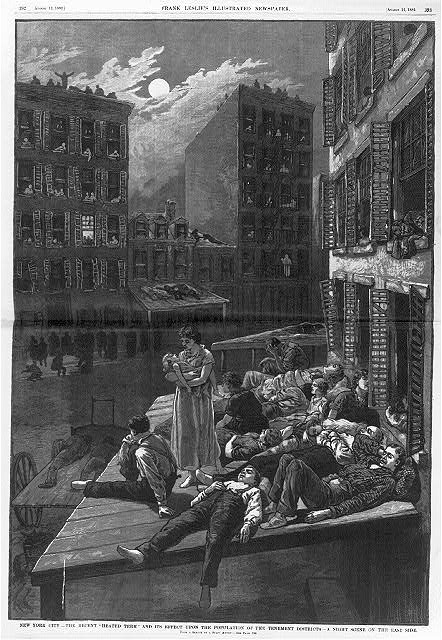
3. 1870s-'90s: Prints and drawings of residents of the New York tenements in the heat of summer from illustrated weeklies and other sources.


{August 12, 1882: New York City - The recent "heated term" and its effect upon the population of the tenement districts A night scene on the East Side / / from sketch by a staff artist. Frank Leslie's illustrated newspaper, Aug. 12, 1882, p. 393. Source: Library of Congress}


{August 1, 1885: The roof was a place to escape the heat of the summer night — "On The Roof of A Tenement House"; Harper's Weekly; source: Maggie Land Blanck's web page called New York City, Tenement Life}


{1899: Illustration from the book, The New Metropolis; source: Maggie Land Blanck's web page called New York City, Tenement Life}


{1878: Among the Tenement Houses During the Heated Term - Just Before Daybreak; Harpers Weekly; New York Public Library ID 809927; source: Maggie Land Blanck's web page called New York City, Tenement Life}

4. Summer sports: Robert Capa took this shot during the Tour de France in 1939.

{In the summer of 1939 Capa spent twenty days following the 2500 mile Tour de France. Capa followed the race on a motorbike riden by his friend. The resulting photographs were published in Match magazine. From Match magazine 27th July 1939 Tour De France. My source: fansinaflashbulb by erinbarnett}

5. Some images from the ever excellent Big Picture on boston.com: Summer is here


{People cool off from the heat of the day under water sprayed from a fire engine on Independence Day in Philadelphia, Sunday, July 4, 2010. (AP Photo/Matt Rourke)}


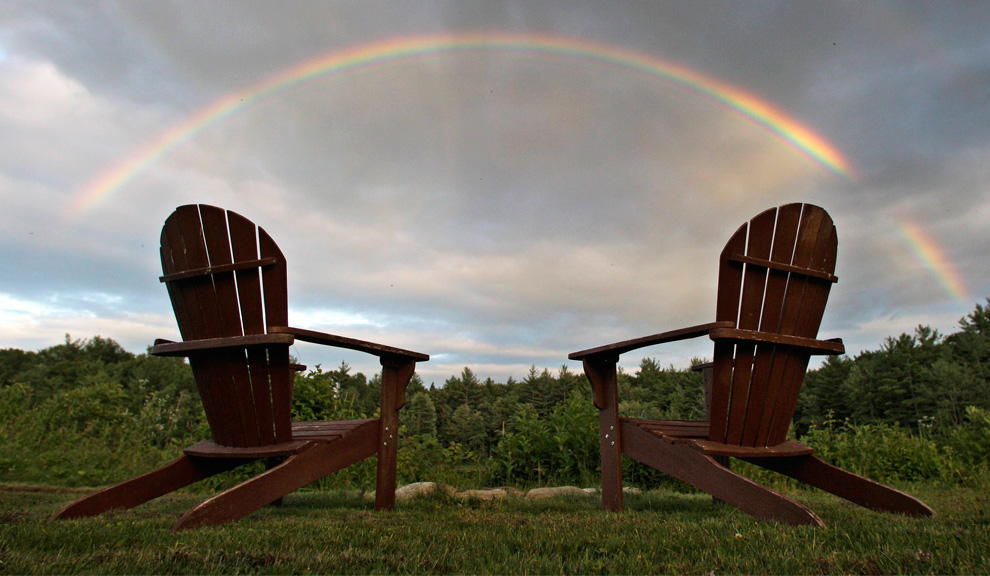
{With two empty Adirondack chairs next to a fire pit, a rainbow stretches across the sky at Adams Pond in East Derry, New Hampshire on July 1, 2010. (AP Photo/Charles Krupa)}


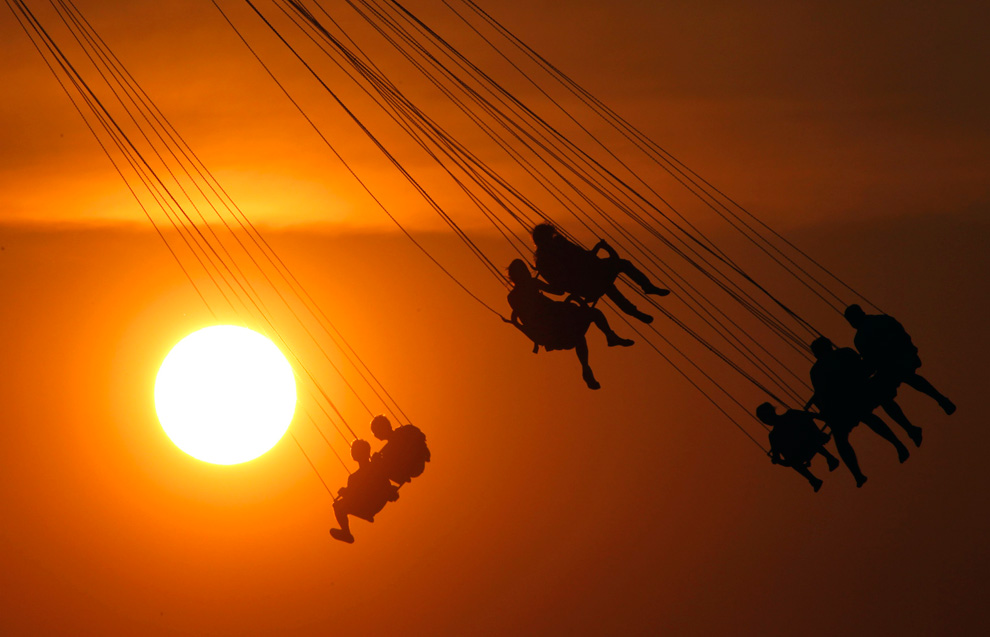
{Youngsters enjoy a swing ride in an Athens amusement park at sunset in Greece on July 6, 2010. (REUTERS/Yannis Behrakis) }


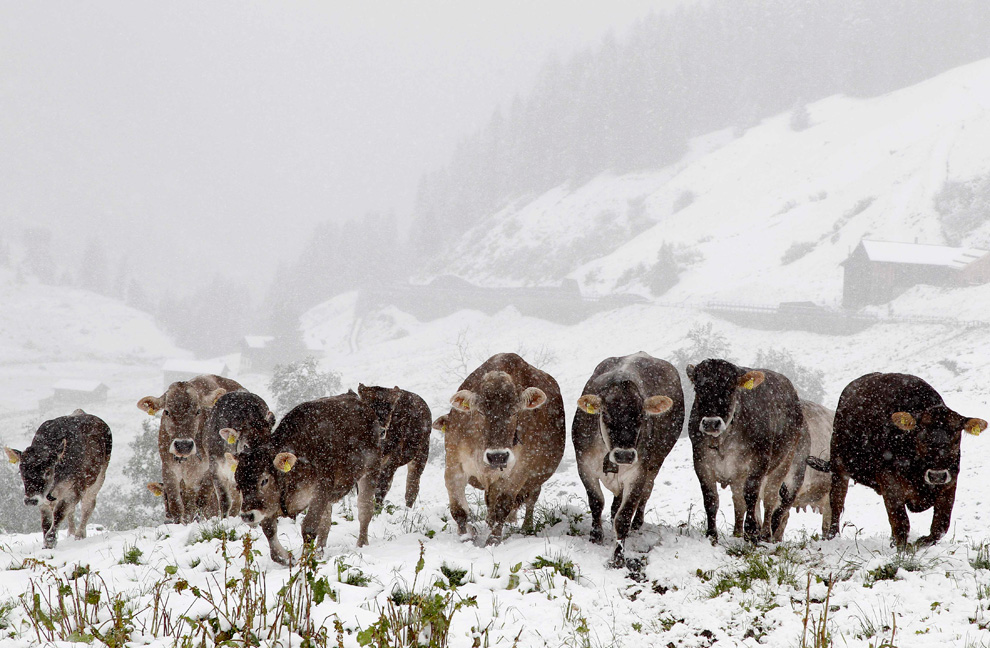
{Cows graze on a snow covered pasture at Tschuggen above Davos, Switzerland on Sunday, June 20, 2010. One day before the astronomical beginning of summer the snow line in Switzerland dropped down to 1,500 meters. (AP Photo/Keystone/Arno Balzarini)}


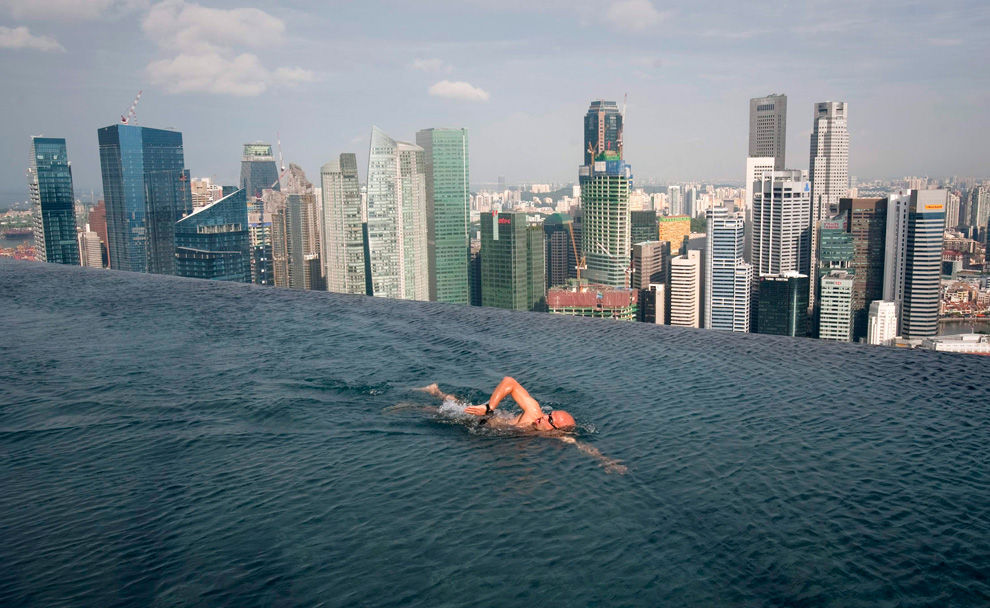
{A guest swims in the infinity pool of the Skypark that tops the Marina Bay Sands hotel towers in Singapore June 24, 2010.}

5. Some Lovin' from the Spoonful.

The Lovin' Spoonful — Summer in the City

Hot town, summer in the city
Back of my neck getting dirty and gritty
Been down, isn't it a pity
Doesn't seem to be a shadow in the city

All around, people looking half dead
Walking on the sidewalk, hotter than a match head

But at night it's a different world
Go out and find a girl
Come-on come-on and dance all night
Despite the heat it'll be alright

And babe, don't you know it's a pity
That the days can't be like the nights
In the summer, in the city

Cool town, evening in the city
Dressing so fine and looking so pretty
Cool cat, looking for a kitty
Gonna look in every corner of the city
Till I'm wheezing like a bus stop
Running up the stairs, gonna meet you on the rooftop

But at night it's a different world
Go out and find a girl
Come-on come-on and dance all night
Despite the heat it'll be alright

And babe, don't you know it's a pity
That the days can't be like the nights
In the summer, in the city

Hot town, summer in the city
Back of my neck getting dirty and gritty
Been down, isn't it a pity
Doesn't seem to be a shadow in the city

All around, people looking half dead
Walking on the sidewalk, hotter than a match head

But at night it's a different world
Go out and find a girl
Come-on come-on and dance all night
Despite the heat it'll be alright

And babe, don't you know it's a pity
That the days can't be like the nights
In the summer, in the city