Showing posts with label global issue. Show all posts

Wednesday, April 27, 2011

financial matters

Years back, when Raghuram Rajan was chief economist of the International Monetary Fund, I used to post about the fragility of the global economy.[1] I didn't write as an expert on the subject, but as a civilian struggling to understand a complicated situation that's too often discussed by economists and pretty much ignored by people like me.

Unlike almost all the others whose writings I attempted to master, Rajan wrote clearly and imparted a coherent and convincing point of view.[2] I was not the only one to feel this way and the blog posts I wrote gathered an unusually large number of hits. In 2007, when Rajan left the IMF, its press releases suddenly became much less useful from my point of view and, at about the same time, its influence was seen as waning. The world's economic condition was no less perilous, but I'd lost my primary source for understanding it.

Fortunately, I'd begun earmarking Steven Pearlstein's excellent columns in the Washington Post. The WaPo archive of his work, going back to July 5, 2006, can be found here.[3]

This week's column, The politics and economics of a falling dollar, is especially good.

He recognizes that people like me find it difficult to focus our attention on global financial matters, but, he says, "it turns out they are at the heart of most of the economic issues we're dealing with, from budget battles to the euro crisis to the rising price of gasoline." He explains how the US dollar became and continues to be the world's dominant currency, tells how this results in unimaginable quantities of dollars being held outside the United States, and predicts (as others have been doing) that America's debt problems are producing a devaluation of the dollar which will, in time, result in the decline of the dollar as dominant currency. He says "the global system is forced to rely on the currency of a once-dominant economy that has piled up too much debt and can't quite figure out how to deal with it."

He concludes:
There are two ways this dollar story can play out.

In the optimistic scenario, a credible budget deal is reached in Washington, the Fed manages to sop up all the excess liquidity it has created, and the long-term slide in the dollar remains gradual enough for the world to muddle through until a new order and a new architecture can emerge.

In the darker scenario, hinted at last week by the leading credit-rating agency, the failure to adopt a budget deal triggers a U.S. credit crisis that spawns a dollar crisis, which sets off another global financial crisis — one that makes the last one look like child’s play.
In the column, Pearlstein quotes Gordon Brown's speech at this year's Bretton Woods Conference. The speech is quite long, but admirably free of jargon and not difficult to understand. In it, Brown makes a persuasive call for a new set of international agreements for regulation of global finance. Here's a short summary of his talk by the New Yorker's John Cassidy.[4]
Gordon Brown, who was voted out of Downing Street last year, delivered a sweeping survey of global economic issues. Noting that he had recently enjoyed a “period of reflection, enforced reflection,” he argued that most of the problems facing the world—financial instability, recessions, trade disputes, environmental degradation — ”cannot be addressed on an individual basis and can only be resolved by global coördination.” In the area of financial regulation, Brown pointed out, coördination was sorely lacking, with some individual countries pursuing their own agendas and trying to cozy up to big financial institutions. “I believe we are going back to a race to the bottom,” Brown said.
Brown also pointed out that the old industrial nations of the North Atlantic would soon be surpassed in wealth by China and the other newer ones. It's virtually inevitable that the purchasing power of the Chinese population will dwarf that of the United States within the next two decades. Inhabitants of China will then be the world's greatest consumers; Americans may be able to export goods to feed this Chinese demand, but that's not a certainty. Careful oversight at the international level will be required to make likely a smooth transition from the past half century's American dominance to whatever is to follow it.

This graphic, from wikipedia, gives one economic projection for the next four decades. It estimates the ten largest economies in the world in 2050, measured in GDP nominal (millions of USD).


Here is the video of Gordon Brown's speech at this years Bretton Woods Conference.


---------

Notes:

[1] These posts, going back to 2006, are mostly on the global economy and are mostly drawn from the work of Rajan and the Washington Post's Steven Pearlstein.
[2] The authors of the wikipedia article on Rajan say
In 2005, at a celebration honoring Alan Greenspan, who was about to retire as chairman of the U.S. Federal Reserve, Rajan delivered a controversial paper that was critical of the financial sector. In that paper, "Has Financial Development Made the World Riskier?", Rajan "argued that disaster might loom."Rajan argued that financial sector managers were encouraged to
(take) risks that generate severe adverse consequences with small probability but, in return, offer generous compensation the rest of the time. These risks are known as tail risks.[...] But perhaps the most important concern is whether banks will be able to provide liquidity to financial markets so that if the tail risk does materialize, financial positions can be unwound and losses allocated so that the consequences to the real economy are minimized.
Thus Rajan described the 2007-2008 collapse of the world's financial system.

The response to Rajan's paper at the time was negative. For example, former U.S. Treasury Secretary and former Harvard President Lawrence Summers called the warnings "misguided."
[3] Articles by Steven R. Pearlstein

[4] Cassidy is author of How Markets Fail: The Logic of Economic Calamities (which I recommend) and Dot.con: How America Lost Its Mind and Money in the Internet Era

Sunday, July 29, 2007

dymaxion

I'm waiting for the close of the Sachsen Tour and that of France. Both are winding up today; in both leadership has switched from rider to rider with close times separating the top riders. I can follow the one on a German-language site, the other on the Beeb.

I don't speak German and rely on babelfish to pigeon-English the text for me This produces funny results, particularly when it translates riders names literally. So Sebastian Schwager becomes Sebastian brother-in-law, René Obst becomes René fruit, and Stephan Schreck becomes Stephan fright.

Meanwhile, here's something else that's been on my mind.

I read an excellent blog called If:Book which recently had a post on transitions from one technology to another. The new technology may be revolutionary, but the first instances of it frequently don't appear so. We can all think of examples. The first printed books imitated codex manuscripts. The first factories that used steam power worked just like mills that used water power. And, most-famously, early motor cars were built like horse-drawn carriages.

The post, by Dan Visel, says we get trapped by the metaphors we use. He's referring to designers mostly, but the same works for consumers, entrepreneurs, and just about any social group you can mention. Edmund Burke wrote his most compelling prose on the power of such metaphors. As vehemently as Visel deplores this influence, he celebrated it.

For all that he supported the American colonies in their rebellion against the Crown and for all that he advocated free trade and abolition of the mercantilist policies, he was a strong advocate of social hierarchy, established authority, and the hereditary ruling class. He would say, "A perfect democracy is, therefore, the most shameless thing in the world. As it is the most shameless, it is also the most fearless. No man apprehends in his person that he can be made subject to punishment."

The Burkes of the world aren't always wrong. As Burke said, the Terror set off by the French Revolution can't be defended without serious moral contortions. More recently we know that some of the 20th-century's most vicious dictators were innovators as well as destroyers. Totalitarianism itself was a kind of visionary innovation.

Neither, of course, are the technological visionaries always wrong. Think about what Dan Bricklin and Bob Frankston came up with in producing VisiCalc in 1979.

Or about Hypertext, a vision of Ted Nelson's from 1965. More than 40 years on, we're still working out the implications of his revolutionary thought.

So where does Buckminster Fuller fit in?

This implicitly, is what Dan Visel asks.

Eighty years ago, in 1927, Fuller began to think about motor transport. Like Nelson's his ideas have yet to be fully realized, though like Ted's many of them have become commonplace.

Fuller's idea: the Dymaxion car, a transport system that bears family resemblance to the VW bus and ubiquitous minivans of the past decade, but which still appears revolutionary to us, both in the working designs he developed for it and in the ideas which it embodied for future development. Here's a link to a short Dymaxion car chronology.

And a YouTube video about a working prototype:


Read Visel's post to learn more.


{Picture sources: karellen1975 and dworld. Click to enlarge.}


While I was writing this post, Spain's Alberto Contador won the Tour de France. I still don't have the outcome of the Sachsen Tour.

Wednesday, July 11, 2007

alternative energy source that might work?

There's an intersting essay in Slate that showed up in Sunday's Outlook section of the Washington Post. Here's the citation: HUMAN NATURE, A Corny Cold War, by William Saletan, Sunday, July 8, 2007; Page B02

Outlook pieces are usually earnest, one-sided, wonkish, and written in self-consiously persuasive manner.

This piece is glib, ironic, and self-consiously quotable. It's Gibbon-esque in its twists and turns, though not in its sentence structure.

The subject is bio fuels. The author tells us that what seems obvious just isn't so. It does make sense to use agriculture to make fuel. Yes, the result will be higher food prices, but the increase in available energy sources, and presumably the restraint on energy price rises, should (not definitely will) more than offset them.

He says, "Fuel is the whole point of food." Which just isn't the way we're used to thinking about food: fuel for conversion to energy in animals, yes, but fuel to power motor vehicles?

What about the corruption of agricultural price supports in industrial nations? He says they're a problem: "Yes, ethanol subsidies are a scam. Yes, we should drop our trade barriers and let Brazilian sugar cane wipe out American corn." (As if they're political will for that.)

But he also says an enlighted biofuel policy can help lift third-world nations out of poverty: "Sugar cane, wood chips and switch grass. Such 'cellulosic' ethanol could lower the output of greenhouse gases and deliver up to six times the amount of energy its production requires. If you want to help poor people, biofuel beats the heck out of oil. In a biofuel economy, the chief asset is open land. Who has open land? Poor countries. Latin America has sugar cane. Africa and Asia have cassava. Switch grass, which grows in dry regions, will level the playing field further. Bush says that switch grass will empower the western United States. That's nice, but the real story is that it'll empower the Southern Hemisphere."

It's all pretty neat -- though fearfully difficult to achieve.

Read the whole thing if you have time. And notice how the author ironically pits Bush against Castro, ironically turns environmentalism and anti-globalism upside down, and uses abundant catch phrases and some provocative statements to make his case:

A fuel that literally grows on trees.

The old buzzword was "job security." The new buzzword is "food security."

Most of the corn we export today feeds livestock, not people.
Two months ago, a U.N. report calculated that one-third of the increased demand for food over the next 30 years will come from people shifting their eating habits to meat and dairy -- a net loss of dietary efficiency -- as they become able to afford it.

We're studying the use of microbes to extract fuel from straw and wood waste. We're trying to grow biofuel in algae. We're even learning to make fuel from animal fat and excrement.

Yes, we need solar power, conservation and efficiency. But don't give up on biofuel. It just needs time to grow.
human@slate.com

William Saletan covers science and technology for Slate, the online magazine at www.slate.com.

Thursday, June 28, 2007

desertification

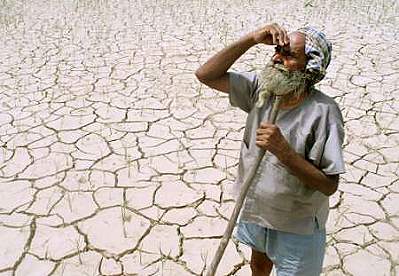
A news search on the term "desertification" turns up lots of stories. Most stem from a press release of a study conducted by the the United Nations University. What's striking is the scale of the problem and the linkage of cyclical draughts, such as those in Africa, to global warming. The study says maybe 50 million people will flee from newly arid lands in the next 10 years.

Desertification is mainly caused by climate change, erosion, and degradation of soil in dryland areas. Crop raising based on irrigation, cattle farming, and other traditional farming practices exacerbate the problem. The report says the process might be halted by new forms of agriculture, such as encouraging forests in dry land areas. But care must be taken or efforts to help will make matters worse. For example the author of the report says that a tree-planting program in China won't stem the advance of deserts because the trees being planted needed large amounts of water, putting even more pressure on scarce resources.

Here's the press release followed by some images and links:
Desertification: UN experts prescribe global policy overhaul to avoid looming mass migrations

Desertification, exacerbated by climate change, represents “the greatest environmental challenge of our times” and governments must overhaul policy approaches to the issue or face mass migrations of people driven from degraded homelands within a single generation, warns a new analysis from the United Nations University.

Contact: Terry Collins
terrycollins@rogers.com
416-538-8712
United Nations University

In the analysis for presentation June 28 at UN Headquarters, New York, UNU experts say the loss of soil productivity and the degradation of life-support services provided by nature pose imminent threats to international stability. They outline a multi-point prescription for policy reform at every level of government.

“It is imperative that effective policies and sustainable agricultural practices be put in place to reverse the decline of drylands,” says Prof. Hans van Ginkel, UN Under Secretary-General and Rector of UNU.

Land use policy reform is urgently needed to halt overgrazing, over-exploitation, trampling and unsustainable irrigation practices, as are policies to create livelihood alternatives for dryland populations, he says.

Based on input of 200 experts from 25 countries convened in Algiers late last year, the analysis urges governments to adopt a broader, overarching view and a more coordinated, integrated and interlinked approach to dealing with desertification, climate change, poverty reduction and other public concerns.

It highlights dozens of problems and inconsistencies in policy-making today at every level, saying decisions are often taken in isolated sectoral silos, the end results of which, on balance, can be counterproductive.

“Some forces of globalization, while striving to reduce economic inequality and eliminate poverty are contributing to worsening desertification. Perverse agricultural subsidies are one such example,” says Prof. van Ginkel.

One-third of all people on Earth – about 2 billion in number – are potential victims of desertification’s creeping effect. And, left unchecked, the number of people at risk of displacement due to severe desertification is an estimated 50 million over the next 10 years – a sweep of migrants worldwide equal in number to the entire population of South Africa or South Korea.

“Addressing desertification is a critical and essential part of adaptation to climate change and mitigation of global biodiversity losses,” says Prof. van Ginkel. “UNU has led the argument over the last decade that such inter-linkages in policy formulations must be taken.”

“Reforming policies to combat desertification also represent one of the world’s most expedient ways to sequester more atmospheric carbon and help address the climate change issue,” says Zafar Adeel, lead author of the analysis and Director of the UNU’s Canadian-based International Network on Water, Environment and Health.

Policy formulation for combating desertification “has been hindered by the lack of concrete data about rates and extent of desertification,” he adds. “We must, as the global international community interested in desertification, put monitoring and assessment at the top of our policy agenda.”

Desertification shows no sign of abatement: An “environmental crisis” with major impacts

UNU says the main barrier to expanding isolated successes at combating desertification is “the lack of effective management policies.”

In some countries where policies are deemed conducive to addressing desertification, enactment and implementation falls short. Or, designed and implemented at a national level, policies fail to translate into local action. Worse, some policies provide perverse incentives, exacerbating competition and conflict over the use of land and natural resources.

Among many recommendations, the report urges governments and policy-makers to:
    * Reject the notion that aridity and water scarcity are inevitable;
    * Create financial incentives for pastoralists and other dryland users to preserve and enhance the ecosystem services their land provides to all;
    * Accept the carbon sequestration as a measure for simultaneously combating desertification and climate change. While vegetative cover in most drylands is sparse, drylands represent more than 40% of global land area, providing immense opportunities for carbon sequestration;
    * Foster alternative, sustainable livelihoods for dryland dwellers, including non-agricultural jobs in industry and tourism, for example;
    * Yield ownership and decision making to communities: empower them to take charge of land on which they depend and end the pattern of individuals chasing environmentally-detrimental short-term gains;
    * Promote greater transparency and accountability, the participation of multiple actors, information sharing, measurable results, and follow-up systems;
    * Better educate local populations and policymakers, many of whom lack adequate awareness of the fragility of their natural resource base and, in some places, fail to understand fundamental concepts of "drylands" and "desertification;"
    * Put science at the heart of policy making and beef up research on emerging issues such as thresholds or "tipping points" as they relate to migration and desertification; and
    * Improve coordination at all levels:

    Nationally: harmonize policies dispersed across a range of government ministries and agencies; rationalize and link the wide assortment of development, poverty reduction and environmental policy frameworks, independently conceived and "each in their own orbit," to encourage synergies and integration;

    Regionally: to help address transboundary issues such as integrated river basin management and environmental migration; and

    Internationally: better relate global conventions, agreements and other initiatives one to another. The analysis says the separate constitutions, priorities and procedures involved in administering the mix of international agreements operating today prevent important synchronization needed to achieve broad social and environmental goals: food security and famine relief, conflict and migration prevention, better health and poverty reduction, desertification and climate change avoidance and biodiversity protection and enhancement.
The authors urge governments to better define and understand environmental migration – its economic and ecological consequences, and to create a global framework to legally recognize and assist environmental refugees.

“The expected climatic change scenarios as projected by the recently published report of the IPCC give an additional dark shade to an already gloomy picture. However it is difficult to properly quantify the number of environmental migrants and the migration routes as long as the concept itself remains debated even from a scientific point of view,” the analysis says.

UNU advances a classification scheme based on three subgroups of migrants driven predominantly by environmental reasons:
    * Environmentally motivated migrants
    * Environmentally forced migrants
    * Environmental refugees
Finally, the analysis says governments need to measure progress in human-development terms and develop a common set of environmental indicators and data collection methods to enhance consistency for tracking and comparison purposes.

###

United Nations University

Established by the U.N. General Assembly in 1973, United Nations University is an international community of scholars engaged in research, advanced training and the dissemination of knowledge related to pressing global problems. Activities focus mainly on peace and conflict resolution, sustainable development and the use of science and technology to advance human welfare. The University operates a worldwide network of research and post-graduate training centres, with headquarters in Tokyo.

UNU-INWEH began operations in 1997 to strengthen water management capacity, particularly of developing countries, and to provide on-the-ground project support. With core funding from the Government of Canada through CIDA, it is hosted by McMaster University, Hamilton, Canada.

source: http://www.worldrevolution.org/


source: http://www.the-human-race.com/pages/about_desertification.htm


Deserts are shown in yellow. Threatened areas are in orange; the darker the color, the greater the threat. Click to view full size; source: http://www.mazerolle.fr/demographie/cours2006/chapitre-03S3d.htm


Links:

UN issues desertification warning
By Matt McGrath
BBC environment reporter
Desertification could displace up to 50m people over the next decade
Tens of millions of people could be driven from their homes by encroaching deserts, particularly in sub-Saharan Africa and Central Asia, a report says. ...

DESERT VOICES
Oral Testimony - Perhaps nowhere in the world are the impacts of desertification more challenging than in Africa, where it is inextricably linked to poverty, migration and food security. These personal accounts from Sudan and Ethiopia highlight the wide-ranging consequences of desertification, from migration for work and conflict over resources, to changes in traditions and women’s roles...

Severity Of Desertification On World Stage
Science Daily (press release) - Jun 19, 2007
Science Daily — Desertification puts the health and well-being of more than 1.2 billion people in more than 100 countries at risk, according to the United ...

Likely Spread of Deserts to Fertile Land Requires Quick Response, U.N. Report Says
The New York Times
By ELISABETH ROSENTHAL
Published: June 28, 2007
ROME, June 27 — Enough fertile land could turn into desert within the next generation to create an “environmental crisis of global proportions,” large-scale migrations and political instability in parts of Africa and Central Asia unless current trends are quickly stemmed, a new United Nations report concludes....

Desertification
From Wikipedia, the free encyclopedia
Desertification is the degradation of land in arid, semi arid and dry sub-humid areas resulting from various climatic variations, but primarily from human activities. Current desertification is taking place much faster worldwide than historically and usually arises from the demands of increased populations that settle on the land in order to grow crops and graze animals....